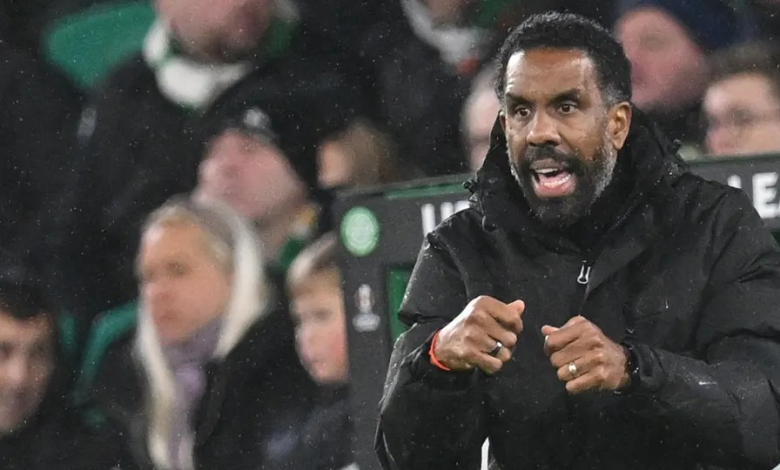
To put it lightly, things have not gone well in Wilfried Nancy’s start to life as Celtic FC manager.
The traditional Scottish power has lost Nancy’s first three matches in charge, marking the club’s first three-game slide since 2020. After an already controversial appointment replacing interim boss Martin O’Neill, early chatter suggests Nancy could face an exit if results don’t turn around quickly.
Nancy arrived in Glasgow after five largely successful seasons in MLS — two with CF Montréal and three with the Columbus Crew. During that spell, he won the 2023 MLS Cup, the 2024 Leagues Cup, and reached the 2024 Concacaf Champions Cup final.
Yet despite those achievements, Nancy’s early struggles in Scotland have reignited doubts about whether MLS managers are truly prepared for Europe’s most demanding jobs.
The MLS-to-Europe Debate
The notion that MLS managers cannot succeed in Europe is both simplistic and easily disproven. Several coaches arrived in MLS with European credentials and still found the league challenging — among them Dean Smith, Owen Coyle, and Domènec Torrent.
That said, it would also be dishonest to claim that Nancy’s MLS experience fully prepared him for the realities of his first European head coaching role. MLS rewards a different set of managerial skills than pressure-heavy environments like Celtic.
Big-Picture Thinking vs Immediate Results
One of the biggest differences lies in MLS’s structure.
The league’s top prize, MLS Cup, is decided via a postseason tournament with forgiving qualification standards. This setup rewards managers who prioritize long-term development and peaking at the right moment rather than immediate week-to-week urgency.
When things go wrong, MLS clubs often show patience. Of the five teams that fired their managers this season, only D.C. United quickly installed a permanent replacement. Atlanta United, for example, allowed former Celtic boss Ronny Deila to finish the season despite missing the playoffs, only formalizing his exit after the final matchday.
This approach isn’t inherently flawed. Minnesota United manager Eric Ramsay — formerly an assistant at Manchester United and with the Wales national team — has spoken positively about how MLS encourages long-term thinking.
But that same environment can leave highly process-driven coaches like Nancy ill-equipped for jobs like Celtic’s, where expectations are brutally simple: win now, return to the top of the SPL, and worry about aesthetics later.
Media Pressure: A Hidden Difference
Another major gap is media scrutiny.
Only a handful of MLS clubs — Atlanta, LAFC, LA Galaxy, Portland, Seattle, and Toronto — operate in an environment where fan and media pressure can meaningfully influence decision-making.
Elsewhere, managers often live relatively anonymous lives. Critical questions from reporters don’t always reflect fan sentiment, and defensive answers rarely escalate into wider crises.
This dynamic has shaped coaching behavior. In 2024, Nancy’s public explanation for benching Cucho Hernández drew criticism, but it never created lasting fallout. Similar defensiveness can be seen from MLS-only managers across generations — even from the league’s most decorated coach, Bruce Arena.
By contrast, managers like Gerardo Martino and Domènec Torrent, who arrived in MLS with broader international experience, are far more adept at defusing tension rather than sparring with the media. In other leagues, escalation only intensifies pressure on both coach and players.
Nancy’s post-match comments following Celtic’s 3–1 Scottish League Cup final defeat to St. Mirren suggest he has yet to fully grasp how vital public de-escalation is in his current role. In MLS, that approach rarely carried consequences. At Celtic, it very much does.
Are Clubs Targeting the Wrong MLS Managers?
This raises a broader question: are the MLS managers best suited for Europe actually the ones getting attention?
Oscar Pareja has won more than he’s lost across three MLS clubs while showing tactical flexibility, yet repeated playoff failures have kept him out of “elite coach” conversations. Ben Olsen has consistently helped teams punch above their weight — a skill potentially more valuable in Europe’s lower tiers than in a non-relegation league like MLS. Gary Smith’s pragmatism wore thin in Nashville but would likely be embraced at Celtic in the short term if it delivered results.
A Misaligned Marriage
In Nancy’s defense, his demeanor and philosophy at Celtic are exactly what MLS observers have long known — and often admired. The problem is not necessarily his ability, but the timing and context of his appointment.
That his strengths fit so poorly with Celtic’s current needs says as much about the club’s hiring process as it does about Nancy’s long-term prospects in Europe.
Whether he ultimately succeeds or fails, his early Celtic saga has become a case study in how differently MLS prepares managers — and how unforgiving the European spotlight can be.