In one of the most dramatic and talked-about moments from yesterday’s Premier League clash between Leeds United and Manchester City, Leeds boss Daniel Farke was shown a red card immediately after full-time — and now the Football Association (via the Premier League) has finally spoken on the controversial decision. The fallout from this unprecedented touchline eruption is immense, and Leeds supporters are fuming. Here’s what the official statement says — and what it really means for Leeds United’s hopes this season.
🔴 How It All Went Down: Farke Loses His Cool at Elland Road
On Saturday night at Elland Road, Leeds United suffered a tough 1-0 defeat at home to Manchester City — a result that saw City close the gap on Premier League leaders Arsenal to just two points. The match itself was tense, tight and end-to-end, with Leeds dominating early possession but failing to capitalise on several big chances. Antoine Semenyo scored the only goal right before halftime, turning City’s pressure into three crucial points.
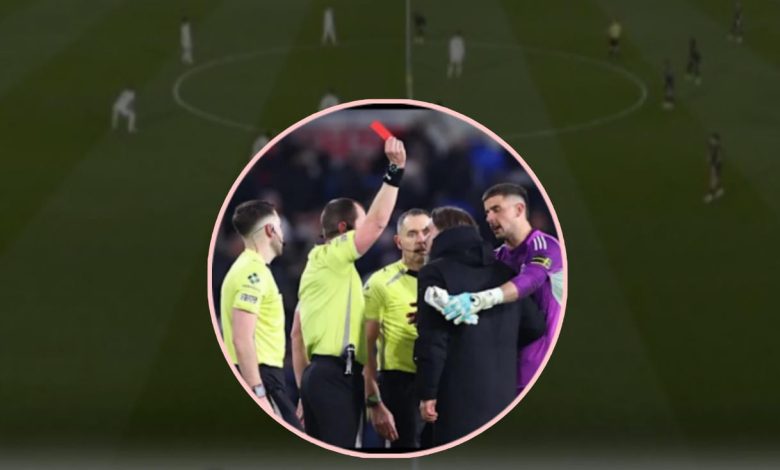
But what truly exploded social media and football forums wasn’t the goal — it was Daniel Farke’s red card just moments after the final whistle.
As referee Peter Bankes blew for full-time, the usually composed German manager raced onto the pitch in visible fury. Farke confronted the referee and his officiating team — which was quickly answered with a straight red card. His goalkeeper, Karl Darlow, had to physically intervene to pull him away.
🧾 The Official Statement: What the FA / Premier League Really Said
Hours after the controversy, the Premier League issued a formal statement explaining the decision:
“Daniel Farke was shown a red card for entering the pitch and confronting the referee after the final whistle.”
Unlike some fan theories and social media speculation, the League was unequivocal — Farke’s dismissal was not down to something he did during the 90 minutes. The red card stemmed solely from his actions after the final whistle, breaking one of the most clear-cut rules in football: managers are not permitted to enter the pitch to confront officials once the match is over.
This statement is crucial — because while fans have debated why Farke was so furious (time-wasting, a waved-away penalty appeal, perceived soft calls), the official explanation is embarrassingly simple: he broke the rules.
⚠️ The Rules Are Clear — But Was It Justified?
According to the official statement and a league-wide football regulation principle, managers must remain off the playing surface once the final whistle is blown. Any entry onto the pitch to argue with officials typically earns at least a caution — and often a red. That rule exists to protect referees, players and staff, preventing post-match confrontations from spiralling out of control.
But Leeds fans — and even some pundits — insist that what Farke did wasn’t violent or dangerous. They argue that the speed with which the referee produced the red card indicates something deeper was at play: a perceived lack of respect for a club fighting to stay in the Premier League.
According to assistant coach Eddie Riemer, Farke was frustrated by the amount of time City wasted, decisions not going Leeds’ way — and in particular a stoppage that seemed too short to allow Leeds a final chance at a set piece. Riemer admitted that emotion overwhelmed Farke, though he stressed it was uncharacteristic of the normally composed manager.
🔥 Social Media Ignites: Fans Are Absolutely Furious
From Reddit threads to Twitter posts, fans described the red card as “the most obvious ref power move of the season” and ref bias packaged as a red card. Some even joked that Farke merely ran onto the pitch and got punished before he said a word. Others blamed the officiating crew for missing key calls — and then choosing to punish the manager instead.
This reaction has shown a wider trend: supporters believe that today’s referees are quicker to penalise the emotion in the game rather than the actual content of what was said or done — a debate that could spark a much bigger conversation across the league.
📉 What This Means For Leeds United
With the official statement out, the key question for Leeds United now is what comes next.
⛔ One-Match Touchline Ban
Farke will almost certainly serve a one-match touchline ban in Leeds’ upcoming fixture (reportedly against Sunderland), meaning he will be unable to lead from the technical area. He can still manage training and prep off the pitch, but the absence on matchday is a huge tactical disadvantage.
🧠 Impact on Morale
Leeds United sit comfortably outside the relegation zone — six points clear as of yesterday’s result — but the timing of this red card brings a psychological twist. Teams in the bottom half live on momentum, leadership and belief. A suspended manager could trim that edge just when it’s needed most.
📊 Fans and Media Reaction Could Shape Future Rules
The incident has now sparked wider debate about how and when referees should respond to emotional reactions — especially after games. It’s entirely possible that this controversy could fuel future rule clarifications or official guidelines on manager conduct. Clubs, fans and analysts alike are watching closely.
🏁 Final Verdict: Was It Fair?
In purely technical terms: Yes, the Premier League was within its rights to issue the red card. The official rules regarding post-match conduct are not ambiguous, and entering the pitch to confront officials is a clear violation.
Yet the context — a heated loss, a controversial stoppage time period, and emotions running high — adds layers that the League’s brief statement didn’t address. Fans argue that the letter of the rule was applied, but not the spirit. Only time will tell if this will be remembered as a textbook application of protocol — or one of the most controversial managerial dismissals of the season.