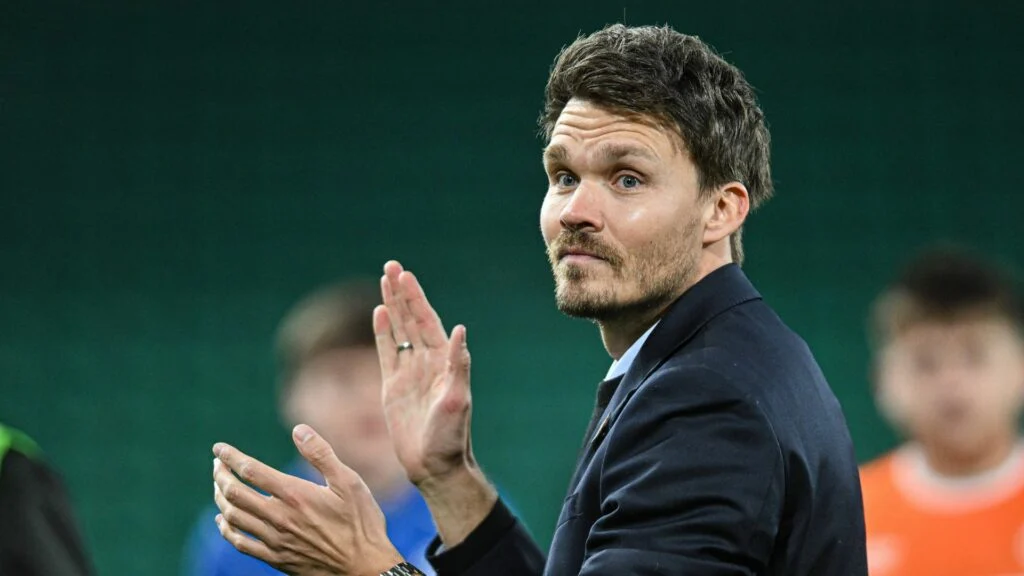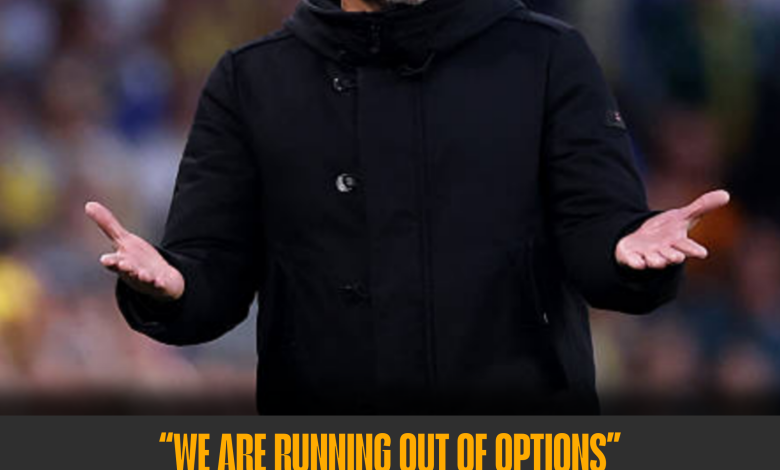
The tension around Leeds United is no longer something you can ignore or downplay. It’s in the performances, it’s in the reactions, and most of all, it’s in the words now coming from Daniel Farke himself.
For weeks, there was a sense that Leeds were simply going through a rough patch — something temporary, something fixable. But that illusion is starting to fade. The tone has changed. The conversations have shifted. And now, even the man at the center of it all appears to be acknowledging a difficult truth.
This didn’t have to happen.
“There were moments earlier in the season where we should have taken more from games,” Farke admitted in a recent reflection — a statement that, on the surface, sounds calm and measured, but underneath carries a heavy implication. Leeds are not just in trouble… they’ve played a part in putting themselves there.
And that’s what makes the current situation so uncomfortable.
There was a time not long ago when Leeds looked like a team finding its rhythm. Performances were improving, confidence was building, and there were flashes of quality that suggested they had enough to steer clear of danger. It wasn’t perfect, but it felt stable.
Then came the missed chances.
Not just one or two — but a pattern. Games where Leeds controlled large spells yet failed to score. Matches where they took the lead but couldn’t hold it. Points that slipped away, quietly at first, then repeatedly. At the time, those moments didn’t seem fatal. Now, they look like warning signs that were never fully addressed.
“Football at this level punishes you for every mistake,” Farke said. “And we’ve made too many in key moments.”
That’s the part that lingers.
Because in a relegation battle, there is no such thing as a harmless mistake. Every dropped point adds pressure. Every missed opportunity narrows the margin for recovery. And Leeds, slowly but surely, have run out of room to breathe.
For a while, there were explanations — and they were valid.
Injuries disrupted consistency. Tough fixtures made momentum difficult. New players needed time to settle. There were reasons to believe that once those issues eased, results would follow.
But football doesn’t wait for perfect conditions.
And now, those explanations are starting to feel like echoes from an earlier part of the season. The games left are fewer. The stakes are higher. And the patience, both inside the club and among supporters, is wearing thin.
“You can talk about circumstances,” Farke hinted, “but at some point, you have to look at what you could have done better.”
It’s a subtle shift in language — but an important one.
Because it signals something fans have already begun to feel: the excuses are no longer enough.
The mood among supporters has changed in a way that’s impossible to miss. What was once cautious optimism has turned into nervous realism. Every match is watched with a different kind of tension now — not just hoping for a win, but fearing the consequences of anything less.
And when results don’t come, the reaction is immediate.
There’s frustration, of course. But more than that, there’s a growing sense of disbelief. How did it get to this point? How did a season that once held promise turn into a fight for survival?
Some fans point to recruitment. Others question tactics. A few still defend the process. But increasingly, the conversation circles back to one idea:
This could have been avoided.
That’s what makes Farke’s admission so powerful. Not because it’s dramatic, but because it aligns with what people are already thinking.
It validates the feeling that Leeds didn’t just fall into this situation — they drifted into it.
And now, they’re stuck in it.
The Premier League has a way of exposing patterns, and Leeds have developed one that’s hard to ignore. Defensive lapses at crucial moments. A lack of cutting edge when it matters most. An inability to turn control into results.
These are not isolated issues. They are recurring themes.
“You don’t get many second chances in this league,” Farke acknowledged. “And we are at a stage where every game demands everything.”
That’s not just a statement — it’s a warning.
Because the margin for error is no longer shrinking. It’s gone.
What makes the situation even more dangerous is the growing unpredictability around them. Teams below are picking up points. Rivals are finding form at the worst possible time for Leeds. The gap that once offered a sense of security has become fragile.
And when a team starts relying on other results, the situation becomes even more uncomfortable.
Leeds are no longer just fighting their own battles — they’re watching everyone else’s too.
There’s still time, of course. That’s the one thing keeping hope alive.
But time alone doesn’t solve anything.
Performances need to change. Results need to come. And most importantly, the mindset has to shift from reflection to action. Because while looking back may explain how Leeds got here, it won’t get them out.
“The focus now has to be on what we can control,” Farke insisted. “There’s no benefit in looking too far back — only in responding the right way.”
It’s the kind of message managers deliver when the situation is delicate. Balanced, composed, but carrying urgency beneath the surface.
The truth is, this is the moment that defines seasons.
Not the early promise. Not the occasional brilliance. But the response when everything is on the line.
Leeds are standing at that point now.
And the question is no longer whether this situation could have been avoided.
It’s whether they can survive it.
Because in the end, football doesn’t care about what could have been. It only responds to what is.
And right now, what is… is a club under pressure, a manager facing questions, and a team running out of chances to get it right.
No more explanations.
No more comfortable narratives.
No more distance from the reality.
Just a fight.
And the outcome of that fight will decide everything.