Alan Shearer’s 14-Word Post About Trent Arnold Sparks Reaction
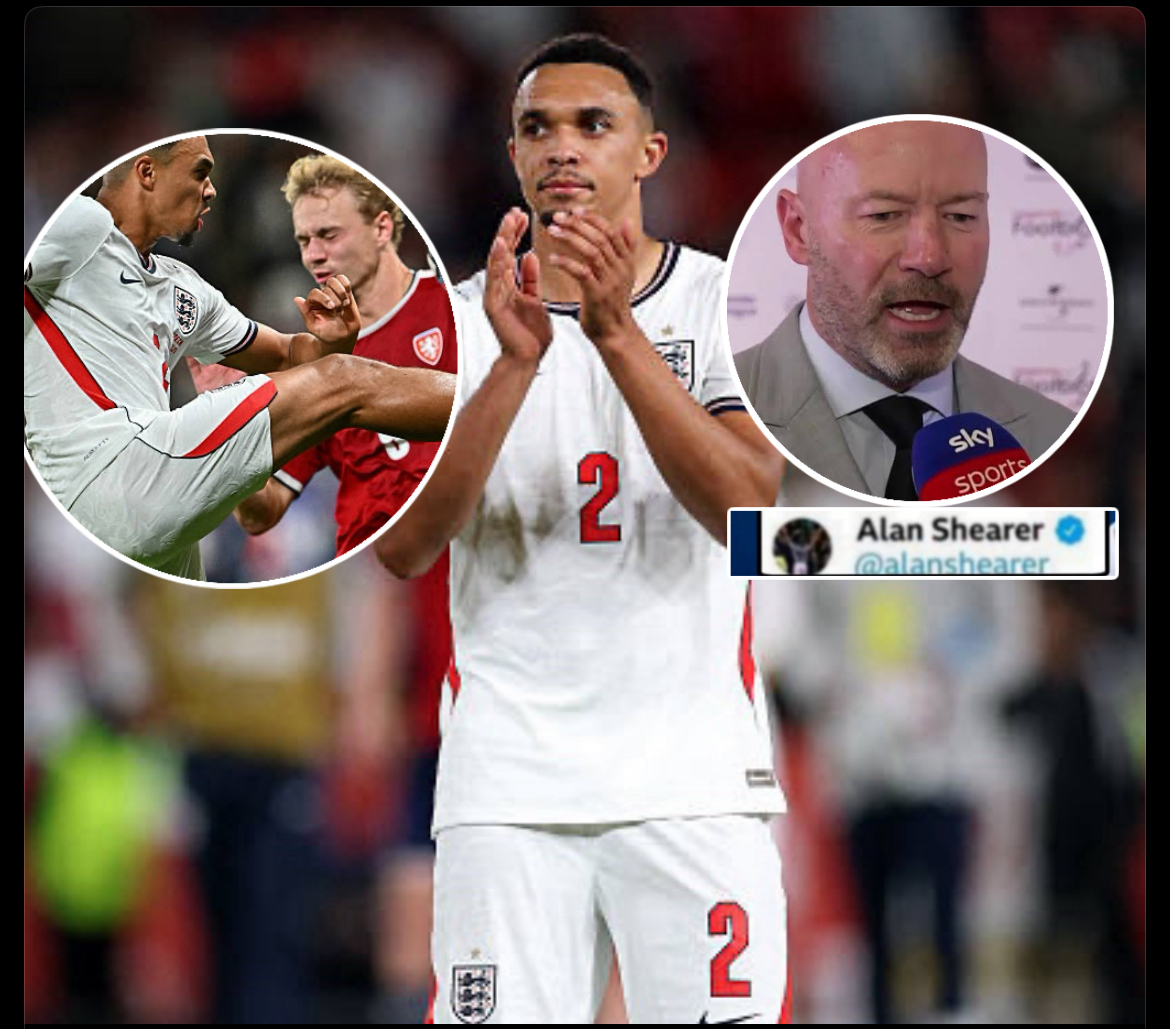
For weeks, the conversation around England has been about selection, balance and which players Thomas Tuchel can trust when the pressure starts to rise.
Then, in Prague, one player quietly reminded everyone why he remains such an interesting option for the Three Lions.
Trent Alexander-Arnold.
The Real Madrid full-back returned to England’s starting XI against Czechia and immediately found himself under the spotlight. It was his first England start in almost two years, and with questions surrounding his international future and his role under Tuchel, there was plenty riding on his performance. (England Football)
And while the 2–0 victory will ultimately be remembered for goals from Anthony Gordon and Harry Kane, one of the biggest talking points from the night was the quality Trent produced when England needed a breakthrough.
His cross for Gordon’s opener was the kind of moment that explains why England keep coming back to the same conversation.
Because when Trent gets time and space to deliver, there are not many players who can produce that kind of ball.
The cross was precise.
The timing was excellent.
And Gordon was able to attack it and head England into the lead shortly after half-time.
It was exactly the sort of contribution that can change the conversation around a player.
But does one excellent moment automatically mean Trent should now be considered an automatic starter?
That is where the debate becomes much more interesting.
THE CASE FOR TRENT
There is a very simple argument for keeping Trent in the team.
Creativity.
England have plenty of talented players, but Trent offers something different from the right side.
He can influence a match without necessarily having to run into the final third every few seconds. His passing range allows him to find forwards from deeper positions, switch the play and deliver crosses that can turn a defensive situation into an attacking opportunity.
Against Czechia, that quality was there for everyone to see.
England had struggled to find a breakthrough before the interval, despite having the numerical advantage after Pavel Šulc was sent off in the first half.
Then came the moment.
Trent chased down possession, turned on the right and delivered the ball into an area where Gordon could attack it.
Gordon did the rest.
England had their breakthrough.
And suddenly, the player who had been the subject of so much selection debate was directly involved in the goal that changed the game. (Reuters)
Anthony Gordon himself praised Trent after the match, highlighting the quality and technique required to produce the assist and saying he had been looking forward to playing with him. (England Football)
That matters because it shows what England’s attacking players can potentially get from Trent.
There is also the question of versatility.
Trent does not have to be used simply as a conventional right-back who spends the entire game hugging the touchline.
Tuchel has already shown that he is willing to use players in different roles depending on the match situation.
After the break against Czechia, Trent operated deeper and Tuchel praised aspects of his performance, including his ability to keep the ball and contribute defensively. (The Guardian)
That gives the England manager another tactical option.
Instead of asking, “Is Trent a good enough defender to play right-back?”, perhaps the better question is:
How can England use Trent’s strengths while giving the team enough defensive security?
That is a very different conversation.
BUT THERE IS ANOTHER SIDE
At the same time, England cannot build a team based purely on individual moments of quality.
This is international football.
The margins are small.
And against the very best opponents, defensive concentration becomes just as important as creativity.
That is why there will still be questions surrounding Trent.
England’s recent matches have shown how quickly defensive problems can become costly. Their 3–2 defeat to Spain immediately before the Czechia game reminded everyone that controlling possession and creating chances is only part of the equation.
The Czechia match also needs to be placed into context.
England played against a side that was reduced to ten men in the first half.
That obviously changed the tactical picture.
It gave England more space and allowed them to control the game more comfortably after the opening goal.
So while Trent’s assist was outstanding, some fans will understandably want to see whether he can reproduce that level of influence against stronger opposition, particularly when England are under pressure without the ball.
That is where the next few matches could become very important.
ONE PERFORMANCE DOESN’T END THE DEBATE
This is probably the most interesting part.
Trent did not walk into Prague and magically erase every question surrounding his England career.
But he did something arguably more useful.
He reminded everyone why the debate exists in the first place.
If a player offers nothing different, there is no real argument for selecting him.
Trent is different.
His passing ability is different.
His crossing is different.
His vision is different.
And his ability to produce a pass that other players might not even attempt makes him a unique tactical option.
But uniqueness alone does not guarantee a starting position.
Tuchel has to decide how much attacking freedom he wants from the full-back position and how much defensive security he requires.
That decision becomes even more complicated when England have several talented options competing for places.
And that is why Trent’s performance against Czechia was so significant.
He has not necessarily answered every question.
He has simply created more questions for Tuchel to answer.
THE GORDON CONNECTION
There was another interesting element to the performance.
The combination with Anthony Gordon.
Gordon has been in excellent form for England, scoring in three consecutive appearances, including against Spain and Czechia. (England Football)
Against Czechia, that relationship with Trent produced the breakthrough.
Gordon’s movement gave Trent something to aim for.
Trent’s delivery gave Gordon the opportunity.
And the result was England’s opening goal.
That is exactly what managers want from attacking partnerships.
It does not have to be complicated.
One player sees the run.
The other trusts the pass.
The move works.
And suddenly England have another attacking route.
Gordon’s comments after the match made the connection even more interesting. He praised Trent’s ability to make that kind of pass and said he would make the same run again. (England Football)
That could be something worth watching in future matches.
WHAT DOES THIS MEAN FOR TUCHEL?
Now comes the difficult part.
Thomas Tuchel has to decide whether Trent’s latest performance deserves another opportunity from the start.
There is no simple answer.
If Tuchel prioritises creativity, progression and the ability to unlock a deep defence, Trent has a very strong argument.
If Tuchel prioritises defensive stability and wants maximum protection from his full-backs, there are reasons to consider other options.
And that is exactly what makes this such a fascinating selection debate.
It is not necessarily about whether Trent is “good” or “bad.”
It is about what England need from that position.
Do they need a defender first?
Do they need an additional creator?
Can they have both?
Can Trent provide enough defensive reliability while still giving England his unique attacking qualities?
Those are the questions Tuchel now has to answer.
THE NEXT TEST
England’s next Nations League fixture is against Croatia on Saturday.
That match could provide another opportunity to judge whether the Czechia performance was the beginning of something or simply one very good night.
One match can create excitement.
Several consistent performances create a pattern.
And that is what Trent now has the opportunity to build.
The most important thing for him is probably consistency.
If he continues to provide the passing quality he showed against Czechia while also demonstrating the defensive discipline required at international level, the conversation around his place in the England team could become increasingly difficult to ignore.
But if his performances become inconsistent, the questions will return just as quickly.
That’s football.
The pressure does not disappear after one assist.
SO, WHAT SHOULD TUCHEL DO?
This is where England fans will disagree.
Some will look at that cross for Gordon and say:
“That is exactly why he has to play.”
Others will look beyond the assist and say:
“One moment of quality should not decide a starting position.”
Both sides have a reasonable argument.
And perhaps that is what makes the situation so interesting.
Trent Alexander-Arnold has not ended the debate.
He has restarted it.
After being out of the England picture for a considerable period, he returned to the starting XI, helped create the opening goal and played his part in a clean-sheet victory.
England won.
Gordon scored.
Kane scored.
And Trent walked away with something almost as valuable as an assist:
another opportunity.
Now it is up to him to make the most of it.
And it is up to Tuchel to decide exactly where that talent fits into his England team.
So, England fans…
Should Trent start against Croatia based on what he showed against Czechia, or should Tuchel consider another option for the next game?
There are genuine arguments on both sides.
What would YOU do? 👇🏴🗣️