SPFL Issues Statement on Rangers vs Kilmarnock VAR Controversy as Replay Questions Emerge
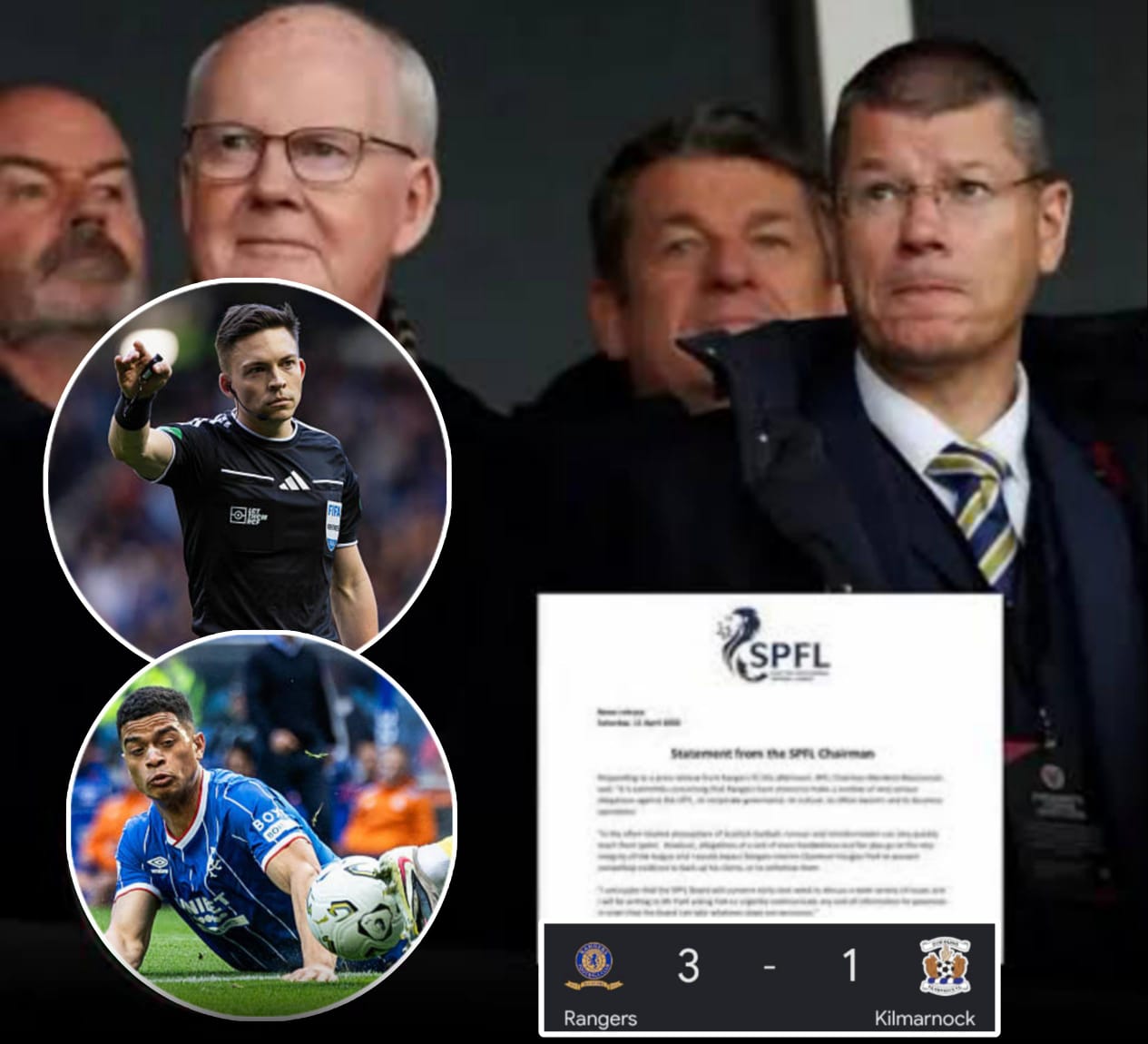
Scottish football is facing intense scrutiny following Rangers’ controversial 3-1 victory over Kilmarnock, with the disputed Kevin Kelsy goal reigniting questions about VAR, refereeing decisions and the accountability of match officials.
The dramatic encounter at Ibrox on Saturday, 10 October 2026, was expected to be remembered for Rangers’ impressive attacking performance and their move to the top of the Scottish Premiership table. Instead, attention has increasingly focused on the incident that allowed Rangers to extend their first-half lead and the questions raised by Kilmarnock manager Neil McCann.
The controversy centres on Kelsy’s 24th-minute goal, which Kilmarnock believed should have been disallowed for a possible handball. The referee allowed the goal to stand after a VAR check, leaving the visitors frustrated and prompting renewed debate about the consistency of officiating in Scottish football.
Reports supplied for this story describe an SPFL review of the incident and the communication surrounding the VAR decision. However, the precise wording and scope of the alleged official statement, as well as any formal decision concerning a replay, require confirmation from the governing body.
With supporters demanding answers and the incident attracting widespread attention, the central question is whether the decision was correct under the laws of the game and whether any procedural failure occurred.
Rangers 3-1 Kilmarnock: How the Match Unfolded
Rangers delivered a strong first-half performance at Ibrox, scoring three times before the interval to put themselves in a commanding position.
Ryan Naderi opened the scoring in the 15th minute, giving the home side an early advantage. Kevin Kelsy then doubled the lead nine minutes later, although the circumstances surrounding his finish would become the main talking point after the match.
Naderi struck again in the 44th minute, completing his brace and giving Rangers a 3-0 lead at half-time.
For Kilmarnock, the three-goal deficit created a difficult challenge. The visitors had opportunities of their own but struggled to turn those chances into goals during the opening period.
Their performance improved after the break, and substitute Nicky Clescenco scored in the 90th minute to reduce the deficit. Nevertheless, Rangers held on for a 3-1 victory that moved them above Celtic in the league standings at that point in the season.
Although the result strengthened Rangers’ position, the disputed second goal became the defining incident of the afternoon.
The Kevin Kelsy Goal That Sparked the Controversy
The flashpoint occurred when Kelsy attempted to control a delivery during Rangers’ attacking move.
The ball appeared to make contact with the forward’s arm during the sequence, prompting questions about whether the goal should have been allowed. Kelsy recovered his balance and completed the move, sending the ball into the net to make it 2-0.
Referee Matthew MacDermid allowed the goal to stand, and the VAR team reviewed the incident without overturning the decision.
For Kilmarnock, the problem was that a possible handball had occurred during the attacking phase immediately preceding the goal. If the contact constituted an offence under the applicable laws, the goal should have been disallowed.
However, handball decisions depend on the precise circumstances of an incident. Not every contact between the ball and a player’s arm constitutes an offence, and officials must assess the relevant criteria rather than rely on a single image.
The position of the arm, the player’s movement, whether the body has been made unnaturally bigger and the specific circumstances of the attacking action can all be relevant.
Consequently, the key issue is whether the available footage established a punishable handball offence and whether the VAR officials had grounds to intervene.
That is the question Kilmarnock want answered.
Neil McCann Breaks His Silence Over the Decision
Kilmarnock manager Neil McCann made his frustration clear after the defeat, questioning the decision to award Rangers’ second goal.
McCann was quoted as saying:
“We gifted Rangers three goals. I’ve got a real problem with the second one — I think it’s a handball.”
His comments reflected his belief that the incident should have been assessed differently.
The Kilmarnock manager also expressed frustration with the interpretation of handball, saying he no longer understood how the rules were being applied.
McCann’s criticism was not an attempt to deny Rangers’ attacking quality. He acknowledged that his own side had made costly mistakes and failed to capitalise on opportunities during the first half.
He also praised the players for responding after the interval, when Kilmarnock showed greater attacking intent and eventually scored through Clescenco.
Nevertheless, the second goal remained a significant grievance.
For managers, a disputed decision can be especially frustrating when it changes the circumstances of a match. Going two goals behind is a very different challenge from trailing by one, particularly away from home against a team with Rangers’ attacking resources.
But while McCann’s complaint is clear, the final assessment of the incident belongs to the appropriate football authorities under the established rules.
What Is the SPFL Reviewing?
The supplied report states that the SPFL is reviewing the Kelsy incident and the VAR communication process.
If a formal review has been opened, its scope will be important.
There are several distinct questions that could be examined. The first is whether the referee’s original decision was correct under the laws of the game. The second is whether VAR followed the required protocol when assessing the incident. The third is whether any procedural failure occurred that requires further action.
These questions should not be confused.
A governing body can review an incident without concluding that the referee made a serious error. Similarly, a decision that remains controversial does not automatically demonstrate that officials breached the rules.
The most useful outcome would be a clear explanation of what the officials reviewed, why the goal was allowed to stand and whether the process complied with the applicable VAR procedures.
At the time of writing, the match result and McCann’s criticism are supported by published match coverage. The precise official wording of the alleged SPFL statement, however, has not been independently established in the sources available for this article.
Readers should therefore distinguish between the reported review and any claim that the governing body has formally admitted an error or initiated disciplinary proceedings.
Could Rangers and Kilmarnock Be Forced to Replay the Match?
The possibility of a replay has become one of the most dramatic aspects of the debate.
However, a controversial refereeing decision does not automatically mean that a football match must be played again.
Football competitions operate under formal regulations governing match administration, refereeing and disputes. The fact that supporters believe a goal should have been disallowed is not, by itself, sufficient to invalidate a completed fixture.
A replay would require an appropriate regulatory basis and a decision made through the relevant procedures. The precise circumstances would matter, including the nature of any alleged breach and whether the applicable rules provide a remedy.
It would therefore be premature to claim that a replay has been ordered, that Kilmarnock have secured the right to one or that Rangers’ three points are about to be removed.
If the authorities establish that a serious procedural breach occurred, they would need to determine what action, if any, is permitted under the governing regulations.
Until an official decision confirms otherwise, Rangers’ 3-1 victory remains the recorded result.
Nevertheless, the controversy highlights a legitimate question for Scottish football: what level of error, if any, should be required before a completed match can be challenged through formal procedures?
That question deserves a transparent answer rather than speculation.
Why the Controversy Matters for Scottish Football
The debate goes beyond the interests of Rangers and Kilmarnock.
VAR was introduced to reduce major errors and help officials make more accurate decisions in important moments. However, when a review produces an outcome that a club considers incorrect, questions about consistency and transparency inevitably follow.
Supporters want to understand why similar incidents can appear to produce different outcomes. Managers want confidence that the laws are being applied consistently. Referees, meanwhile, must make decisions under pressure, sometimes with limited camera angles and difficult interpretations.
The challenge for the governing authorities is to explain decisions without undermining the independence of match officials.
A clear account of the Kelsy incident could help establish whether the controversy resulted from a reasonable interpretation of the rules, insufficient visual evidence or a possible procedural problem.
Without that explanation, competing interpretations are likely to continue circulating among supporters.
The issue is particularly sensitive in a title race, where every point can matter. Rangers’ victory moved them to the top of the standings temporarily, making the circumstances of the result even more significant to rival supporters.
But the importance of the result does not change the standard of evidence required to establish an offence.
The same rules must apply regardless of which club benefits from a decision.
Rangers Have Also Experienced Controversial Decisions
The supplied account also refers to an earlier handball controversy involving Lawrence Shankland, in which a decision reportedly went against Rangers.
Comparisons with previous incidents can be useful when examining consistency, but they need to be based on the details of each case.
Handball decisions can differ because of the position of the arm, the movement of the player, the sequence of play and the applicable law. Two incidents that appear similar in a photograph may not be identical under the rules.
If the Kelsy incident is reviewed alongside earlier decisions, the important question should be whether the same criteria were applied consistently.
The objective should not be to compensate one club for a previous decision or to award an advantage to another. It should be to ensure that the rules are interpreted and enforced fairly.
What Happens Next?
The next stage depends on whether the football authorities provide further information about the incident.
Supporters will want to know whether the SPFL has formally confirmed a review, whether any concerns about VAR procedure have been identified and whether the referee’s decision will receive further scrutiny.
Kilmarnock may continue to seek clarification through the appropriate channels, while Rangers will expect the recorded result to stand unless the relevant authorities determine otherwise under the applicable regulations.
Any announcement about disciplinary action or a possible replay should be judged by its exact wording. A routine review, a formal investigation and a decision to replay a match are three different things.
The distinction is essential to understanding what happens next.
For official updates, supporters can consult the SPFL website and the Scottish FA website, which publishes information about football governance and refereeing matters.
Final Verdict: A Major VAR Debate, but the Replay Question Remains
Rangers’ 3-1 victory over Kilmarnock has reignited debate about handball, VAR and the transparency of refereeing decisions in Scottish football.
Naderi’s brace and Kelsy’s goal helped Rangers secure the result, but the disputed second strike has become the central talking point. McCann’s criticism makes clear that Kilmarnock believe the incident should have been handled differently.
The reported SPFL review adds another dimension to the discussion, although the precise official statement and any decision concerning a replay require direct confirmation.
For now, the priority should be a clear explanation of the decision and the process followed by the officials.
If a breach of the rules is established, the governing bodies can consider the matter under the appropriate regulations. If the officials followed the required procedures and the evidence did not establish an offence, that conclusion should also be explained clearly.
Should Rangers’ goal have been disallowed? Should a serious refereeing or VAR breach ever lead to a replay? And what should the SPFL do to improve confidence in Scottish football’s officiating system?