MARTIN O’NEILL PUT ON THE SPOT AS BRUTAL CELTIC QUESTIONS SPARK EXPLOSIVE RESPONSE – MESSAGE REVEALED!
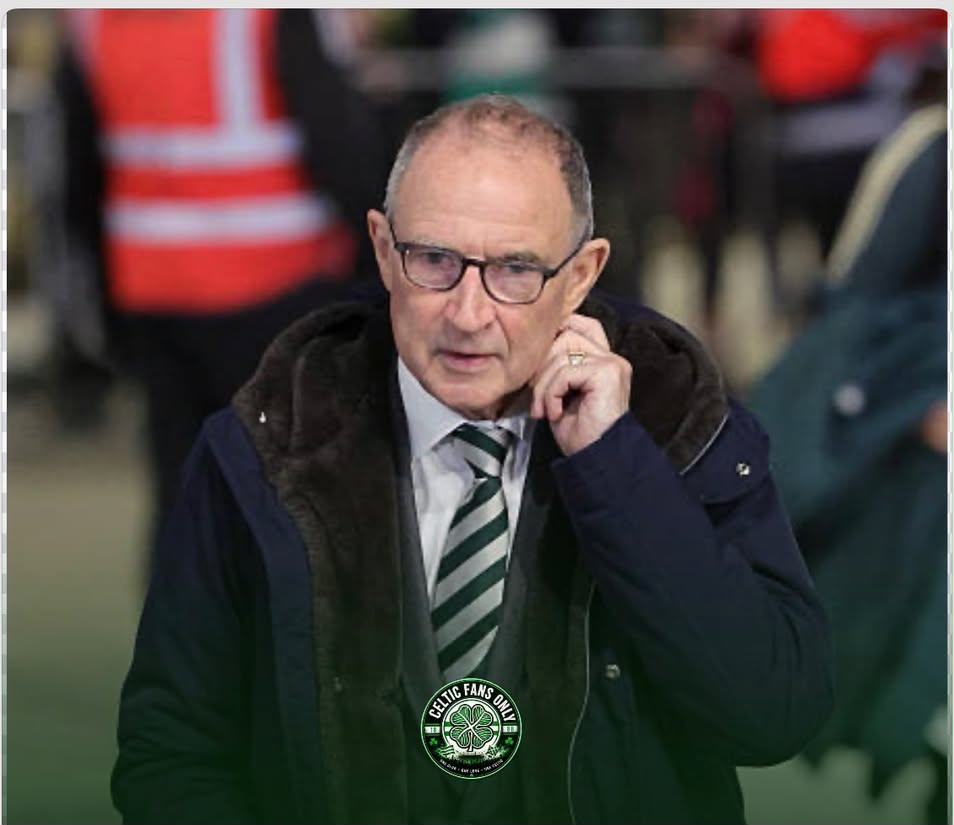
MARTIN O’NEILL PUT ON THE SPOT AS BRUTAL CELTIC QUESTIONS SPARK EXPLOSIVE RESPONSE – MESSAGE REVEALED!
Martin O’Neill has been confronted with some uncomfortable questions surrounding Celtic’s progress, with the experienced manager offering a revealing response as concerns continue to emerge over the team’s performances, attacking structure and European struggles.
The Celtic manager is facing an increasingly interesting situation at Parkhead. Although the Hoops remain in a strong position domestically, recent performances have raised questions about whether the current squad is functioning as effectively as supporters would expect.
And this time, the questions have not come exclusively from outside the club.
Celtic captain Callum McGregor has already expressed concerns about the team’s attacking structure, particularly the difficulty of establishing clear roles for the forwards. His comments have now received a response from O’Neill, who has openly admitted that he agrees with his captain and insists that the situation needs to be sorted out.
It is a significant development at a time when Celtic are attempting to balance their domestic ambitions with an increasingly disappointing European campaign.
With supporters demanding consistency and greater control in important matches, attention is turning towards O’Neill and the decisions he makes over the coming weeks.
But what exactly is happening at Celtic, and what did the manager say when confronted with questions about the club’s progress?
CELTIC’S PERFORMANCES RAISE UNCOMFORTABLE QUESTIONS
On paper, Celtic’s domestic position remains encouraging.
The Scottish champions are four points clear at the top of the Premiership, maintaining an advantage over Rangers despite dropping points in their recent encounter with Dundee United.
However, the league position does not tell the entire story.
Celtic’s 2-2 draw against Dundee United on Wednesday, October 28, was another reminder that there are problems O’Neill still needs to address.
The Hoops found themselves trailing 2-1 at half-time, forcing the manager into attacking changes as he attempted to rescue the situation.
Although Celtic eventually recovered to secure a point, the performance raised questions about the team’s organisation, attacking balance and ability to control matches.
For a club with Celtic’s expectations, simply collecting points is not always enough to silence criticism.
Supporters want to see a team capable of dominating opponents, creating opportunities consistently and maintaining control when matches become difficult.
The concern is that Celtic have occasionally looked vulnerable when opponents apply pressure, with the team struggling to maintain possession and dictate the rhythm of games.
These concerns have become particularly noticeable when comparing their domestic performances with their European results.
EUROPEAN CAMPAIGN BECOMES A MAJOR CONCERN
Perhaps the biggest issue surrounding O’Neill’s current Celtic side is what has been happening in Europe.
Celtic have lost all three of their opening Europa League matches, leaving themselves with a difficult challenge if they are to revive their hopes of progressing in the competition.
Their latest disappointment came against Celta Vigo, where the Scottish champions suffered a 2-1 defeat despite initially taking the lead.
Mika Baur put Celtic ahead shortly after half-time, creating an opportunity for O’Neill’s side to take control of the contest.
However, the advantage did not last.
Javi Rodriguez scored twice in three minutes to turn the match around, exposing Celtic’s difficulties in responding when their opponents increased the pressure.
The defeat was particularly frustrating because Celtic had entered the encounter following an impressive 7-1 victory over Hearts.
That domestic performance had created optimism that O’Neill’s side were beginning to find their rhythm.
Instead, their European struggles returned.
Following the defeat, questions were raised about whether Celtic currently possess the individual quality and collective organisation required to compete effectively against stronger European opposition.
Former Scotland international James McFadden questioned the team’s ability, while former Celtic goalkeeper Pat Bonner also expressed concerns about the quality available to O’Neill.
These assessments have added another dimension to the debate surrounding the manager.
Is the problem primarily the players, the tactical organisation, recruitment or the manager’s approach?
That is a question Celtic supporters will continue debating as the season progresses.
CALLUM McGREGOR’S COMMENTS PUT O’NEILL IN THE SPOTLIGHT
Interestingly, one of the most revealing developments has come from Celtic’s own captain.
Callum McGregor has spoken about the difficulties surrounding the team’s attacking arrangements, particularly the lack of clearly established roles among the forwards.
His comments followed the 2-2 draw against Dundee United, during which O’Neill initially deployed three centre-forwards.
McGregor suggested that the players were not always operating in positions that suited their natural profiles.
He explained that some players were behaving like wingers while others were operating more like conventional strikers, creating difficulties for the overall structure.
He also warned that Celtic could become too open, describing their football as becoming a bit like basketball.
That particular observation is significant.
When a team loses control of possession and repeatedly moves from one attacking situation to another without establishing dominance, it can create opportunities for opponents to exploit defensive spaces.
For Celtic, this has become an issue that requires attention.
McGregor’s comments were not simply about individual performances. They highlighted a wider concern about how the team is being organised and whether the attacking players are being used in their most effective positions.
And when the club captain publicly identifies such an issue, it naturally attracts attention.
MARTIN O’NEILL’S RESPONSE AS HE ADDRESSES THE QUESTIONS

O’Neill has now responded to the concerns, and his comments provide an interesting insight into how he views the current situation.
Rather than dismissing McGregor’s observations, the Celtic manager admitted that he agreed with his captain.
Speaking ahead of Sunday’s encounter with Falkirk, O’Neill acknowledged that some of the attacking players were still learning how to operate alongside one another.
He specifically addressed the situation involving Callum Osmand and Camilo Duran.
O’Neill explained that Osmand is essentially a centre-forward who would probably benefit from playing alongside a stronger attacking partner.
He also acknowledged that Duran is naturally a centre-forward.
The manager’s explanation suggests that Celtic are still working towards finding the right combinations and establishing the most suitable positions for their attacking options.
His response was particularly interesting because it acknowledged that the team has not yet reached the level of understanding required.
O’Neill said:
“We’re trying to sort it out. We’ll sort it out.”
He also indicated that several players have not yet had sufficient opportunities, suggesting that the squad will become more settled as the season progresses.
Among those mentioned were Jordan Lotomba and young Joel van den Berg, who had returned to training.
The manager believes that the coming weeks, leading towards Christmas, will provide opportunities to establish the right combinations.
However, his response also leaves an important question hanging over Celtic.
How long will it take before the team begins to function consistently?
Supporters will undoubtedly want to see improvements rather than repeated explanations about players learning their roles.
THE KASPER HOGH QUESTION ADDS ANOTHER DIMENSION
Another name attracting attention is Kasper Høgh.
The striker was among the three centre-forwards selected by O’Neill against Dundee United, alongside Osmand and Duran.
However, the manager’s decision to remove both Osmand and Høgh at half-time raised questions about the effectiveness of the original arrangement.
With Celtic trailing 2-1, O’Neill decided to change the attacking structure.
Duran was moved into the central striking position, while Jota and Hasseim Hassan were introduced to provide additional width and attacking movement.
The changes helped Celtic recover, with the team eventually securing a 2-2 draw.
Nevertheless, the situation has created an interesting selection debate ahead of the Falkirk match.
Should O’Neill continue experimenting with multiple centre-forwards, or would Celtic benefit from selecting a more conventional attacking arrangement?
Høgh’s position is particularly interesting because the Danish forward is competing for opportunities in an attack that has yet to establish a settled structure.
The manager must decide whether to continue giving the striker opportunities alongside other central forwards or introduce a different combination that offers greater balance.
There is also the question of how Osmand and Duran fit into the plans.
O’Neill has already acknowledged that the players have different attacking profiles.
Consequently, Sunday’s encounter could provide another indication of whether the manager is beginning to settle on his preferred attacking formation.
SFA CONTROVERSY ADDS TO THE PRESSURE AT PARKHEAD
Away from the football itself, Celtic are also dealing with another significant issue involving the Scottish Football Association.
On October 29, the SFA confirmed that Celtic and Rangers had both failed to overturn their stadium closure punishments following the disorder that occurred after their Scottish Cup quarter-final at Ibrox in March.
The appellate tribunal upheld the requirement for both clubs to play their next home Scottish Cup matches behind closed doors.
Both clubs must also pay £100,000 in compensation to their respective visiting opponents, although the suspended additional stadium closure and associated suspended payment were removed.
Celtic have strongly questioned the proportionality of the punishment.
The controversy has generated considerable discussion among supporters, particularly regarding the circumstances surrounding the disorder and the responsibilities of the two clubs.
O’Neill also addressed the subject during his Friday press conference, raising questions about the contrasting reactions to pitch invasions by referring to celebrations at Fleetwood Town following their cup victory over Arsenal.
Although the SFA controversy is separate from Celtic’s performances on the pitch, it represents another difficult issue facing the club.
The manager must therefore maintain his focus on football while the club deals with growing discussions surrounding supporters, disciplinary decisions and its wider relationship with the authorities.
FALKIRK MATCH COULD PROVIDE AN IMPORTANT ANSWER
Celtic now turn their attention towards Sunday’s Scottish Premiership encounter against Falkirk.
The match comes at an interesting time for O’Neill.
His team remain four points clear at the top of the league, but the recent draw against Dundee United and disappointing European results mean there is little room for complacency.
Falkirk will also provide a difficult test.
They have recorded three consecutive league victories and will be looking to make life uncomfortable for the visiting champions.
For O’Neill, the match presents an opportunity to demonstrate that the attacking problems identified by McGregor are being addressed.
Will Kasper Høgh retain his place?
Will Osmand and Duran feature together again?
Could O’Neill make further changes to his attacking arrangement?
These are some of the questions supporters will be watching closely.
With Rangers and Hearts involved in League Cup semi-final action this weekend, Celtic also have an opportunity to extend their advantage at the top of the Premiership.
A convincing performance would provide encouragement, particularly after the frustrations of Wednesday’s encounter.
However, another unconvincing display would inevitably bring renewed attention to the manager’s decisions.
ARE CELTIC SUPPORTERS RIGHT TO QUESTION MARTIN O’NEILL?
This is perhaps the biggest question emerging from the current situation.
O’Neill is undoubtedly one of the most recognisable managerial figures in Celtic’s modern history.
His experience, previous achievements and understanding of the club remain important assets.
There is also an argument that he deserves sufficient time to develop the squad and establish the combinations he believes will work.
After all, Celtic are still leading the Premiership, and their domestic position suggests that the season is far from being a disaster.
However, football is ultimately judged by performances and results.
Three consecutive Europa League defeats, difficulties controlling certain domestic matches and uncertainty surrounding the attacking structure are legitimate issues that require attention.
McGregor’s comments have made the debate even more interesting because they have brought the team’s structural problems into the public conversation.
O’Neill has acknowledged those concerns rather than pretending everything is perfect.
But acknowledging a problem and solving it are two different things.
Celtic supporters will want to see evidence that the manager’s plans are producing improvements.
The coming fixtures could therefore become important in shaping the conversation around his leadership and the direction of the team.
For now, there is no confirmation that Celtic are considering replacing O’Neill, and the manager has publicly indicated that he intends to work through the current difficulties.
Nevertheless, the questions surrounding his tactical decisions, European performances and the development of the squad are unlikely to disappear immediately.
One thing is certain: Martin O’Neill has acknowledged that Celtic have issues to resolve. The next challenge is proving that he has the answers.
And with Falkirk waiting on Sunday, supporters will not have to wait long to see what changes, if any, he makes.