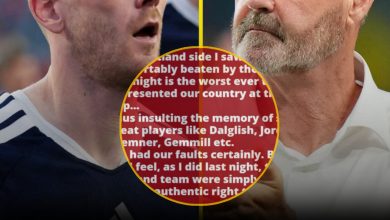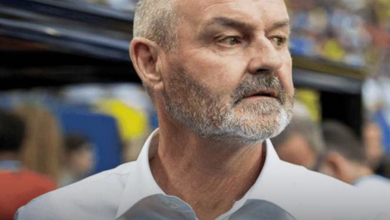
Steve Clarke has revealed the heartbreaking reason behind his decision to resign as Scotland manager following the nation’s World Cup exit, admitting he had already decided to walk away if his side failed to reach the knockout stages.
The 62-year-old stepped down just minutes after Scotland’s elimination from the 2026 FIFA World Cup was confirmed, bringing an end to a remarkable seven-year spell that transformed the national team.
Clarke Had Already Made His Decision
Speaking in an emotional farewell video released after his resignation, Clarke admitted that his future had effectively been decided before the tournament even began.
Although he had recently signed a new four-year contract with the Scottish FA, the experienced coach revealed the extension was designed to provide stability for the squad rather than guarantee his own future.
“Before signing the contract it was a case of trying to give a little bit of comfort to the players, knowing that we could continue the journey,” Clarke explained.
“But I always had it in my head that if we didn’t get out of the group, something we’ve tried to do across three tournaments, it would probably be the time to step away.”
He also admitted that qualification for the knockout rounds would likely have changed his mind, insisting he would have been happy to continue leading Scotland into another major tournament.
An Emotional Goodbye
One of the most difficult moments came when Clarke informed his players that he was leaving.
The Scotland squad and coaching staff gathered in a hotel meeting room in Charlotte, where Clarke delivered the news in person before making any public announcement.
“It was an emotional moment when you tell your players you’re stepping away after such a journey together,” he said.
“Some of the boys have been with me right from the start, seven or eight of them, so it was important to me that they knew first.”
Captain Andy Robertson was informed shortly before the meeting, allowing him the opportunity to address the squad and pay tribute to the departing manager.
Clarke’s Final Message
Before leaving, Clarke urged his players not to rely on the expanded World Cup format or favourable qualification routes in future campaigns.
Instead, he challenged the squad to continue earning qualification on merit, just as they had throughout his time in charge.
“Our qualification record is probably unsurpassed in Scottish football history,” Clarke said.
“All I said to the boys was not to use the free pass to get to the next tournament. Make sure you qualify in your own right because we do that and do it well, and it gives you a good feeling.”
World Cup Ends in Disappointment
Scotland’s campaign began with optimism after defeating Haiti 1-0 in their opening group match.
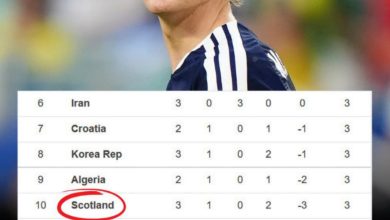
However, defeats to Morocco and Brazil left Steve Clarke’s side finishing third in Group C with just three points.
They were forced to wait for results elsewhere to determine their fate but eventually finished 11th out of the 12 third-placed teams, missing out on one of the eight knockout places.
The exit extended Scotland’s long-standing record of never progressing beyond the group stage at a major international tournament.
Mixed Reaction to Clarke’s Decision
Not everyone agreed with the timing of Clarke’s resignation.
Former Scotland striker Duncan Ferguson questioned why the manager had signed a long-term contract only weeks before stepping down.
“I think he’s jumped the gun. He’s resigned too quickly. He signed his four-year contract. Why have you just signed a four-year deal and walked out? I don’t get that part,” Ferguson said.
Despite the criticism, Clarke departs having restored belief in the national team, leading Scotland to three major tournaments after decades of frustration and ending the country’s 23-year wait to return to the World Cup.
End of an Era
Although Scotland’s World Cup campaign ended in disappointment, Clarke leaves as one of the most successful managers in the nation’s modern history.
His farewell made clear that the decision was not made in the heat of defeat, but was one he had accepted long before the tournament began.
For Scotland, attention now turns to finding the man who can build on the foundations Clarke leaves behind and finally guide the national team beyond the group stage of a major tournament.