Scottish football may have entered a brand-new chapter, but the emotions surrounding Steve Clarke’s departure are far from over.
Just days after Scotland’s disappointing exit from the 2026 FIFA World Cup, the man who led the national team through one of its most memorable modern eras made the decision to step down as head coach. While supporters continue to debate whether the resignation came too late or was the right decision, an unexpected voice has now entered the conversation.
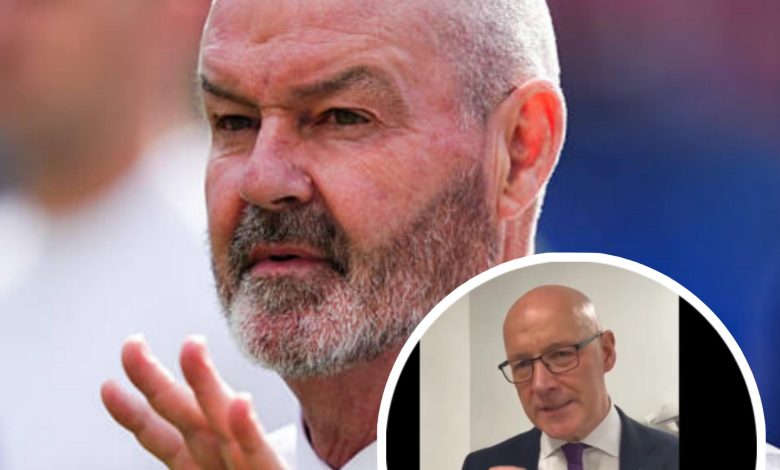
Scotland’s First Minister, John Swinney, has publicly praised Steve Clarke and wished him well following his departure—a message that has added a fresh perspective to a story that has dominated Scottish football since the World Cup ended.
With emotions still running high, Swinney’s comments have reminded many supporters that Clarke’s legacy is far more complicated than the disappointment of one tournament.
A World Cup Campaign That Ended in Heartbreak
Expectations were high heading into the tournament.
Scotland had worked tirelessly to qualify and arrived in North America hoping to make history. Instead, the campaign ended much earlier than fans had hoped, bringing frustration, disappointment and renewed questions about the direction of the national team.
The elimination sparked fierce debate across social media, radio phone-ins and football forums. Some supporters believed Scotland had underachieved given the quality within the squad. Others argued that Clarke had already taken the team as far as possible.
As pressure mounted following the World Cup exit, it became increasingly clear that change was coming.
Eventually, Steve Clarke announced his resignation, bringing an end to a managerial spell that lasted seven years.
The End of an Era
When Steve Clarke accepted the Scotland job in 2019, expectations were modest.
The national team had failed to qualify for major tournaments for more than two decades, and confidence among supporters had reached a low point.
Few could have predicted what would happen next.
Under Clarke, Scotland qualified for UEFA Euro 2020—the country’s first major tournament appearance since the 1998 FIFA World Cup. Although the tournament itself was delayed by the COVID-19 pandemic, qualification alone was celebrated as one of the greatest moments in modern Scottish football.
He followed that achievement by leading Scotland to UEFA Euro 2024, making it back-to-back European Championship appearances.
Then came another historic milestone.
Scotland secured qualification for the expanded 2026 FIFA World Cup, ending the nation’s 28-year absence from football’s biggest stage.
Those achievements alone ensured Clarke’s place in Scottish football history.
Yet football is often remembered for its most recent results, and the disappointment of the World Cup proved too difficult to escape.
John Swinney Breaks His Silence
While many expected politicians to avoid commenting on football matters, Scotland’s First Minister chose to acknowledge Clarke’s contribution.
Speaking publicly after the resignation, Swinney praised Clarke’s years of service and wished him every success for the future.
He also joked that despite the growing discussion about who should replace Clarke, he was far too busy with politics to consider becoming Scotland’s next manager himself.
The light-hearted remark quickly caught attention, but it was his respectful tribute that resonated most.
Rather than focusing solely on the World Cup disappointment, Swinney highlighted the years of commitment Clarke had given to the national side and the memories created along the way.
For many supporters, it was a reminder that one difficult tournament should not erase everything that came before it.
Fans Remain Divided
Despite the respectful message from the First Minister, opinions among Scotland supporters remain deeply divided.
Some believe Clarke deserves enormous credit for rebuilding belief within the national team.
After years of disappointment, he restored pride, guided Scotland back to major tournaments and helped develop a squad capable of competing on the international stage.
Others feel the time for change had already arrived.
Critics argue that Scotland failed to make the most of key opportunities at the World Cup and questioned some tactical decisions throughout the tournament.
Many fans accepted that while Clarke’s achievements should be recognised, a fresh voice may now be necessary to take the next step.
The debate shows no sign of ending anytime soon.
A Legacy That Will Be Remembered
Football often moves quickly.
Managers arrive.
Managers leave.
Results change almost every week.
But Steve Clarke’s impact on Scottish football cannot simply be measured by the final matches of his reign.
He inherited a team that had become accustomed to missing major tournaments.
He leaves behind a national side that now expects to compete on the biggest stages.
That cultural shift may ultimately become one of his greatest achievements.
Young supporters have grown up watching Scotland at European Championships and the World Cup—experiences that previous generations waited decades to witness.
That change matters.
Regardless of where opinions fall regarding his resignation, Clarke undeniably changed expectations around the Scotland national team.
Attention Turns to the Future
With Clarke gone, attention has quickly shifted toward finding Scotland’s next manager.
Supporters have already begun discussing potential replacements, with several experienced coaches linked by fans and the media.
The Scottish Football Association now faces one of its biggest appointments in recent years.
Whoever takes over will inherit a talented squad filled with experienced internationals and promising young players.
But they will also inherit enormous expectations.
Qualifying for tournaments is no longer viewed as an impossible dream.
It is now the minimum expectation.
The next manager must build upon the foundation Clarke created while addressing the shortcomings exposed during the World Cup.
That balancing act will not be easy.
Respect Amid Disappointment
John Swinney’s message may not erase the frustration surrounding Scotland’s World Cup exit, but it has provided a moment of perspective.
Football is built on passion, and disappointment naturally leads to criticism.
Yet moments like this also offer an opportunity to recognise years of dedication and achievement.
Steve Clarke’s resignation closes one chapter in Scottish football history.
His tenure included unforgettable qualification campaigns, emotional victories and the restoration of belief across the country.
The World Cup exit will undoubtedly remain part of that story.
But it is unlikely to define it entirely.
What Happens Next?
As Scotland begins its search for a new head coach, supporters will watch every development closely.
The next appointment could shape the national team for years to come.
Can the new manager build on Clarke’s foundations?
Will Scotland continue qualifying for major tournaments?
Can this talented generation finally produce a deep run on the international stage?
Those questions remain unanswered.
What is certain, however, is that Steve Clarke’s departure marks the end of one of the most significant managerial reigns in modern Scottish football.
And while fans continue to debate his legacy, Scotland’s First Minister has chosen to focus on gratitude rather than criticism.
Sometimes, amid all the noise surrounding football, a simple message of respect says more than any heated debate ever could.
The Steve Clarke era is over.
The next chapter for Scotland has officially begun—and the entire football nation will be watching.