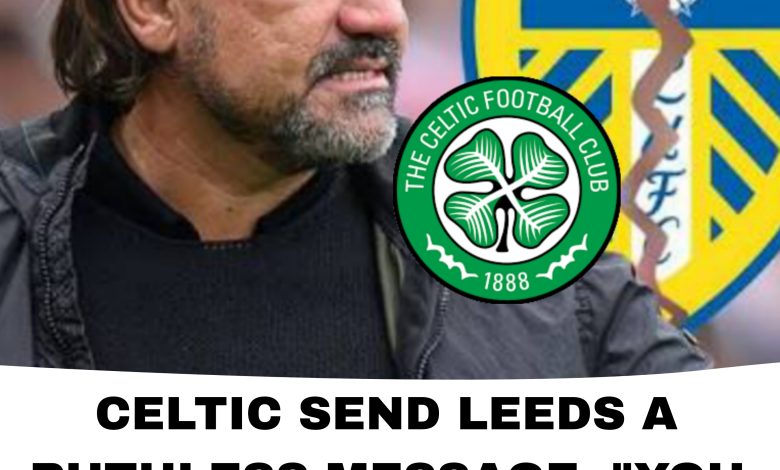
Celtic Reject Leeds United Friendly Proposal Over Bitter 2018 Transfer Fallout
A surprising chapter in the relationship between Celtic and Leeds United has reportedly resurfaced after the Scottish champions turned down a request to play a pre-season friendly, with the decision believed to be linked to an unresolved transfer saga dating back to 2018.
What initially appeared to be a routine invitation for a summer friendly has quickly become one of the biggest talking points of the pre-season, as old tensions between the two clubs have allegedly resurfaced.
According to reports, Leeds United approached Celtic in the hope of arranging a competitive pre-season fixture that would benefit both sides ahead of the new campaign. With both clubs preparing for demanding seasons, the proposed match was viewed as an ideal opportunity to test their squads before the new season gets underway.
However, Celtic reportedly declined the invitation.
Sources close to the situation insist the decision had little to do with scheduling or football preparations. Instead, it is believed to stem from a controversial transfer involving defender Bayo Youssouf in 2018 that left a sour taste at Celtic Park.
Unlike previous reports suggesting Celtic refused to sell the player, club insiders claim the Scottish champions were actually willing to let the deal go through after reaching an agreement with Leeds. Bayo Youssouf travelled to complete the move, with both clubs expecting the transfer to be finalised.
However, the move unexpectedly collapsed when Leeds sent the defender back to Glasgow, claiming he had failed his medical examination.
While Leeds maintained the medical concerns were genuine, sources close to Celtic have long believed the explanation was simply an excuse to back out of the transfer. The Scottish club reportedly felt blindsided after believing the deal had been virtually completed.
A source familiar with the situation claimed the events of 2018 have never been fully forgotten within Celtic’s hierarchy.
“Everything had been agreed, and we believed the transfer was done,” the source reportedly said. “Then the player was sent back because Leeds claimed he failed his medical. Many at the club never accepted that explanation and felt there was more to it than what was made public.”
The source added that while no official statement has ever been made regarding the incident, the disappointment from the failed transfer lingered for years.
“Football is built on trust between clubs. When deals collapse at the final stage under those circumstances, people remember. That history inevitably influences relationships, even years later.”
Neither club has officially commented on the reports, but the story has sparked widespread debate among supporters in both Scotland and England.
Many Celtic fans believe the club had every reason to feel frustrated after seeing a deal fall apart at the final hurdle, especially after allowing the player to travel to complete the transfer. Others argue that if Leeds genuinely had concerns following the medical, they were entitled to withdraw from the agreement.
For Leeds supporters, the reported rejection of the proposed friendly will come as a disappointment, particularly with both clubs looking for quality opposition during pre-season. A meeting between the two historic clubs would have offered valuable preparation and an entertaining spectacle for supporters.
Instead, the fixture now appears unlikely to happen, with Celtic expected to continue searching for alternative opponents as they finalise their summer schedule.
Whether the failed 2018 transfer remains the true reason behind Celtic’s reported decision may never be officially confirmed. But if the reports are accurate, it serves as another reminder that in football, transfer business can leave lasting scars, influencing relationships between clubs long after the paperwork has been put away.