Football is meant to bring joy, tension, heartbreak, and celebration—but sometimes it also brings uncomfortable truths. That was exactly the case after Celtic’s dramatic Scottish Premiership title win, when an emotional post-match interview sparked intense reactions among supporters and pundits alike.
What should have been a night of pure celebration quickly turned into a moment of reflection, controversy, and discomfort for many Celtic fans watching at home.
A Dramatic Title Win That Turned Chaotic
Celtic secured the Scottish Premiership title in dramatic fashion, defeating Hearts 3–1 in a tense final-day showdown. The match itself was already loaded with pressure—Hearts needed just a draw to win their first league title in decades, while Celtic were fighting until the final minutes.
But the real drama came after the final whistle.
As Celtic sealed victory with late goals, fans flooded the pitch in celebration. What followed was chaotic scenes at Celtic Park, with reports of confrontation between supporters and Hearts players, leading to claims of a “menacing” and “unacceptable” atmosphere.
Hearts later said their players experienced “serious physical and verbal abuse,” prompting official complaints and investigations.
The Emotional Interview That Changed the Tone
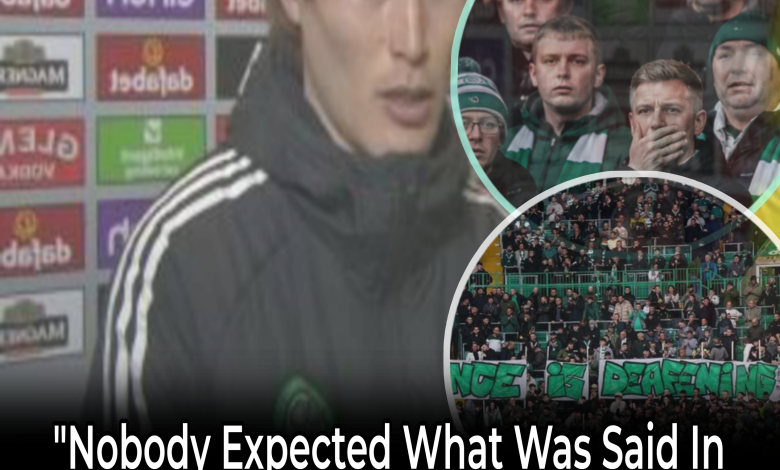
In the aftermath, Celtic manager Martin O’Neill gave an emotional interview that quickly became the center of debate.
Instead of focusing purely on celebration, O’Neill pushed back strongly against criticism of the club and its supporters. When asked whether the scenes had “embarrassed Scottish football,” he dismissed the claim, calling it “nonsense.”
He defended the fans’ passion and insisted that the focus should remain on Celtic’s achievement rather than the pitch invasion controversy.
But for many viewers—especially Celtic supporters—the tone felt unexpected. Rather than a unifying victory message, the interview leaned into defensiveness and disagreement at a sensitive moment.
And that’s where the discomfort began.
Why Fans Felt Uneasy
Celtic fans are no strangers to passion and intensity, but this situation created mixed emotions:
1. Celebration vs. Responsibility
Some fans felt torn between celebrating a huge title win and acknowledging that the post-match chaos had overshadowed the football itself.
Reports of confrontations and safety concerns involving opposing players made the situation more serious than a typical pitch invasion.
2. The Manager’s Strong Language
O’Neill’s firm rejection of criticism (“nonsense”) divided opinion. While some appreciated his loyalty to supporters, others felt the timing and tone lacked sensitivity given the seriousness of the allegations being discussed.
3. Reputation of the Club
Modern football is heavily shaped by media narratives. Many fans worried that the emotional response would deepen negative perceptions of Celtic supporters, especially after already heated debates around fan behavior in recent seasons.
The Bigger Picture: Football Emotion vs. Boundaries
This incident highlights a long-standing tension in football culture:
Fans want emotional, spontaneous celebration
Authorities and opposition clubs expect controlled, safe environments
Managers are often caught between defending supporters and acknowledging criticism
Celtic’s situation sits right in the middle of that conflict.
While the title win was historic, the aftermath raised questions about how celebrations should be managed in high-stakes matches—especially when rival teams and emotions collide.
Hearts’ Reaction Added Fuel to the Fire
Hearts were deeply critical of the situation, describing the scenes as “shameful” and claiming their players were left shaken.
Their officials called for strong action, arguing that the integrity and safety of the game had been compromised.
That response intensified scrutiny on Celtic, placing even more pressure on the emotional interview that followed.
Final Thoughts
What makes this story so powerful is not just the football, but the emotions surrounding it.
Celtic’s dramatic title win should have been a moment of pure celebration. Instead, it became a talking point about fan behavior, responsibility, and how leaders communicate in emotionally charged moments.
For many supporters, the uncomfortable feeling didn’t come from the win itself—but from realizing how quickly joy can be complicated when football spills beyond the pitch.