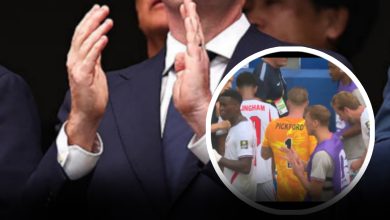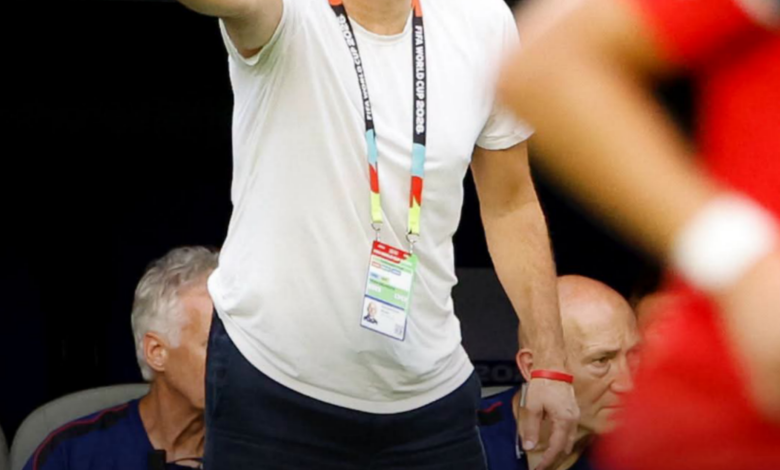
Norway manager Ståle Solbakken has spoken out after a controversial moment during his side’s 2-1 extra-time defeat to England in the World Cup quarter-finals.
The incident centred on Jude Bellingham’s crucial first goal, with Norway convinced the strike should never have stood after new footage appeared to show the ball making contact with the overhead Spidercam cable before the move began.
Bellingham Rescue Sends England Through
England booked their place in the World Cup semi-finals after Bellingham scored twice to inspire a comeback victory over Norway.
The Three Lions had fallen behind after Andreas Schjelderup’s looping cross drifted over Jordan Pickford and into the net before Bellingham levelled just before half-time.
His equaliser proved to be the turning point before the Real Madrid midfielder grabbed the winner in extra time.
Norway Furious Over Controversial Goal
Norway’s frustrations focused on the build-up to England’s first goal.
Television replays from a different angle appeared to show the ball clipping the cable supporting the overhead Spidercam before dropping to Elliot Anderson, who launched the attack that eventually ended with Bellingham finding the net.
Under FIFA laws, play should restart with a drop ball if the ball makes contact with an outside object such as the overhead camera system.
Norway players immediately protested, while Solbakken and goalkeeper Ørjan Nyland were seen remonstrating with referee Clément Turpin after the goal was awarded.
FIFA Explains Decision
FIFA later released an explanation for why the goal stood.
Using the tournament’s Connected Ball technology, officials stated there was no evidence the ball had touched the overhead cable.
A FIFA statement read:
“Before England’s goal against Norway, the sensor in the Connected Ball showed no peak in the heartbeat data while the ball was in the air, therefore there was no evidence that the ball touched the overhead wire.”
The sensor is designed to detect even the slightest contact with the ball.
Solbakken Gives His Verdict
Despite FIFA’s explanation, Solbakken admitted he still believes the ball touched the cable.
Speaking after the match, he said:
“Many on the bench reacted immediately. I wasn’t one of them.”
He added:
“If FIFA says there was no sound from the chip, what can I really say against that? The ball suddenly drops straight down. It looked very strange.”
Although the Norwegian boss accepted FIFA’s technology, he remained unconvinced by what he had seen.
Tuchel Admits England Were Fortunate
England manager Thomas Tuchel also acknowledged his side benefited from key moments during the match.
He said:
“There’s a chip in the ball that can detect even the slightest touch. If it says there wasn’t contact, then that’s the explanation.”
Tuchel also admitted England enjoyed some fortune throughout the contest, saying they were “lucky in decisive moments.”
Odegaard Left Feeling Bitter
Norway captain Martin Ødegaard echoed his manager’s frustrations after the final whistle.
The Arsenal midfielder admitted the controversial decisions made the defeat even harder to accept.
“It’s bitter,” Ødegaard admitted.
He added that losing through such fine margins was much tougher than simply being outplayed, although he praised his teammates for producing Norway’s best World Cup campaign in decades.
The Bottom Line
The debate surrounding England’s equaliser is unlikely to disappear anytime soon. While FIFA insists Connected Ball technology proved there was no contact with the overhead camera cable, Norway remain convinced the goal should have been ruled out. Despite the controversy, England march into the World Cup semi-finals, while Norway are left wondering what might have been.