Scotland Fans Call Out Findlay Curtis After Penalty Appeal Sparks Diving Debate in Slovenia Defeat
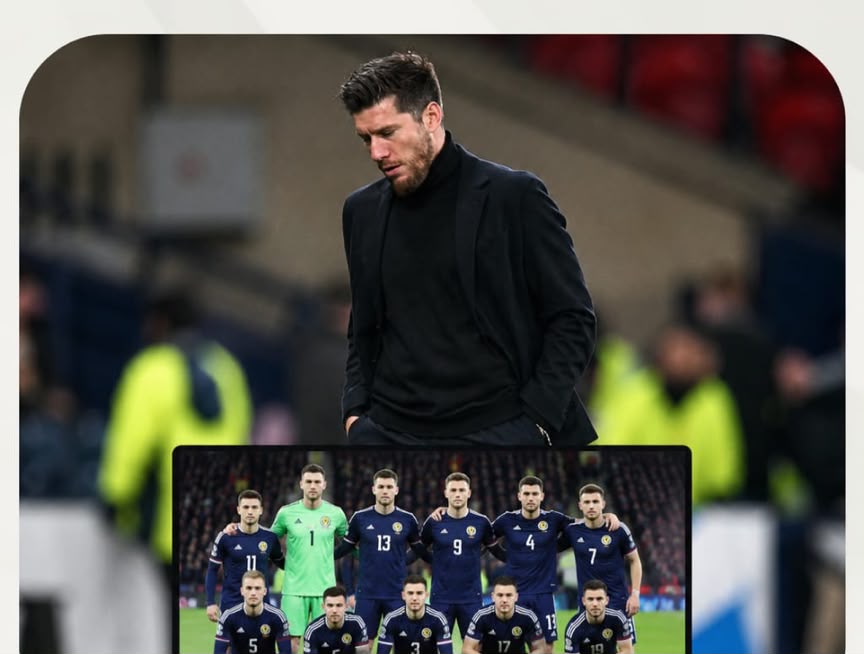
Scotland’s disappointing 2-1 defeat to Slovenia at Hampden Park has sparked plenty of frustration among the Tartan Army, with one second-half incident involving Findlay Curtis becoming a major talking point.
Sébastien Pocognoli’s side appeared to have an opportunity to win a penalty when substitute Curtis went down inside the Slovenia box following a challenge from Zan Karničnik.
Referee Szymon Marciniak immediately waved play on, and VAR did not recommend a review.
The decision quickly divided opinion among Scotland supporters.
Some fans believed there was not enough contact to justify a penalty and accused Curtis of going to ground too easily.
Others defended the young Hearts winger, arguing that he was attempting to make an impact after coming off the bench and should not be harshly judged for a single incident.
The controversy became even more interesting because Scotland had another penalty appeal shortly afterwards.
Josh McPake was brought down inside the area in an incident that appeared more convincing to some observers, but once again the referee allowed play to continue.
That led some supporters to question whether the earlier Curtis incident had influenced the way Scotland’s subsequent appeals were viewed.
The Curtis Incident
Scotland were chasing an equaliser when Curtis entered the Slovenia penalty area.
The youngster went down under the challenge from Karničnik, immediately appealing for a spot-kick.
Marciniak was close to the incident and was unconvinced.
Play continued, with VAR also deciding that the referee’s original decision did not require intervention.
Replays subsequently became the focus of the debate.
Some supporters felt the contact was minimal and that Curtis had initiated his fall.
Others argued that there was enough contact for the referee to at least consider the challenge more carefully.
Ultimately, no penalty was awarded.
That left Scotland still searching for a way back into the game.
Fans Turn Their Attention to Curtis
The incident generated a strong reaction from sections of the Scotland support.
Some fans criticised Curtis for what they believed was an attempt to win a penalty rather than remain on his feet and continue the attack.
One supporter described the incident as embarrassing, while another argued that Curtis should have stayed upright after getting himself into a promising position.
A further criticism focused on the timing of the incident.
Some supporters believed that Scotland’s reputation for appealing for decisions may have been damaged by the number of claims made during the match.
One fan even suggested that the Curtis incident may have contributed to the referee refusing to award the later appeal involving McPake.
Those comments represent supporter opinion rather than an established fact.
There was also a sizeable group willing to defend Curtis.
At just 20 years old, the winger is still relatively inexperienced at international level.
Supporters in his defence argued that he should be given time to develop rather than being branded a cheat over one disputed incident.
McPake’s Appeal Adds Another Layer
The controversy did not end with Curtis.
Minutes later, McPake found himself involved in another penalty appeal.
The Scotland attacker appeared to be bundled to the ground inside the Slovenia penalty area, with some supporters believing the incident looked more worthy of a spot-kick.
Again, Marciniak was unmoved.
No penalty was awarded.
The contrast between the two incidents naturally led to further discussion.
If Curtis’s appeal was viewed as too theatrical by some supporters, the McPake incident was seen by others as a more legitimate claim.
That made the decision particularly frustrating for a Scotland side chasing the game.
However, Pocognoli was clear that he did not want his team’s defeat blamed on the referee.
Pocognoli Refuses to Blame the Referee
After the match, Pocognoli was asked about the penalty appeals.
The Scotland manager reportedly refused to make the officials the focus of his post-match assessment.
“I don’t want to talk about the referee. We didn’t lose because of the referee. We lost because we weren’t good enough.”
That was a significant admission from the Scotland boss.
Rather than argue that Scotland had been denied a point or victory by the officials, Pocognoli accepted that his side had not performed at the required level.
He also reportedly added:
“We didn’t deserve to get the win, that’s the reality. On the ball we were not clever enough. We were far from strong enough in the duels.”
Those comments shifted the focus away from the penalty debate and towards Scotland’s wider performance.
Robertson Delivers His Assessment
Scotland captain Andy Robertson was similarly critical after the final whistle.
The Liverpool defender did not attempt to hide his disappointment.
“Not good enough. The whole team.”
Robertson also pointed to a lack of quality and mistakes but insisted that Scotland could not allow themselves to be outfought.
“As Scotland, we might lack quality or make mistakes, but I don’t think people accept being outfought. I think that’s what happened tonight.”
That assessment reflected the frustration surrounding the result.
Scotland had taken the lead but failed to maintain control of the match.
Instead, Slovenia grew into the contest and eventually turned the game around.
Scotland Take the Lead
The opening goal had initially suggested that Scotland might finally produce a positive result at Hampden.
Ryan Christie put the hosts ahead in the 31st minute with a close-range backheel.
It was not necessarily a dominant Scotland performance, but the goal gave the home side an advantage.
At half-time, Scotland had something to protect.
The challenge was to use the lead to control the second half.
Instead, Slovenia came out with greater intensity.
Slovenia Fight Back
Slovenia’s response after the break was decisive.
Aljoša Matko equalised in the 56th minute, putting the visitors back on level terms.
Scotland suddenly looked vulnerable.
Slovenia continued to find spaces and create opportunities, with the pressure eventually producing a second goal.
Danijel Šturm struck in the 71st minute to complete the turnaround.
Scotland had gone from being ahead to chasing the game.
The home side struggled to find a response.
By the time Curtis and McPake became involved in the penalty appeals, Scotland were already fighting to rescue something from a match that had begun in their favour.
A Difficult Night for Pocognoli
The defeat represents another difficult moment for Pocognoli as he attempts to establish his identity as Scotland manager.
The Belgian coach arrived promising a more aggressive and modern approach.
There have been encouraging moments, but results have not consistently followed.
The loss to Slovenia adds further pressure.
It was particularly disappointing because Scotland had already taken a lead and had home advantage.
Instead of closing the game out, they allowed Slovenia to take control.
The result also ended Scotland’s unbeaten record against Slovenia.
The Wider Problem
Although Curtis’s penalty appeal has attracted considerable attention, it would be unfair to suggest that it was responsible for Scotland’s defeat.
The match had much bigger issues.
Scotland struggled to control possession effectively and were repeatedly exposed by Slovenia’s attacking movement.
The visitors created several chances before and after their goals.
Zan Vipotnik and Adam Čerin were among the Slovenia players who threatened before the visitors eventually found the net.
Scotland needed to defend better and maintain greater control after taking the lead.
Instead, Slovenia were allowed back into the match.
Andy Halliday Questions Pocognoli’s Honeymoon Period
Former Rangers midfielder Andy Halliday also reportedly offered a critical assessment of Scotland’s situation.
Halliday suggested that Pocognoli’s initial period of patience from supporters had now come to an end.
“I thought coming into this camp, Pocognoli would probably need a period of grace. I think that period of grace is now over.”
The comment reflects the growing expectation around the new manager.
Scotland supporters understand that a new coach needs time, but international football provides limited opportunities to build momentum.
Every defeat can therefore bring increased scrutiny.
What Happens to Curtis?
For Curtis, the immediate challenge will be to move beyond the controversy.
The Hearts winger remains a young player trying to establish himself at international level.
One disputed penalty appeal should not define his Scotland career.
The criticism will inevitably be uncomfortable, particularly with some supporters using strong language to describe the incident.
But Pocognoli’s decision to bring Curtis into the squad demonstrates that the manager sees potential in him.
The youngster will now need to respond on the pitch.
Rather than allowing the controversy to dominate his international story, his best answer will be to continue developing and make a positive contribution when the next opportunity arrives.
Scotland Need a Response
The result leaves Scotland with plenty to address before their next international window.
Pocognoli will need to analyse why his team struggled after taking the lead and why Slovenia were able to create so many opportunities.
The penalty debate will likely continue among supporters, but the manager has already made his position clear.
Scotland did not lose because of one refereeing decision.
They lost because they were unable to maintain their performance for 90 minutes.
That is the area Pocognoli must address.
The Penalty Debate Will Continue
The Curtis incident is unlikely to disappear from social media immediately.
Supporters will continue to disagree about whether there was enough contact for a penalty.
Some will insist the winger went down too easily.
Others will argue that the contact was sufficient to justify the appeal.
The later McPake incident has only added fuel to the discussion.
But without an official penalty decision being overturned or the referee publicly changing his assessment, the incident remains a matter of interpretation.
Calling Curtis a “cheat” goes further than the available evidence establishes.
What can be said is that his decision to go down became a major talking point during a frustrating Scotland defeat.
Scotland Must Look Forward
For Pocognoli, the priority now has to be preparing Scotland for their next international fixtures.
The Tartan Army will expect a response.
The manager has already shown that he is willing to be honest about poor performances, and his post-match comments after the Slovenia defeat suggested he understood exactly where his team fell short.
The players will need to demonstrate that they have learned from the experience.
For Curtis, that means putting the penalty controversy behind him.
For the wider team, it means becoming harder to break down, more effective in possession and more ruthless when opportunities arise.
Scotland cannot afford to let one controversial moment distract from the bigger lessons of the defeat.
The 2-1 loss to Slovenia was a disappointing night at Hampden, and the penalty appeals involving Curtis and McPake will remain part of the conversation.
But the biggest issue was the performance itself.
Scotland took the lead and had home advantage, yet Slovenia came back to win.
Pocognoli has accepted responsibility for the team’s shortcomings, while Robertson’s assessment that Scotland were “not good enough” reflected the mood around the camp.
Curtis will now have to learn from the scrutiny surrounding his penalty appeal.
At just 20, there is plenty of time for him to develop.
For Scotland, however, there is much less time to waste.
The next international window will provide an opportunity to respond — and the Tartan Army will be expecting a much-improved performance.