West Ham’s Reported Complaint After Controversial QPR Penalty as Referee’s Admission Emerges
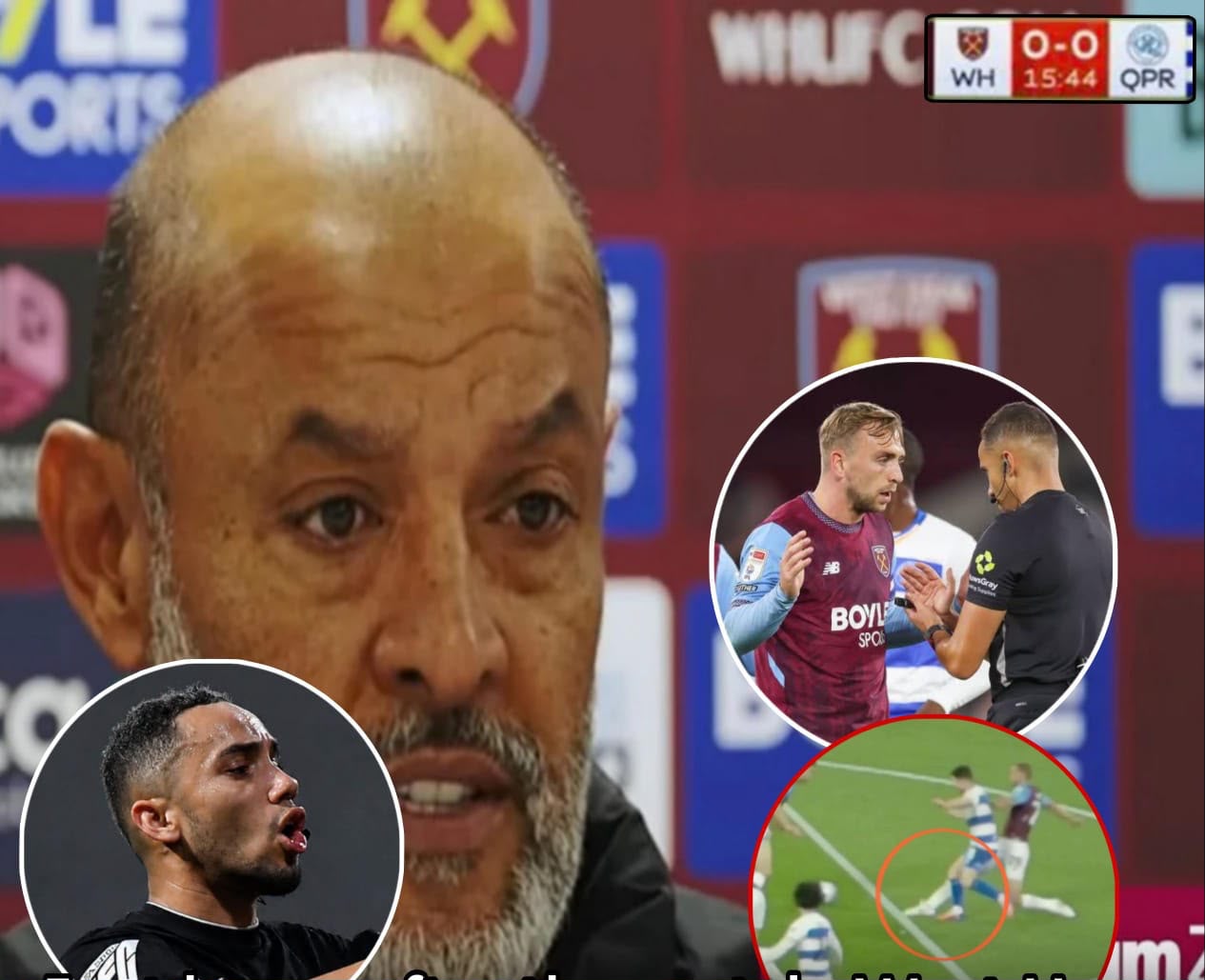
West Ham United have been left furious after a controversial penalty decision played a major role in their 1-1 draw with Queens Park Rangers, with fresh questions being raised about the standard of officiating in the Championship.
The Hammers were denied the chance to move top of the table after referee Ruebyn Ricardo awarded QPR a first-half penalty in circumstances that prompted immediate protests from West Ham’s players.
Tomáš Souček appeared to win the ball during his challenge on Paul Smyth, with replays suggesting the contact took place outside the penalty area. Despite the protests, Ricardo pointed to the spot, and Nicolas Madsen converted to give the visitors the lead.
The controversy continued after the final whistle when Souček revealed that Ricardo had subsequently told him he had made a mistake.
According to the information provided, West Ham have reportedly lodged a formal complaint with the EFL over the incident. However, while the controversial decision and Souček’s account of the referee’s post-match admission have been reported, an official confirmation of a formal complaint has been established in the sources reviewed.
The alleged complaint has nevertheless brought the debate about Championship officiating and the absence of VAR back into focus.
The Decision That Left West Ham Frustrated
The controversy began in the 18th minute at the London Stadium.
Souček, making his first appearance of the season after recovering from an ankle injury, had lost possession to Smyth and attempted to recover the ball. The West Ham midfielder slid in and appeared to poke the ball away from the QPR winger.
Ricardo judged that a foul had occurred inside the penalty area and immediately awarded a spot-kick.
West Ham’s players reacted with disbelief, believing Souček had made a legitimate challenge and that the contact had occurred outside the box. With no VAR available to review the incident, the original decision stood.
Madsen stepped up and converted the penalty, putting QPR ahead and leaving the hosts with an early setback to overcome.
The decision quickly became the main talking point of the match. West Ham’s official report described Souček as having poked the ball away from Smyth outside the penalty area before Ricardo awarded the spot-kick. Sky Sports also highlighted the controversial nature of the decision.
For West Ham, the frustration was not simply about conceding a goal. It was about the circumstances in which the penalty was awarded and the lack of a video review that might have allowed the decision to be reconsidered.
Souček Reveals What Ricardo Told Him
Souček made his feelings clear after the match, explaining that he believed he had won the challenge.
The midfielder said he was initially confused when the referee awarded the penalty. He also revealed that Ricardo had spoken to him after the final whistle and admitted he had been wrong.
Speaking after the game, Souček said:
“I was so happy I won the challenge. I saw it inside and it’s even worse than I thought.”
He added that he had tried to speak to the referee during the match but had not received the explanation he wanted.
Souček’s account was reported by the Press Association and carried by The Irish News, which stated that the midfielder said Ricardo had acknowledged his mistake after the game.
If the referee did admit that the decision was incorrect, it would understandably add to West Ham’s frustration. However, an admission that a decision was wrong would not, by itself, establish that the referee deliberately ignored protocol or that the club has formally complained to the EFL.
Those are separate claims that require confirmation.
What West Ham Are Reportedly Challenging
According to the supplied information, West Ham’s alleged complaint centres on three main issues.
The first concerns the decision itself. The club reportedly believe the penalty should not have been awarded because Souček appeared to win the ball and the challenge took place outside the area.
The second relates to communication and accountability. Souček’s comments suggest he was dissatisfied with the explanation he received during the match, particularly given the importance of the decision.
The third concerns the wider standard of officiating in the Championship. Without VAR, a major decision can stand even when subsequent footage appears to contradict the referee’s assessment.
At present, these points should be understood as the reported basis of West Ham’s concerns rather than confirmed details of a formal EFL complaint. No official statement confirming that the club has lodged such a complaint was identified in the sources reviewed.
Nevertheless, the incident highlights a familiar problem for teams competing in a division where promotion can carry significant sporting and financial consequences.
Nuno Espírito Santo Makes His Feelings Clear
West Ham manager Nuno Espírito Santo was also critical of the decision.
The Hammers boss believed the footage showed that his side had been punished by an incorrect call. His post-match comments reflected the frustration felt by the players and supporters after seeing QPR take the lead from the penalty spot.
Nuno said:
“I think the images are clear. I had a chance to see them. They speak for themselves, it’s clear. It’s a mistake that punishes us.”
His comments were reported in West Ham’s official post-match coverage, which acknowledged the controversy surrounding the penalty awarded against Souček.
Nuno was also disappointed that his team failed to turn their second-half improvement into a victory. West Ham eventually equalised through captain Jarrod Bowen, but the missed opportunity from the penalty spot in stoppage time ensured that the Hammers could not claim all three points.
The manager’s frustration therefore extended beyond the first-half decision. His side had fought back, created chances and reached the closing moments with an opportunity to win, only to leave the pitch with a draw.
Bowen Equalises Before the Late Penalty Drama
West Ham’s response improved after the interval, with Nuno making changes in an attempt to inject more attacking energy into the side.
The equaliser arrived in the 70th minute. Bowen followed up after his initial effort was blocked, finding the net to bring the Hammers level and give the home crowd renewed hope.
West Ham then pushed for a winner.
As the game entered its final moments, substitute Amadou Mbengue pulled Pablo’s shirt inside the penalty area, prompting Ricardo to award West Ham a penalty of their own.
Bowen stepped forward with the chance to complete the comeback.
However, QPR goalkeeper Pierce Charles produced a decisive save, diving low to his left to keep out the spot-kick. Charles then reacted brilliantly to deny Arne Engels’ follow-up header, pushing the ball against the underside of the crossbar before West Ham were unable to turn the rebound into a goal.
The double save preserved QPR’s point and ensured that the match ended 1-1.
Both West Ham’s official report and Sky Sports highlighted Charles’ dramatic intervention, which denied the hosts a late victory.
The ending made the result particularly painful for West Ham. They believed they had been disadvantaged by the first penalty decision and then had a chance to win the match, only for Charles to produce two outstanding saves.
The Debate Over VAR in the Championship Returns
The incident has renewed discussion about whether the Championship should introduce additional video technology to help officials review major decisions.
Unlike the Premier League, the Championship does not currently use VAR in its matches. That means referees must make their decisions in real time, with no routine video review available to correct a potentially significant error.
The absence of VAR is a subject of debate among supporters, clubs and pundits. Some believe technology could help reduce clear mistakes involving penalties, red cards and other major incidents. Others are concerned about delays, the cost of implementation and the effect on the atmosphere inside stadiums.
The supplied information states that Championship clubs voted against introducing a Football Video Support challenge system for the 2026/27 season. That detail should be checked against an official EFL announcement before being treated as confirmed, but the broader debate over video assistance remains relevant to the West Ham incident.
The Souček decision illustrates why the issue is unlikely to disappear. If footage appears to show that a challenge took place outside the box and that the defender won the ball, supporters will naturally question why the penalty was awarded and whether a review system could have helped.
At the same time, the existence of controversy does not automatically mean every disputed decision would be overturned through technology. The purpose of a review system would be to help officials assess specific incidents against the laws of the game, not to eliminate every disagreement.
What the Result Means for West Ham and QPR
The 1-1 draw represented a missed opportunity for West Ham, who had hoped to secure a victory and strengthen their position near the top of the Championship.
Instead, they had to settle for a point after conceding from a controversial penalty and failing to convert their own late spot-kick.
QPR, meanwhile, left the London Stadium with a valuable result. Madsen’s first-half penalty gave them the lead, while Charles’ late double save ensured that they avoided defeat despite West Ham’s second-half pressure.
The supplied information places West Ham second on 16 points, one behind Swansea City, with QPR fifth on 14 points. Those standings should be checked against the latest official table before publication, as league positions and points totals can change with each result.
Whatever the precise table positions, the draw has left West Ham with plenty to consider: their reaction to going behind, their ability to create clear chances and their record from the penalty spot.
The controversy surrounding Ricardo’s decision is likely to remain a major part of the post-match discussion.
Could the Alleged Complaint Force a Response?
If West Ham have formally submitted a complaint to the EFL, the club could seek clarification about the decision and the process followed by the match officials.
However, the existence of a complaint would not necessarily mean that the EFL would publicly overturn the result or impose any disciplinary action. A formal review, if one takes place, could focus on the decision-making process and any relevant feedback for the officials.
At the time of writing, official EFL response to the alleged complaint has been confirmed in the sources reviewed.
The distinction is important. The controversial penalty and Souček’s account of the referee’s subsequent admission have been reported, but claims that West Ham have launched a formal protest and that the EFL is facing a specific demand for action require separate confirmation.
For now, the incident provides another example of the scrutiny referees face when a major decision has a direct impact on a match.
The Verdict: West Ham’s Frustration Is Clear, but the Complaint Needs Confirmation
West Ham’s 1-1 draw with QPR was defined by two penalties and two very different outcomes.
Madsen converted the first after Ricardo penalised Souček in a decision that prompted strong criticism from West Ham and was later described by Souček as a mistake the referee acknowledged after the match.
Bowen then had the chance to win the game in stoppage time, but Charles’ double save ensured that QPR took a point back with them.
Nuno’s comments made West Ham’s frustration clear, while Souček’s account has added further scrutiny to the first-half decision.
The claim that West Ham have formally complained to the EFL remains unconfirmed in the sources reviewed. If verified, it would add another dimension to the debate about Championship officiating and the lack of VAR.
For now, the central issue is clear: a controversial penalty changed the course of the match, and West Ham believe the decision cost them a valuable opportunity.
What do you think? Should the Championship introduce video technology to help review controversial penalty decisions? Share your thoughts in the comments below.