SPFL STATEMENT DRAMA AS REFEREE FACES BACKLASH OVER CONTROVERSIAL HANDBALL DECISION IN RANGERS VS KILMARNOCK
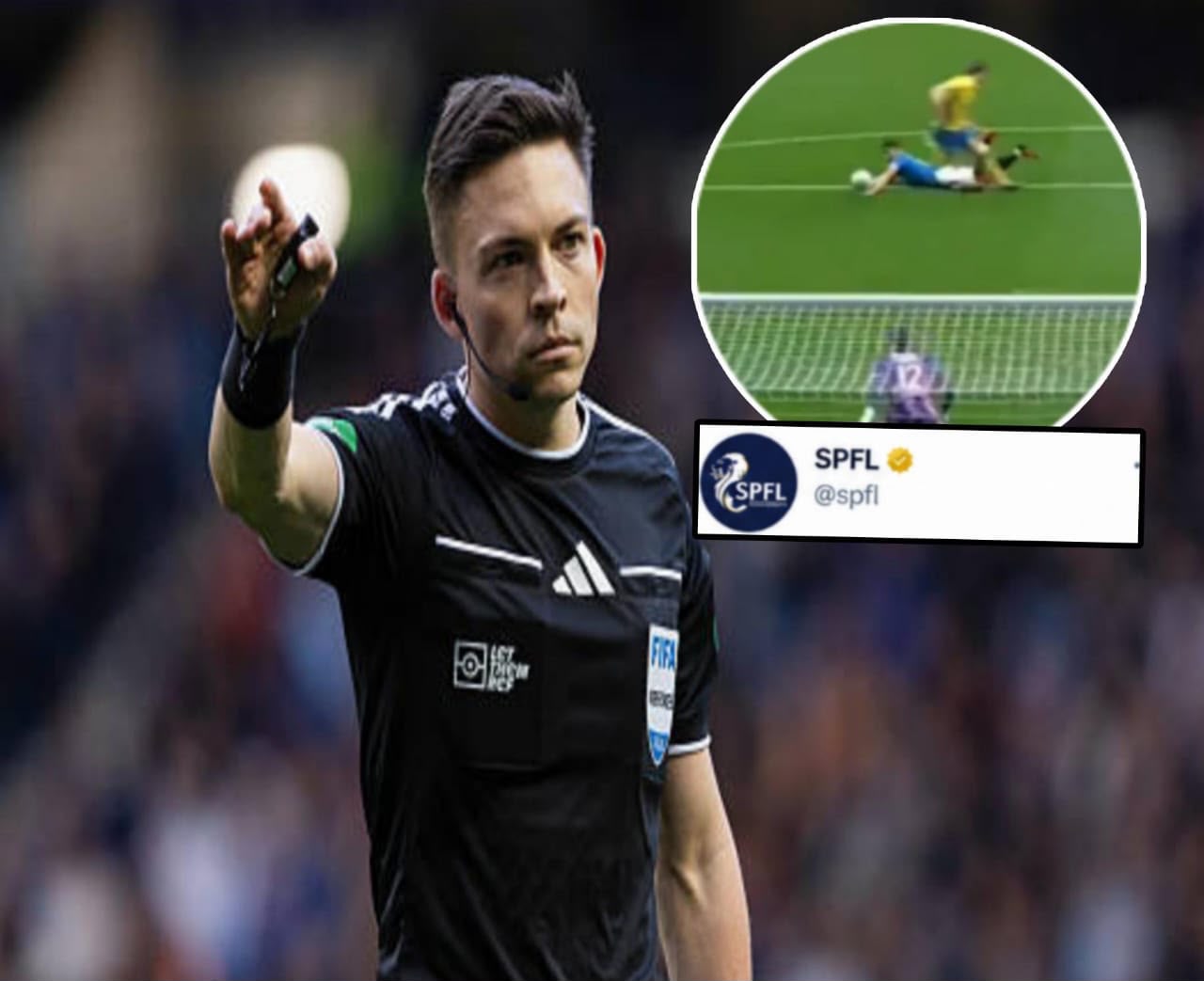
EXCLUSIVE: Rangers climbed to the top of the Scottish Premiership after beating Kilmarnock 3–1, but the result has been overshadowed by a controversial handball claim involving Kevin Kelsy. Kilmarnock boss Neil McCann has questioned the decision, putting the spotlight firmly on the officials and reigniting the debate over consistency in Scottish football.
Rangers may have secured another important victory, but their 3–1 win over Kilmarnock has not escaped controversy.
The Ibrox side produced another strong attacking performance to claim three points and move above Celtic in the Scottish Premiership table, with Ryan Naderi scoring twice and Kevin Kelsy also finding the net.
Yet it was Kelsy’s goal that became a major talking point after Kilmarnock manager Neil McCann questioned whether a handball should have been given in the build-up.
For Rangers, the result represented another step forward in their push for the top spot. For Kilmarnock, the defeat brought frustration, particularly over an incident that McCann believes deserved greater scrutiny.
The controversy has once again placed Scottish football’s officiating under the microscope.
And with supporters increasingly demanding consistency over handball decisions, the incident raises questions that extend beyond the outcome of one match.
🔥 RANGERS WIN — BUT THE HANDBALL CONTROVERSY TAKES CENTRE STAGE
Rangers entered the contest knowing that victory would give them an opportunity to move above Celtic, who were due to play Motherwell the following day.
They delivered the result they needed, defeating Kilmarnock 3–1 and extending their winning run in the league.
Naderi was the standout performer, scoring twice in the first half to give Rangers control of the contest. Kelsy then added a third before the break, leaving the visitors with a significant deficit to overcome.
Kilmarnock eventually found a consolation goal through substitute Nicky Clescenco in the closing stages, but it was not enough to prevent Rangers from collecting all three points.
On the surface, it was a successful afternoon for Rangers.
However, the discussion following the final whistle quickly shifted towards the circumstances surrounding Kelsy’s goal.
McCann questioned whether the ball had struck Kelsy’s hand before he scored, expressing his dissatisfaction with the decision.
His reaction ensured that the handball incident became one of the major talking points to emerge from the fixture.
The debate is particularly significant because handball decisions remain among the most difficult calls for referees to make. The difference between a legal contact and a punishable offence can depend on the player’s actions, the position of the arm and the specific circumstances of the incident.
That is why the available footage and the applicable rules matter so much.
A controversial moment alone does not establish that the referee made an error. But when a manager publicly questions a decision, it is understandable that supporters want a clear explanation of how the officials reached their conclusion.
⚖️ NEIL McCANN MAKES HIS FRUSTRATION CLEAR
Kilmarnock manager Neil McCann did not hide his dissatisfaction with the decision.
Speaking after the match, McCann questioned the legitimacy of Rangers’ second goal, arguing that Kelsy’s involvement should have been examined more critically.
His comments reflected the frustration of a manager whose team had suffered a damaging defeat, although he also acknowledged that Kilmarnock had contributed to their own problems during the contest.
According to reporting by The Scottish Sun, McCann said he had a real problem with the decision while also admitting that his side had gifted Rangers three goals. He nevertheless pointed to the positives in Kilmarnock’s second-half performance and urged his players to maintain their confidence. (The Scottish Sun)
That distinction is important.
McCann’s criticism was directed at a specific incident, rather than serving as an explanation for everything that went wrong for Kilmarnock.
The visitors conceded three times, and their manager recognised that his team had made mistakes. But he also believed the handball question deserved attention.
For supporters, the two issues can coexist.
A team can make defensive errors and still have legitimate questions about an individual refereeing decision. Equally, disagreement with an official does not automatically mean the official was wrong.
The next step in assessing the controversy is to establish precisely what happened and whether the incident met the criteria for a handball offence.
Without that analysis, it would be premature to describe the decision as a confirmed refereeing error.
🚨 WHY THE KELSY INCIDENT HAS SPARKED QUESTIONS
Handball is one of football’s most debated rules because the outcome can depend on details that are not always obvious during live play.
The ball making contact with a player’s hand or arm is not automatically an offence.
Officials must consider the circumstances, including whether the player deliberately handled the ball, whether the arm position made the body unnaturally bigger where relevant, and whether other provisions of the Laws of the Game apply.
There are also specific considerations when an attacking player handles the ball immediately before scoring or creating a goal.
That makes the exact sequence of events in the Kelsy incident particularly important.
Did the ball make contact with his hand or arm? If so, what was the nature of that contact? Was the contact punishable under the applicable law? And what did the match officials see?
These questions must be answered using the available evidence rather than assumptions based on the final result.
If the contact constituted an offence under the rules, the goal should not have stood. If the contact did not meet the criteria for an offence, the decision may have been correct despite the protests.
That is why a proper explanation of the incident would be more useful than simply declaring that the referee got it wrong.
The controversy is not resolved by the intensity of the reaction. It is resolved by examining the facts.
🖥️ THE BIG QUESTION: WAS THE DECISION REVIEWED?
Whenever a contentious goal or potential handball becomes a major talking point, attention inevitably turns towards VAR.
Video technology can help officials examine incidents that may have been difficult to assess at full speed. It can provide additional camera angles and allow the relevant officials to review the sequence before reaching a decision.
However, VAR is not designed to turn every contact into a lengthy investigation.
The process must follow the applicable protocol, and officials still need to interpret the relevant laws.
In the Rangers–Kilmarnock controversy, it is important to establish whether the incident was reviewed and, if so, what the review concluded.
Those details should not be assumed.
If VAR examined the incident, an accurate account of the review would help explain why the goal was allowed to stand. If no review took place, the reason should be established before conclusions are drawn about the officiating process.
The distinction matters because criticism of a referee’s on-field judgement is not necessarily the same as criticism of the VAR system.
An official can make a difficult decision in real time, while a review can introduce a separate question about whether the applicable protocol was followed correctly.
Supporters deserve an accurate account of which situation applies.
📢 HAS THE SPFL RELEASED A STATEMENT?
The controversy has prompted questions about whether an official explanation will follow.
However, there is an important distinction between a statement issued by the Scottish Professional Football League and comments from the Scottish FA or its refereeing department.
The SPFL, the Scottish FA and the officials responsible for reviewing refereeing decisions have different roles within Scottish football. An accurate report must identify which organisation has actually responded.
The reporting I found confirms McCann’s criticism of the handball decision, but I could not independently establish that the SPFL has released an official statement addressing this specific incident.
That means it would be misleading to invent an official response or claim that the authorities have admitted an error without seeing the statement itself.
If an official response is published, supporters will want to know what it says about the decision, whether the relevant rules were applied correctly and whether any further action has been announced.
A statement may explain the circumstances without admitting that an error occurred. It may also address a broader question about officiating standards rather than provide a definitive ruling on the goal.
The exact wording matters.
Until the statement can be confirmed, the strongest evidence-based angle is McCann’s criticism and the questions surrounding Kelsy’s goal.
🔵 RANGERS WILL POINT TO THE RESULT — AND THEIR ATTACKING FORM
While the controversy has attracted attention, Rangers have plenty of reasons to be pleased with their performance.
Naderi’s two first-half goals gave the hosts a strong platform, while Kelsy’s contribution helped them establish a commanding lead.
The result marked another important step in Rangers’ league campaign, with the team moving to the top of the table ahead of Celtic’s match against Motherwell.
It was also reported to be Rangers’ sixth consecutive league victory. (The Guardian)
From the Rangers perspective, the main objective was to win the match and collect three points.
They achieved that goal.
The controversy surrounding Kelsy’s strike does not erase the other attacking contributions, nor does it automatically invalidate the result. Any assessment of the disputed incident must be based on the applicable rules and evidence.
Rangers supporters will naturally focus on the team’s progress, the goals and the league position.
Opposition supporters, meanwhile, will want the handball question answered.
Those competing reactions are a familiar feature of football, particularly when a match contains a moment that one side believes should have been punished.
The important thing is that debate does not become a substitute for evidence.
🟡 KILMARNOCK’S FRUSTRATION GOES BEYOND ONE DECISION
Kilmarnock’s defeat was not caused by a single incident alone.
McCann acknowledged that his team had gifted Rangers three goals, a concession that highlights the defensive problems the visitors must address.
At the same time, the manager identified positives in the second-half performance and encouraged his players to retain their confidence.
That message could prove important as Kilmarnock look to recover from the defeat.
The club cannot allow frustration about one decision to overshadow the work required to improve results. Defensive organisation, concentration and taking chances at the other end will all be crucial.
But it is equally reasonable for the manager to seek clarity about a decision he believes was questionable.
The two responsibilities are compatible.
Kilmarnock must improve their performances, and the relevant authorities must ensure that controversial incidents are assessed according to the rules.
The challenge is to move from frustration towards a clear understanding of what happened.
🏴 ANOTHER TEST FOR TRUST IN SCOTTISH FOOTBALL OFFICIATING
The debate surrounding Rangers and Kilmarnock is part of a wider conversation about refereeing standards in Scotland.
Controversial decisions are not unique to Scottish football. Across the game, officials face difficult judgements involving handball, offside, physical challenges and incidents in the penalty area.
But supporters expect consistency, particularly when technology is available to help review important moments.
That expectation is understandable.
When similar incidents appear to produce different outcomes, fans want to know why. When a goal is disputed, managers want to understand how the officials interpreted the rules. And when an error occurs, the game benefits from a transparent explanation.
None of that requires assuming that referees are biased or that a controversial call was deliberately made.
Officials work under considerable pressure, and the laws sometimes involve subjective judgement. Accountability means examining decisions fairly, not automatically condemning the person who made them.
In this case, the most useful outcome would be a clear, evidence-based explanation of the handball incident and confirmation of any official review that took place.
That would give supporters something more substantial than speculation.
🔥 FINAL VERDICT: THE CONTROVERSY NEEDS ANSWERS
Rangers defeated Kilmarnock 3–1, moved to the top of the Scottish Premiership table and continued their impressive run of league victories.
But the result has been accompanied by questions about Kevin Kelsy’s goal and whether a handball offence should have been given in the build-up.
Neil McCann has made his frustration clear, while also acknowledging that Kilmarnock’s own mistakes contributed to the defeat.
The controversy now centres on a straightforward question: was the handball decision correct under the Laws of the Game?
Answering that requires an examination of the incident and the applicable rules, alongside any confirmed explanation from the relevant authorities.
It would be premature to claim that the SPFL has admitted a mistake or released a statement on this specific incident without verifying the contents of such a statement.
What can be reported is that the decision has attracted criticism and become a major talking point after Rangers’ victory.
For Rangers, the focus will be on maintaining their momentum. For Kilmarnock, the priority is learning from the defeat while seeking clarity over the disputed moment.
For Scottish football, the wider lesson is that controversial decisions are best addressed through accurate reporting, consistent application of the rules and clear explanations when appropriate.
The debate may continue, but the answer should ultimately come from the evidence — not the noise surrounding the final whistle.
⚽ Do you believe the referee was right to allow Kelsy’s goal to stand, or should the incident have been penalised? Share your view in the comments.