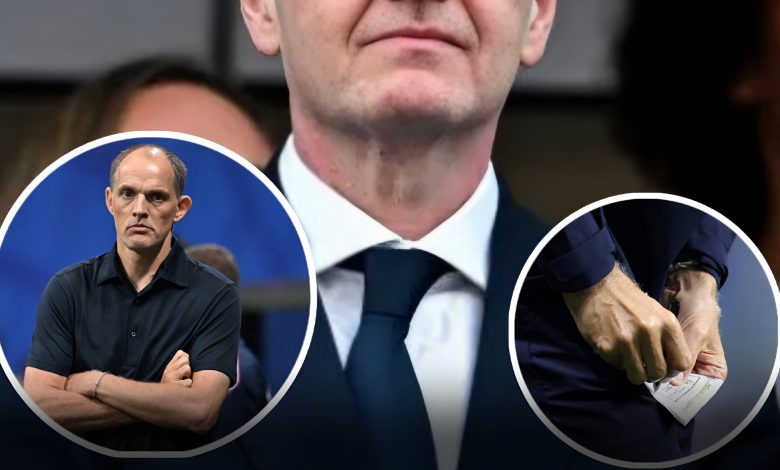
England’s World Cup fairy tale is hanging by a thread — and it has nothing to do with the scoreline. Just days before Thomas Tuchel’s side walk out for a quarter-final that could define their tournament, FIFA has dropped a disciplinary bombshell that has thrown the Three Lions’ semi-final ambitions into serious doubt. One player is already gone. Four more are one mistake away from joining him. And the timing could not be crueler.
This is the story of how a single red card in Mexico City has snowballed into a full-blown crisis for England’s World Cup squad — and why the next ninety minutes against Norway could cost Tuchel far more than just a place in the last four.
THE VERDICT THAT ROCKED THE THREE LIONS CAMP
FIFA’s Disciplinary Committee wasted no time. Following England’s rollercoaster 3-2 win over Mexico in the round of 16, the governing body confirmed what many feared: defender Jarell Quansah would not get away lightly for his straight red card on Jesús Gallardo. The Bayer Leverkusen centre-back was sent off in the 54th minute after referee Alireza Faghani reviewed a high challenge on the pitch-side monitor and ruled it serious foul play.
Under FIFA’s own disciplinary code, that classification doesn’t just mean a one-match ban. It means two. And that is where the real damage was done. Quansah won’t just miss the quarter-final against Norway — he is also ruled out of the semi-final, should England even get there. For a defender who had been growing into a key figure in Tuchel’s back line, it is a devastating blow delivered at the worst possible moment.
But Quansah’s ban is only half the story. FIFA’s ruling has reignited a much bigger conversation — one that has England fans furious and rival federations murmuring about double standards.
THE BALOGUN COMPARISON THAT’S SPARKED OUTRAGE
Here’s where things get messy. United States striker Folarin Balogun was also sent off for serious foul play earlier in the tournament. By FIFA’s own precedent, that should have meant the same two-match sanction handed to Quansah. Instead, Balogun received just a single match suspension, with an additional game suspended under probationary conditions — effectively a slap on the wrist compared to what England’s man now faces.
The discrepancy hasn’t gone unnoticed. Reports suggest political intervention played a role in softening Balogun’s punishment, a claim that has only added fuel to the fire. Several national federations have reportedly questioned FIFA’s consistency, and other teams have already tried — and failed — to challenge disciplinary rulings of their own in the days since. For England, the frustration is obvious: same offense, same officials’ logic, wildly different outcomes. One nation’s star striker plays on. England’s defender sits out for a fortnight.
Whether or not the criticism changes anything, the damage for Tuchel’s side is already done. Quansah is out. Now the bigger question is who else could follow him out the door.
THE FOUR ENGLAND STARS WALKING A DISCIPLINARY TIGHTROPE
This is where the story turns from bad to genuinely alarming for England supporters. FIFA’s own disciplinary tracking shows that England currently have four more players sitting precisely one yellow card away from a semi-final suspension:
– Jude Bellingham — England’s talisman, already booked earlier in the tournament during the last-32 win over DR Congo
– Declan Rice — cautioned in the win over Mexico and now walking a tightrope in midfield
– Marc Guehi — booked in the same Mexico match, adding to the central defensive worry
– Nico O’Reilly — the fifth England player carded against Mexico, now also living dangerously
Under FIFA’s rules for this tournament, any player who collects two yellow cards across the round of 32, round of 16, and quarter-final stages is automatically suspended for the very next match. That means if any of these four men so much as pick up a routine caution against Norway — a mistimed tackle, a shirt pull, dissent to the referee — they will be watching England’s potential semi-final from the stands, not the pitch.
To put the scale of the problem in context, England have been the most heavily sanctioned side left in the competition. The team has committed 54 fouls across the tournament and picked up a tournament-high eight cards — seven yellow and one red. That works out to a card roughly every 6.75 fouls, comfortably the worst disciplinary ratio of any of the eight remaining quarter-finalists. Compare that to Norway, England’s very next opponents, who have committed fewer fouls than any other team left in the competition and picked up just two yellow cards all tournament — a card every 24 fouls. The contrast could not be starker, and it is precisely why alarm bells are ringing inside the England camp.
Nor are England alone in facing this nightmare scenario. FIFA’s disciplinary numbers show seventeen players across the remaining quarter-finalists are one booking away from missing a semi-final, with Morocco the only side facing an equally severe squeeze, also with four players on the brink. But knowing misery has company will offer Tuchel little comfort. England already have their disciplinary crisis. They cannot afford another.
WHY THE YELLOW CARD RULES MATTER MORE THAN EVER
For fans unfamiliar with the fine print, FIFA’s tournament disciplinary system works in phases. Bookings accumulate across the group stage, the round of 16, and the quarter-finals — and a second yellow card picked up anywhere within that stretch triggers an automatic one-match ban. Crucially, the slate only resets after the quarter-final stage. That means anything picked up in the semi-final itself would not carry over into a final, but there is no such mercy for a booking picked up now. A second yellow against Norway ends a player’s semi-final involvement immediately, with zero room for appeal.
Red cards operate under a separate, harsher framework entirely. A straight red — or two yellows shown in the same match — results in an automatic one-match ban at minimum. But if the offense is deemed serious foul play, as ruled in Quansah’s case, that ban is upgraded to two matches. It is a distinction that might sound like a technicality on paper, but for England it has already proven to be the difference between a defender being available for one must-win game or being frozen out of two.
THE NORWAY TEST THOMAS TUCHEL CANNOT AFFORD TO GET WRONG
England’s path to the semi-final now runs directly through a Norway side many consider one of the tournament’s form teams — disciplined, dangerous in attack, and playing with the freedom of a nation with little tournament pressure attached to its name. Tuchel already has to solve the puzzle of replacing Quansah defensively. Now he must do it while somehow managing four more players who cannot afford a single lapse in concentration, a single mistimed challenge, or a single moment of frustration with the officials.
It is a nightmare scenario for any manager. Ask a player to change how they compete and you risk blunting the aggression and physicality that got England this far in the first place. Say nothing, and you risk watching your captain, your holding midfielder, or a first-choice centre-back walk into an avoidable booking that costs the team a place in a World Cup semi-final. Tuchel will need to strike that balance perfectly against a Norway side who will sense the opportunity to exploit any hesitancy in England’s play.
There is also the psychological dimension to consider. Players who go into a match consciously trying to avoid bookings often end up playing more cautiously than they should — pulling out of challenges half a second too late, hesitating in duels they’d normally win outright. Norway, by contrast, arrive with the cleanest disciplinary record left in the competition and absolutely nothing to lose. That contrast in mentality could prove just as decisive as anything that happens on the scoreboard.
WHAT ENGLAND FANS ARE SAYING
Unsurprisingly, the FIFA ruling and the wider disciplinary picture have dominated conversation among supporters. The Balogun comparison in particular has become a lightning rod, with many England fans arguing that the tournament’s disciplinary process now looks inconsistent at best and politically influenced at worst. Others are more focused on the here and now: with four key players hanging by a thread, is it time for Tuchel to consider rotating personnel against Norway to protect his squad depth for a potential semi-final, even if it means a less familiar starting eleven?
It’s a genuine selection dilemma. Leave out an at-risk player like Bellingham or Rice and you weaken your chances of actually beating Norway and reaching the semi-final at all. Play them and risk a booking, and you might win the battle but lose the bigger war. There is no clean answer, and it’s exactly the kind of decision that separates tournament-winning managers from the rest.
THE BOTTOM LINE
England go into their quarter-final against Norway with the away support in a strange, uneasy state — the last eight of a World Cup within reach, a semi-final tantalizingly close, but a disciplinary crisis threatening to unravel everything before a ball is even kicked in the final four. Jarell Quansah is already gone for two matches. Jude Bellingham, Declan Rice, Marc Guehi, and Nico O’Reilly are all one yellow card away from joining him on the sidelines for the biggest game of the tournament so far.
FIFA’s verdict has been delivered, the controversy over consistency is far from settled, and now the pressure shifts squarely onto Thomas Tuchel and his players. Win ugly and survive with a full squad, and England’s semi-final dream stays very much alive. Slip up — even in the smallest, most innocuous way — and this could be a knockout stage remembered not for what England achieved on the pitch, but for who wasn’t there to help them finish the job.
One thing is certain: every tackle, every appeal, every half-hearted shove against Norway now carries weight far beyond the final score. England’s World Cup dream is alive. Whether it survives the next ninety minutes intact may come down to discipline as much as talent.