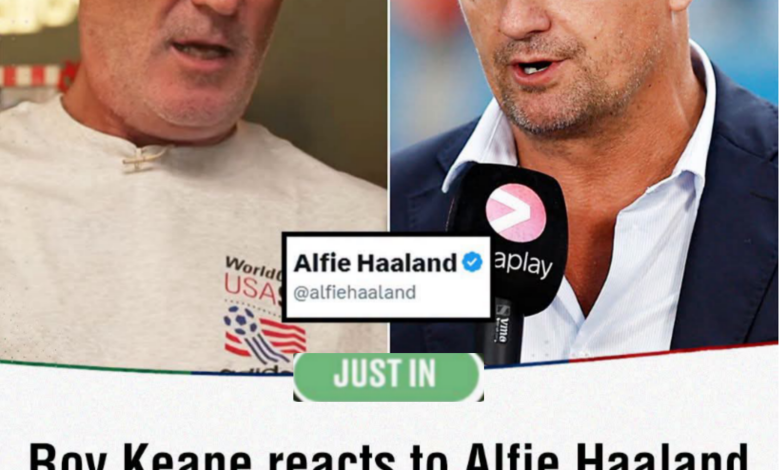
Roy Keane has reignited one of football’s longest-running rivalries after responding to Alf-Inge Haaland’s claims that Norway were “robbed” during their dramatic 2-1 extra-time defeat to England in the 2026 FIFA World Cup quarter-final.
The fallout from England’s victory has been dominated by controversial refereeing decisions, with Norway feeling several key moments went against them. While FIFA has defended the officials and VAR, the debate has continued across social media and television, prompting strong reactions from former players on both sides.
Among those to weigh in was former Manchester United captain Roy Keane, who had little sympathy for Haaland’s complaints and delivered a typically cutting response that quickly grabbed headlines.
Norway left frustrated after quarter-final defeat
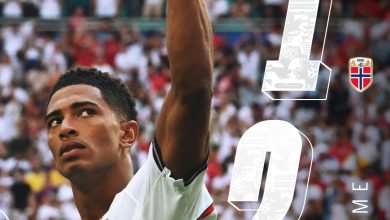
England booked their place in the World Cup semi-finals thanks to a brace from Jude Bellingham in a hard-fought encounter played in difficult conditions in Miami.
Norway had taken the lead through Andreas Schjelderup before Bellingham equalised just before half-time and eventually scored the winner in extra time.
However, several decisions left the Norwegian camp furious.
The biggest talking points included Bellingham’s first goal, which Norway believed should have been ruled out after television replays appeared to show the ball brushing a spidercam cable before Elliot Anderson collected possession. FIFA later confirmed that data from the Adidas Connected Ball showed no contact with the overhead wire, allowing the goal to stand.
Norway were also upset after a second-half goal was disallowed when VAR ruled Erling Haaland had fouled Elliot Anderson during the build-up. Later in extra time, England had a penalty overturned after another lengthy VAR review.
Those incidents convinced many Norwegian supporters that luck—and perhaps the officials—had favoured England.
Alf-Inge Haaland accuses officials of helping England
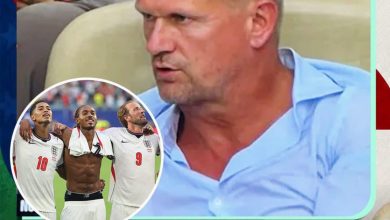
Watching from the stands was former Manchester City and Leeds United midfielder Alf-Inge Haaland, father of Norway striker Erling Haaland.
The former Premier League player wasted little time making his feelings known after the final whistle.
Replying to posts on social media, Haaland sarcastically wrote:
“Well done Bellingham and referee.”
In another post discussing England’s victory, he added:
“Really? Saved by the referee. Hope you win the WC now. But feel we got robbed today.”
His comments quickly spread online, with many England supporters dismissing them as sour grapes while Norwegian fans backed his assessment of the controversial decisions.
The comments reach The Overlap
The controversy was later discussed on The Overlap, where Gary Neville, Ian Wright and Roy Keane were asked for their thoughts on Haaland’s reaction.
Ian Wright was the first to respond, suggesting the Norwegian’s remarks were driven more by emotion than by what actually happened on the pitch.
The Arsenal legend said he believed Haaland’s comments amounted to little more than “sour grapes” after seeing his country knocked out of the tournament.
Keane, however, was even more direct.
Roy Keane delivers trademark response
Never one to avoid confrontation, Keane offered a blunt assessment of Haaland’s complaints.
Referring to the Norwegian’s social media posts, Keane joked that Alf-Inge was still “whinging,” dismissing the idea that England had somehow stolen victory.
The remark immediately caught attention because of the history between the two men.
Keane showed little interest in debating VAR decisions or FIFA’s explanations, instead suggesting Haaland should simply accept the result rather than blame officials for Norway’s elimination.
It was a classic Keane response—short, sharp and brutally honest.
A rivalry stretching back decades
The exchange is particularly significant given the relationship between Keane and Haaland.
Their rivalry dates back to their Premier League careers, when tensions first flared during a Manchester United clash with Leeds United in 1997.
Keane suffered a serious knee injury after attempting to challenge Haaland, with the Norwegian accusing him of exaggerating the damage.
Four years later, after Haaland had joined Manchester City, Keane produced one of the most infamous tackles in Premier League history, deliberately fouling his long-time rival.
Keane later admitted in his autobiography that the challenge was intentional, resulting in a lengthy suspension and one of football’s most controversial disciplinary cases.
Although both men retired years ago, the hostility between them has clearly never disappeared.
England preparing for Argentina showdown
While the debate continues, England have already shifted their attention to an enormous semi-final against defending champions Argentina.
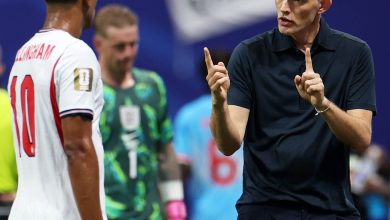
Thomas Tuchel admitted after the Norway game that he was unhappy with England’s overall performance despite praising his players’ mentality.
Jude Bellingham, who once again proved decisive with two goals, disagreed with some of his manager’s criticism, insisting the difficult weather conditions made the match far tougher than many observers appreciated.
England will now hope to improve their performance when they face Lionel Scaloni’s side for a place in the World Cup final.
Norway left wondering what might have been
For Norway, the defeat marked a heartbreaking end to what had been their best-ever World Cup campaign.
Martin Ødegaard, Erling Haaland and their teammates pushed England all the way but ultimately fell short after extra time.
Despite the disappointment, the tournament demonstrated Norway’s growing strength on the international stage, with the squad reaching the quarter-finals for the first time in their history.
Nevertheless, the controversial officiating decisions—and the heated exchange between Roy Keane and Alf-Inge Haaland—have ensured that the fallout from England’s victory will remain a major talking point long after the final whistle.
As England continue their quest for World Cup glory, Keane’s brutal response has added another memorable chapter to one of football’s fiercest personal rivalries, proving that some grudges never truly fade.