FIFA has announced a significant change to its Video Assistant Referee (VAR) operations just hours before England face Argentina in one of the biggest matches of the 2026 FIFA World Cup, as football’s governing body attempts to improve officiating following a wave of criticism throughout the tournament.
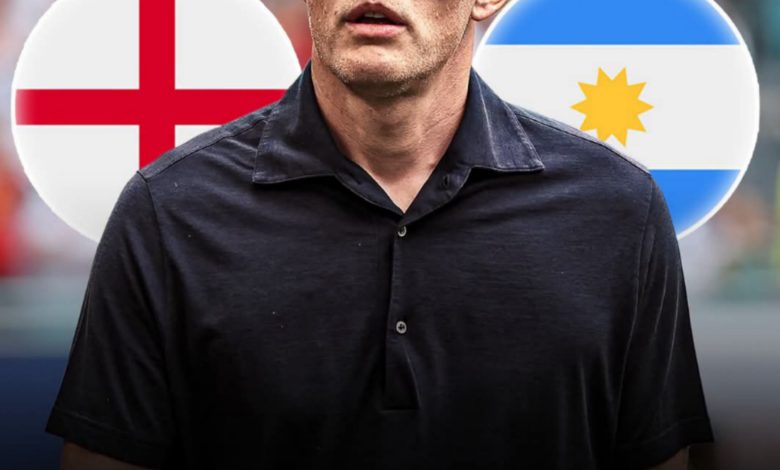
The highly anticipated semi-final at Atlanta Stadium will determine who joins either France or Spain in Sunday’s World Cup final, with England chasing their first appearance in the tournament’s showpiece since lifting the trophy in 1966. However, ahead of the clash between two of international football’s fiercest rivals, much of the discussion has centred on officiating rather than tactics.
After several controversial VAR decisions during both the group stage and knockout rounds, FIFA has decided to alter how the technology will operate for the closing stages of the competition. The governing body hopes the adjustment will reduce the risk of communication failures and improve the speed and efficiency of decision-making during the semi-finals and final.
FIFA responds to growing VAR criticism
VAR has once again divided opinion throughout the 2026 World Cup.
While the technology was introduced to eliminate clear and obvious refereeing mistakes, many supporters, players and managers have instead questioned the consistency of decisions made during the tournament.
Several high-profile matches have been overshadowed by lengthy reviews and controversial interventions, prompting criticism from national teams and football pundits alike.
England themselves experienced frustrating moments during their dramatic quarter-final victory over Norway.
Thomas Tuchel’s side eventually progressed thanks to Jude Bellingham’s extra-time winner, but they were left bewildered after seeing a penalty award overturned following a VAR review. Many observers believed Djed Spence had been fouled inside the area by a Norwegian defender, only for officials to reverse the original decision.
That incident became one of several contentious moments involving VAR during the knockout rounds.
Egypt’s complaints added pressure on FIFA
England were not the only nation left unhappy with the use of technology.
Egypt also voiced serious concerns after their heartbreaking defeat to Argentina.
The African side believed they had established a commanding lead during their Round of 16 clash before Mostafa Ziko’s goal was ruled out following a lengthy VAR intervention.
Officials determined that Lisandro Martinez had been fouled earlier in the attacking move, leading to the goal being cancelled.
The decision sparked outrage among Egyptian players, coaching staff and supporters.
In the aftermath of the match, the Egyptian Football Association released an official statement expressing its dissatisfaction and formally requesting clarification from FIFA over the officiating.
The controversy added further pressure on football’s governing body, which had already faced criticism over several major decisions throughout the tournament.
FIFA introduces major operational change
In response, FIFA has now altered the way VAR will operate for the remainder of the competition.
Up until now, video officials have worked remotely from the International Broadcast Centre located in Dallas, regardless of where matches have been played across the United States, Canada and Mexico.
That system has been used consistently throughout the tournament.
However, for England’s semi-final against Argentina—and the remaining matches—FIFA has decided to station VAR officials on-site at the stadium.
The move represents one of the biggest officiating adjustments made during the tournament.
Rather than relying solely on the remote operations centre, officials will now be much closer to the action.
Although the overall review process remains unchanged, having VAR personnel inside the stadium provides an additional safeguard should technical or communication issues arise between the referee and the review team.
Why FIFA made the decision
FIFA has stressed that the change is primarily intended as a contingency measure rather than a complete overhaul of the VAR process.
The technology itself remains exactly the same, with officials still reviewing incidents using multiple camera angles before communicating with the referee.
However, reducing the physical distance between the match officials and the VAR team is expected to improve operational reliability during football’s biggest games.
Speaking about the decision, FC Dallas owner and FIFA World Cup Organising Committee member Dan Hunt explained why organisers felt the adjustment was necessary.
“There’s a lot of drama that unfolds in these games,” Hunt said.
“And look, when you are asking only four officials to manage what’s going on on the field, it’s very difficult on a field that’s much bigger than an American football field.”
He welcomed the decision to bring officials closer to the stadium environment.
“I’m glad that there’s gonna be on-site. I don’t know what that communication’s gonna look like.”
His comments reflected FIFA’s desire to eliminate even the smallest possibility of technical complications during the semi-finals and final.
England hope controversies stay away
England will certainly hope the new arrangement leads to fewer controversial moments.
Thomas Tuchel’s side have already endured an emotional route to the last four.
After defeating DR Congo and Mexico in the previous knockout rounds, England required extra time to overcome Norway in a tense quarter-final.
Jude Bellingham once again emerged as the match-winner, scoring twice to rescue England after Andreas Schjelderup had given Norway the lead shortly before half-time.
Despite celebrating progression, England’s victory was followed by widespread debate over several refereeing decisions, including Norway’s belief that Bellingham’s equaliser should have been ruled out after claims the ball struck a spider-cam cable before the move developed.
FIFA’s Connected Ball Technology found no evidence of contact, allowing the goal to stand, but the controversy added further scrutiny to officiating standards.
Experienced officials take charge
The semi-final itself will be overseen by experienced American referee Ismail Elfath.
He will be assisted by fellow Americans Corey Parker and Kyle Atkins, while Italy’s Maurizio Mariani has been appointed as fourth official.
Elfath has already officiated several matches during the tournament and is widely regarded as one of FIFA’s most trusted referees.
Interestingly, Lionel Messi has never lost a match refereed by Elfath, a statistic that has attracted attention ahead of Wednesday’s encounter.
England supporters, however, will hope that record ends as the Three Lions attempt to book a place in their first World Cup final in six decades.
Will the change actually improve VAR?
While the decision has generally been welcomed, many believe moving VAR officials closer to the stadium will not automatically solve the biggest problem surrounding the technology.
The controversy surrounding VAR has rarely been about communication failures.
Instead, much of the criticism has focused on how officials interpret incidents and apply the Laws of the Game consistently.
Supporters have frequently questioned why similar challenges receive different outcomes depending on the match or the referee involved.
Consequently, many believe FIFA’s latest adjustment is more about reassuring fans than fundamentally changing decision-making.
Even with officials working on-site, controversial calls may still occur if interpretations remain inconsistent.
Massive stakes in Atlanta
The importance of Wednesday’s semi-final only increases the pressure on the officiating team.
England are seeking to end nearly 60 years of World Cup disappointment by reaching another final, while Argentina hope to defend the trophy they won in Qatar four years earlier.
The match also brings together two nations whose football rivalry stretches back decades, from Diego Maradona’s famous exploits in 1986 to David Beckham’s redemption in 2002.
With Lionel Messi potentially making his final World Cup appearance and Jude Bellingham enjoying the tournament of his life, every major decision could prove decisive.
FIFA’s decision to relocate VAR officials demonstrates just how determined the organisation is to avoid another refereeing controversy overshadowing one of the biggest matches in international football.
Whether the adjustment succeeds will become clear once the whistle blows in Atlanta, but one thing is certain: every decision made by the officials will be scrutinised more closely than ever as England and Argentina battle for a place in the 2026 FIFA World Cup final.