MARTIN O’NEILL’S BRUTAL ADMISSION AFTER BENFICA HUMILIATION LEAVES CELTIC FANS STUNNED NOBODY SAW THIS COMING
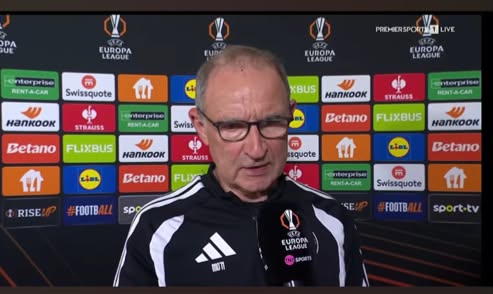
Celtic manager Martin O’Neill has delivered a brutally honest assessment of his side’s disappointing 4–1 defeat against Benfica, admitting that the Hoops allowed the match to slip away from them during a disastrous first half. However, despite the heavy defeat in Lisbon, the experienced manager has refused to give up hope of reaching the UEFA Europa League knockout stages, insisting that his team’s second-half performance has given him genuine reasons to believe they can still turn their European campaign around.
The result was a painful one for Celtic supporters, particularly after their team conceded three goals before half-time at the Estádio da Luz on Thursday night. While the Scottish side showed considerably more attacking intent after the break, their improved performance ultimately proved insufficient to prevent another damaging European defeat.
Yet it was O’Neill’s post-match reaction that offered the most revealing insight into Celtic’s difficult evening.
Rather than dismissing his players or suggesting that their European ambitions were already over, the Celtic boss acknowledged the mistakes that had cost his team while pointing to the character they displayed after the interval.
His comments have left supporters with two very different questions to consider: how did Celtic allow Benfica to establish such a commanding advantage, and can the positives from the second half provide a foundation for recovery?
A DISASTROUS FIRST HALF LEFT CELTIC WITH TOO MUCH TO DO
Celtic’s problems began almost immediately after the match started.
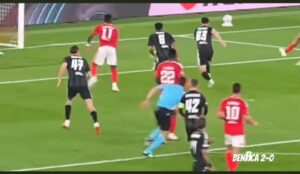
Benfica took the lead in the fifth minute after Dane Murray fouled Jhon Durán inside the penalty area. The Colombian striker stepped forward and converted the resulting penalty with a Panenka finish, giving the Portuguese side an early advantage and putting Celtic under immediate pressure.
For O’Neill, conceding so early was particularly frustrating because he felt his team had initially started the match reasonably well.
Speaking after the game, the Celtic manager explained: “It was tough. We conceded an early goal from a penalty kick. It put us on the back foot, particularly when we’d started actually quite brightly.”
Those comments revealed the frustration behind Celtic’s opening period. The team had arrived in Lisbon hoping to compete, but the early penalty forced them to chase the match before they had properly established themselves.
The situation became considerably worse in the 23rd minute when Alexander Bah doubled Benfica’s advantage.
Celtic were unable to regain control, and Durán struck again in the 36th minute to make it 3–0. Gianluca Prestianni played an important role in Benfica’s attacking display, providing the assists for Bah and Durán as the hosts repeatedly exposed weaknesses in the visiting defence.
By half-time, Celtic were facing the prospect of another difficult European evening.
O’Neill admitted that the scoreline could have had an even more damaging psychological effect on his players.
“We could have capitulated at half-time in the game at 3–0,” he explained.
It was a significant admission from the Celtic manager. He recognised that falling three goals behind away from home could have completely destroyed his team’s confidence, especially against opponents with Benfica’s attacking quality.
However, he also pointed to a missed opportunity that could have changed the direction of the contest.
“In fact, we should have scored. We had a great chance to make it 2-1 before they made it 3-0.”
That moment proved crucial. Had Celtic taken their opportunity, the match might have developed differently. Instead, Benfica extended their lead shortly afterwards, leaving the visitors with a mountain to climb.
O’NEILL ADMITS CELTIC LET THE GAME SLIP AWAY
Perhaps the most important part of O’Neill’s assessment concerned the difference between Celtic’s two halves.
The manager did not attempt to disguise the damage caused by the opening 45 minutes. Celtic had conceded three times, failed to take a key scoring opportunity and allowed Benfica to dictate the terms of the contest.
However, his response was not simply to criticise the result.
Instead, he focused on what happened after the interval, when Celtic showed greater urgency and began creating opportunities that had been difficult to manufacture during the opening period.
O’Neill acknowledged that Celtic had allowed the game to slip away in the first half, but he was encouraged by the effort his players produced afterwards.
He said: “But in terms of chances we created, I thought that was terrific. Of course, we let the game slip in the first half, but really big, big effort.”
That statement captures the central issue facing Celtic.
There was enough quality in their second-half display to suggest that they were capable of troubling Benfica, but their initial defensive problems had left them with too much ground to recover.
For supporters, that contrast will be particularly frustrating. Celtic demonstrated that they could put the opposition under pressure, yet they did not consistently show the same urgency when the match was still finely balanced.
The challenge for O’Neill will be ensuring that the determination displayed after half-time becomes a regular feature of the team’s performances rather than something that only emerges when they are chasing a heavy deficit.
SECOND-HALF SUBSTITUTIONS GIVE CELTIC REASON FOR HOPE
O’Neill made changes at the interval, introducing Callum Osmand and Haissem Hassan in place of Kasper Høgh and Sebastian Tounekti.
The substitutions helped Celtic approach the second half with greater attacking purpose.
Hassan, in particular, provided an additional threat from wide areas, while the visitors began moving the ball forward with greater urgency and attempting to stretch Benfica’s defence.
The improvement eventually produced a goal in the 63rd minute.
Hassan delivered a cross that Camilo Durán converted with a header, reducing the deficit to 3–1 and giving Celtic a brief opportunity to make the closing stages considerably more uncomfortable for the hosts.
The visitors continued pushing forward, and Camilo Durán struck the post in the 72nd minute as Celtic searched for another goal.
There were moments when the prospect of a more competitive finish appeared realistic. Had Celtic scored again, Benfica might have been forced to defend a much narrower advantage under increasing pressure.
O’Neill was particularly pleased with the influence of his substitutes.
“The substitutes coming on made a massive difference to us and I was delighted with the second half,” he said.
He also praised the team’s attacking response, explaining that Celtic had created numerous opportunities after the break.
That assessment provides an important clue about what the manager may take from the defeat.
Although the final score was disappointing, he believes the performance of his replacements demonstrated that Celtic possess players capable of changing the momentum of a match.
The question now is whether those changes should influence his selection decisions in the coming fixtures.
Supporters will naturally want to see the team begin matches with the same attacking energy they displayed in Lisbon, rather than relying on second-half interventions to rescue difficult situations.
BENFICA DELIVER THE FINAL BLOW AS CELTIC’S COMEBACK FADES
Despite Celtic’s improved performance, Benfica remained dangerous whenever opportunities emerged to attack on the counter.
The Portuguese side had already established a three-goal advantage, and their ability to exploit space meant Celtic could not commit everyone forward without accepting additional risks.
Those risks became evident in the closing stages.
Vangelis Pavlidis scored in the 89th minute to make it 4–1, restoring Benfica’s three-goal cushion and ending any remaining hopes of a late Celtic comeback.
For O’Neill, the final goal was another reminder that an improved attacking performance must be accompanied by defensive discipline.
He acknowledged that Benfica could threaten on the break, even while expressing satisfaction with the chances Celtic had created.
The defeat therefore presented a complicated picture.
Celtic had shown more determination and attacking quality after the interval, but Benfica ultimately demonstrated why teams cannot afford to lose their defensive organisation against dangerous European opponents.
The Scottish side must now find a way to combine the positive aspects of their second-half performance with greater concentration from the opening whistle.
Without that balance, promising attacking spells may continue to be undermined by mistakes at the other end.
THE ADMISSION THAT WILL GIVE CELTIC FANS SOMETHING TO THINK ABOUT
Despite the 4–1 defeat, O’Neill delivered a message that may surprise supporters expecting him to express serious doubts about Celtic’s European prospects.
Rather than conceding that qualification was becoming unrealistic, the manager insisted that his team’s second-half performance had strengthened his belief that they could still progress.
“Honestly, it gives me the heart to know that we’ll still qualify for the knockout stages,” O’Neill said.
It was an optimistic assessment following a damaging result, particularly because Celtic had now lost their opening two Europa League matches.
His confidence is understandable from the perspective of a manager who has seen his players respond positively after a difficult opening period. However, optimism alone will not be enough to repair the damage caused by consecutive defeats.
Celtic must turn those encouraging spells into results, and their remaining fixtures will become increasingly important as they attempt to improve their position in the league phase.
The manager’s comments suggest that he believes the team still has the ability to compete, but the players must demonstrate that belief on the pitch.
There is also a clear distinction between creating chances and converting them. Celtic had opportunities to make the match more competitive, yet their inability to take advantage of important moments allowed Benfica to maintain control.
If the Hoops are to recover, they must become more clinical in front of goal while eliminating the defensive errors that put them under unnecessary pressure.
WHAT THIS MEANS FOR CELTIC AHEAD OF THE HEARTS CLASH
Attention will now turn to Celtic’s next domestic challenge against Hearts on Sunday, October 18.
Following the disappointment in Lisbon, the match offers O’Neill an immediate opportunity to assess how his players respond to adversity.
The manager has already indicated that he intends to take encouragement from the second-half performance against Benfica. His task is to ensure that the players carry that energy into their next appearance without repeating the mistakes that proved so costly in Portugal.
The Hearts encounter will also test Celtic’s ability to manage pressure. After a heavy European defeat, supporters will expect a determined response, particularly from a team that demonstrated its attacking potential during the second half.
Selection decisions could become an important talking point, especially after O’Neill acknowledged the positive influence of his substitutes.
Hassan and Osmand helped inject fresh energy into the attack, while Camilo Durán provided the goal that briefly raised hopes of a comeback.
Whether those performances earn them more prominent roles remains to be seen, but O’Neill now has further evidence to consider as he evaluates his options.
Celtic must also address the defensive concerns exposed by Benfica. Conceding three times before half-time left the team with little room for error, and another slow start against domestic opposition could create fresh difficulties.
A positive response against Hearts would not erase the European defeat, but it could help restore confidence ahead of the next Europa League fixture.
CELTIC’S EUROPEAN CAMPAIGN IS FAR FROM OVER, BUT IMPROVEMENT IS ESSENTIAL
Martin O’Neill’s reaction to the Benfica defeat was a mixture of disappointment, honesty and determination.
He acknowledged that Celtic had allowed the match to slip away in the first half, recognised the importance of their missed opportunities and praised the attacking response that followed the interval.
Most importantly, he made it clear that he still believes Celtic can reach the knockout stages.
That confidence will provide encouragement to supporters, but the manager’s challenge is now to turn his words into tangible progress.
The 4–1 defeat exposed weaknesses that cannot be ignored, particularly the team’s defensive vulnerability during the opening 45 minutes. At the same time, Celtic’s second-half display demonstrated that they can create problems for strong opposition when they attack with conviction.
The truth is that both performances came from the same team on the same night.
Celtic must learn from the first half while building on the second.
O’Neill’s admission that his side let the game slip away was an honest acknowledgement of what went wrong, but his determination to keep fighting for qualification showed that he has not abandoned the campaign.
Now, the responsibility falls on the players to respond.
For Celtic supporters, the immediate priority will be a stronger performance against Hearts, followed by a serious attempt to get their European campaign back on track against Celta Vigo on October 22.
The defeat in Lisbon has created difficult questions, and the manager’s optimism will only carry weight if Celtic begin producing the results required to support it.
One thing is certain: O’Neill has seen enough in Celtic’s second-half response to keep believing. The big question is whether his players can turn that belief into the performances their supporters desperately want to see.