DION DUBLIN FIRES BACK! SUNDERLAND STAR UNDER PRESSURE AFTER SHOCK ARROGANCE CLAIM!
Sunderland are facing an uncomfortable moment in their Premier League campaign, and the controversy surrounding their latest defeat has taken a fresh twist after Nordi Mukiele delivered a brutally honest assessment of the club’s struggles.
The French defender did not hide his frustration after Sunderland’s damaging 2–0 defeat against Bournemouth. Instead of searching for excuses, Mukiele questioned the mentality of his teammates and suggested that arrogance could be one of the reasons behind their disappointing performances.
But his comments have sparked a different debate, with former Premier League striker Dion Dublin questioning whether such criticism should have been made publicly.
And suddenly, Sunderland have another problem to deal with.
The Black Cats are struggling to find results on the pitch, confidence appears to be under pressure, and questions are now being asked about what is happening inside the dressing room.
For a club that enjoyed such a memorable return to the Premier League last season, the contrast is becoming increasingly difficult to ignore.
Could Mukiele’s explosive honesty be exactly what Sunderland need to turn their season around, or has the defender made a difficult situation even more complicated?
DION DUBLIN QUESTIONS MUKIELE’S DECISION TO SPEAK OUT!
Dion Dublin has made his position clear regarding Mukiele’s public criticism of Sunderland’s mentality.
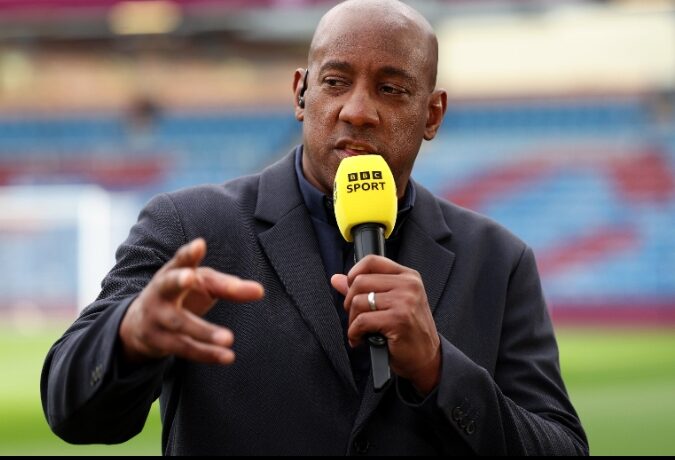
Speaking during BBC’s Match of the Day analysis, the former striker questioned whether the defender should have taken his concerns directly to his teammates and manager rather than discussing them in front of the cameras.
Dublin’s argument was straightforward: when problems develop inside a football dressing room, players must be able to confront them privately and work together to find solutions.
Public criticism can create headlines, but it does not automatically resolve the problems responsible for poor performances.
For Dublin, the important issue was not necessarily whether Mukiele had a point. It was whether making those concerns public was the right decision at such a difficult moment.
That distinction is crucial.
Mukiele was clearly frustrated with what he had witnessed against Bournemouth, and his comments reflected the disappointment of a player who believes Sunderland should be performing much better.
However, Dublin’s response raises another question.
If a player believes his teammates have become complacent, should he be encouraged to speak honestly, even if his words cause discomfort? Or should those conversations remain behind closed doors until the team has had an opportunity to address the situation internally?
There is no easy answer, and that is precisely why the disagreement has become such a compelling talking point.
MUKIELE’S ARROGANCE CLAIM SENDS SHOCKWAVES THROUGH SUNDERLAND
The controversy began after Sunderland’s defeat at Bournemouth, where Mukiele delivered one of the most uncomfortable assessments of the team’s performances this season.
The defender admitted that Sunderland were not good enough and suggested that their impressive seventh-place finish last season might have contributed to a change in mentality.
He openly wondered whether the players had become arrogant.
It was a remarkable admission from someone inside the squad.
Rather than blaming an unlucky result, a difficult fixture or the quality of the opposition, Mukiele questioned whether Sunderland had lost some of the qualities that made them successful.
His comments were particularly striking because Sunderland’s previous campaign had generated so much excitement.
The Black Cats returned to the Premier League with determination, organisation and the kind of collective spirit that helped them exceed expectations.
Supporters had every reason to celebrate what the team achieved.
But football can change quickly.
Success can raise expectations, and expectations can become dangerous when players begin believing that previous achievements will automatically guarantee future results.
Mukiele’s suggestion was that Sunderland needed to remember what made them successful in the first place.
He wanted the team to return to the basics, rediscover its hunger and recognise that every Premier League match demands the same commitment.
It was a harsh assessment, but it also revealed how concerned he was about the direction of the campaign.
FOUR CONSECUTIVE DEFEATS: THE RESULTS THAT CHANGED EVERYTHING
Sunderland’s problems cannot be separated from their recent results.
The 2–0 defeat against Bournemouth extended their Premier League losing streak to four matches, leaving them in 19th place with four points from seven games.
The manner of the defeat made matters worse.
Marcus Tavernier opened the scoring early, before Kevin Danso received a red card in the 17th minute. Sunderland were forced to play most of the contest with ten men, making an already difficult afternoon even more challenging.
Evanilson subsequently doubled Bournemouth’s advantage, while Sunderland struggled to produce a meaningful attacking response.
The result exposed several concerns at once.
Defensive mistakes continued to undermine the team, discipline became another problem, and the lack of attacking threat left Sunderland with little opportunity to recover.
These are precisely the circumstances in which questions about mentality become more serious.
A single defeat can be dismissed as a bad day. Four consecutive league losses suggest that something needs to change.
That does not automatically mean the manager has lost the dressing room or that the players no longer believe in the project.
However, it does mean Sunderland cannot afford to ignore the warning signs.
The team must find a way to stop individual mistakes, regain confidence and start turning performances into points.
Otherwise, the pressure surrounding the club will continue to grow.
IS REGIS LE BRIS ALSO UNDER PRESSURE?
Although the controversy centres on Mukiele and Dublin, the wider debate inevitably leads back to Régis Le Bris.
The Sunderland manager deserves recognition for helping the club achieve so much last season. However, previous success does not remove the need to find answers when results begin to deteriorate.
Le Bris must now work out why his team has struggled to maintain its domestic standards.
Is the problem tactical? Are the players struggling with the demands of competing in Europe and the Premier League? Has confidence dropped following a difficult run of results?
These are questions that require serious attention.
Sunderland have shown a different side of themselves in Europe, winning their opening two matches in the Europa League. That makes their domestic struggles even more frustrating.
The talent and determination that helped them succeed have not simply disappeared.
The challenge is finding a way to reproduce those qualities consistently.
Dublin also raised concerns about whether Sunderland possess enough squad depth to compete effectively on multiple fronts.
That is an important point.
European football brings excitement, but it also creates additional travel, fatigue and a demanding schedule. Managers need reliable alternatives across several positions, particularly when injuries and suspensions begin to accumulate.
Danso’s dismissal against Bournemouth creates another selection headache, while Dan Ballard’s absence adds to the defensive concerns.
Le Bris must now balance his European commitments with the urgent need to improve Sunderland’s Premier League position.
Every decision will be scrutinised, and every disappointing result will intensify the debate.
WAS MUKIELE WRONG TO TELL THE TRUTH?
This is where the controversy becomes particularly interesting.
There are strong arguments on both sides.
Those who agree with Mukiele will argue that Sunderland need honesty more than comfortable excuses.
If players have become complacent, someone must be willing to identify the problem. Footballers cannot demand accountability from their manager while refusing to accept responsibility themselves.
From that perspective, Mukiele’s comments could be a necessary wake-up call.
He has challenged his teammates to examine their performances and consider whether their attitude has changed since last season’s success.
Supporters who have watched Sunderland struggle may welcome that honesty.
They want players who care about results, recognise when standards have fallen and are prepared to demand more from themselves and one another.
However, Dublin’s position also deserves consideration.
A dressing room depends on trust. Players must be able to challenge one another without every disagreement becoming a public controversy.
When criticism reaches the media, individual comments can be interpreted in different ways. Teammates may feel exposed, and discussions that should lead to solutions can become distractions.
There is also a difference between identifying a problem and explaining how it will be solved.
Mukiele has made his concerns clear, but Sunderland still need to demonstrate that they can respond positively.
Ultimately, the truth of his assessment will be judged by what happens next.
If the players return to the pitch with greater determination and begin collecting points, his words may be remembered as a turning point.
If performances continue to deteriorate, the controversy could become another painful reminder of a team struggling to find its direction.
SUNDERLAND FANS WILL DEMAND AN ANSWER ON THE PITCH
For Sunderland supporters, the most important issue is not who wins the argument between Mukiele and Dublin.
It is whether their team can recover.
Fans have watched their club achieve a remarkable return to the top flight, and they will not want the excitement of last season to be followed by a prolonged relegation battle.
They understand that Premier League football is unforgiving. They also know that even talented teams can struggle when confidence disappears and mistakes begin to multiply.
But supporters will expect a response.
The upcoming European fixture against Lech Poznań offers Sunderland an immediate opportunity to restore some confidence before their Premier League meeting with Leeds United.
However, success in Europe cannot completely hide their domestic problems.
Le Bris must ensure his players understand the importance of both competitions, while the squad must demonstrate that the standards established last season remain alive.
Mukiele’s comments have placed the spotlight on mentality. Dublin’s criticism has added another dimension to the debate.
Now the players must provide the answer.
THE VERDICT: A WAKE-UP CALL OR A DRESSING-ROOM DISTRACTION?
Sunderland are at a point where honest conversations are necessary, but those conversations must lead to meaningful action.
Mukiele’s accusation of arrogance was a serious one. It suggested that the club’s struggles might involve more than tactics, injuries or difficult opposition.
Dublin’s response highlights the risks of taking internal frustrations into the public arena.
Neither argument can be settled by headlines alone.
Sunderland need unity, discipline, improved performances and a clear response from their senior players. Le Bris must find solutions, while the squad must accept responsibility for the mistakes that have contributed to this losing run.
The coming matches will reveal whether Mukiele’s words have inspired a reaction or created another distraction.
One thing is certain: Sunderland cannot afford to let this controversy become bigger than the football itself.
The Black Cats have already shown that they can compete and surprise their critics. Now they must prove that last season’s success was built on standards they can maintain, rather than a brief period of momentum.
And the biggest question remains unanswered.
Was Nordi Mukiele brave enough to expose Sunderland’s real problem, or should he have kept his criticism inside the dressing room?
Dion Dublin has questioned his decision. Sunderland’s supporters will have their own opinions.
But the final verdict will come on the pitch.