RED CARD DISASTER! SUNDERLAND HUMILIATED AS LE BRIS FACES HUGE QUESTIONS
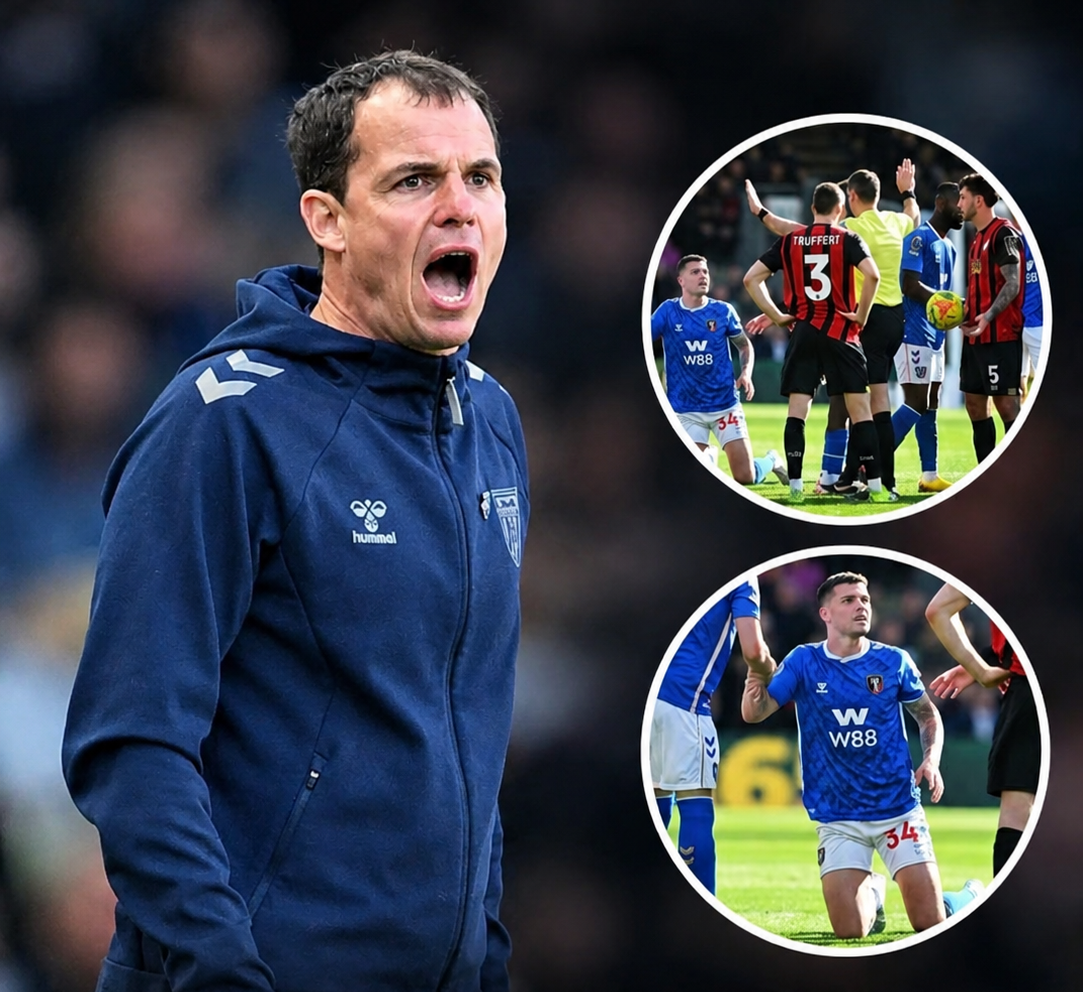
Sunderland’s Nightmare Afternoon Gets Worse as Bournemouth Punish Ten-Man Black Cats
Sunderland’s difficult Premier League campaign has suffered another painful setback, and this time, the circumstances surrounding their defeat have left supporters with even more questions than answers.
A disastrous afternoon against Bournemouth saw Sunderland reduced to ten men inside the opening 20 minutes before eventually suffering a 2–0 defeat. What began as an opportunity to stop their losing run quickly turned into another frustrating chapter in a season that is becoming increasingly demanding for Régis Le Bris and his players.
The early dismissal of Kevin Danso changed the entire complexion of the contest. Sunderland were forced to reorganise, defend for long periods and attempt to contain a Bournemouth side that suddenly had a numerical advantage.
But despite the obvious difficulty of playing with ten men, the final result has intensified the scrutiny surrounding Sunderland’s performances, their defensive discipline and the manager’s ability to find a solution.
Four consecutive league defeats have left little room for comfort.
The Black Cats needed a response. Instead, they returned from the south coast with another loss, more frustration and fresh questions about what must change before their situation becomes even more difficult.
And with pressure mounting, one question now dominates the conversation around the Stadium of Light:
Can Le Bris stop Sunderland’s slide before it threatens to derail their season?
A RED CARD THAT CHANGED EVERYTHING
The afternoon could hardly have become more complicated for Sunderland.
Kevin Danso’s dismissal in the 17th minute immediately placed the visitors under enormous pressure. Playing away from home in the Premier League is difficult enough, but losing a player so early forces a manager to reconsider almost everything.
The formation must change. Midfielders have to cover more ground. Defenders must communicate constantly, while the remaining attackers are often left with fewer opportunities to threaten the opposition.
For Le Bris, the immediate priority was clear: keep Sunderland organised, limit Bournemouth’s opportunities and find a way to remain competitive despite the numerical disadvantage.
However, Bournemouth understood that the circumstances had shifted in their favour.
With an extra player available, the home side could stretch Sunderland’s defensive structure, move the ball into dangerous areas and force the visitors to spend long periods without possession.
Sunderland’s task became increasingly difficult as the match progressed.
The dismissal was undoubtedly a major turning point, but it also highlighted a familiar problem for teams fighting to establish consistency at the highest level: one costly incident can undo hours of preparation.
Sunderland cannot afford to repeatedly place themselves in situations where they must overcome enormous obstacles simply to remain in a match.
Discipline is essential in the Premier League, and the consequences of losing a player early can be devastating.
For Le Bris, the challenge is to ensure that frustration does not lead to further mistakes.
BOURNEMOUTH TAKE FULL ADVANTAGE
Bournemouth needed no invitation to exploit Sunderland’s disadvantage.
The home side increased the pressure and eventually found the breakthrough through Marcus Tavernier before Evanilson added another goal to secure a 2–0 victory.
For Bournemouth, it was a valuable result. For Sunderland, it was another afternoon in which their efforts to regain momentum ended in disappointment.
The difference between the two sides became increasingly apparent as Sunderland struggled to create enough attacking opportunities while trying to protect their goal.
Playing with ten men demands extraordinary concentration. Every defensive movement becomes more important, and every mistake creates the possibility of another dangerous situation.
Bournemouth were able to make their numerical advantage count.
Sunderland, meanwhile, were left chasing the game without the resources to attack with their usual numbers.
There is no denying that the red card made the contest substantially harder for the visitors. Any fair assessment of the performance must take that into consideration.
Nevertheless, the result cannot be viewed in isolation.
Sunderland entered the contest under pressure following a run of league defeats. They desperately needed a positive result, but instead, another setback has intensified the debate about their direction.
The immediate disappointment is understandable.
The bigger concern is whether Sunderland can learn from the experience quickly enough to prevent this difficult period from becoming a prolonged struggle.
FOUR STRAIGHT DEFEATS: THE ALARM BELLS ARE RINGING
One defeat can be explained. Two can be described as a difficult spell. But when losses begin to accumulate, questions naturally become more serious.
Sunderland’s fourth consecutive league defeat has increased the pressure surrounding the team.
Supporters want to see improvement. Players need confidence. The manager must find a way to restore belief while addressing the weaknesses that have contributed to the disappointing results.
That is easier said than done.
A losing run can affect the way a team approaches matches. Players may become hesitant in possession, defenders may begin second-guessing their decisions, and attackers can lose confidence when opportunities fail to arrive.
Even routine situations can become complicated when a side is desperate to end a poor run.
The danger is that every subsequent defeat increases the pressure surrounding the next match.
Sunderland must break that cycle.
The team needs to rediscover its organisation, improve its decision-making and demonstrate that it can respond positively when faced with adversity.
Le Bris must also determine whether the problems are primarily tactical, psychological or a combination of both.
There is little value in simply demanding more effort if the team is also struggling with positioning, balance or execution.
The solution must be clear, practical and achievable.
Most importantly, Sunderland need to turn their frustration into a performance that restores confidence.
LE BRIS FACES UNCOMFORTABLE QUESTIONS
The Sunderland manager is inevitably at the centre of the discussion.
Le Bris has the responsibility of preparing the team, choosing the starting eleven and making the adjustments required when circumstances change.
The red card against Bournemouth limited his options, but the wider run of league defeats means scrutiny is unavoidable.
Supporters will want to know how Sunderland intend to respond.
Will Le Bris change his tactical approach? Could different players be given opportunities? Does the team need to become more cautious defensively, or should Sunderland continue trying to impose themselves on their opponents?
These are legitimate questions for any manager whose team is struggling to collect results.
However, it would be premature to suggest that one defeat automatically makes Le Bris’s position untenable.
Football seasons are rarely straightforward, particularly for clubs attempting to compete consistently in the Premier League.
The important issue is how the manager responds to the current situation.
A strong manager must be capable of identifying weaknesses without losing confidence in the entire project.
Le Bris needs to assess what has gone wrong, communicate his expectations clearly and ensure that the players understand their responsibilities.
The coming fixtures will be important because Sunderland need more than encouraging words. They need evidence that the team is moving in the right direction.
Another poor result would inevitably intensify the debate.
A convincing response, on the other hand, could help restore confidence and remind supporters that this difficult period does not have to define the campaign.
SUNDERLAND’S DEFENSIVE DISCIPLINE MUST IMPROVE
The Danso dismissal has placed discipline firmly under the spotlight.
Sunderland cannot control every decision made during a match, but they can control their preparation, positioning, communication and response to difficult situations.
Avoidable mistakes can be especially damaging for a team already struggling for results.
When a side is under pressure, the temptation to make desperate challenges or force difficult passes can increase. That is precisely when composure becomes most important.
Sunderland need to remain calm, even when opponents begin to dominate possession or the crowd becomes increasingly vocal.
The defensive unit must work together, with midfielders providing protection and attackers helping the team maintain its structure when possession is lost.
Discipline also means avoiding unnecessary bookings, maintaining concentration during set pieces and making sensible decisions in dangerous areas.
These details may appear small, but they can determine whether a difficult afternoon ends in a narrow defeat or a damaging result.
Le Bris will need his players to understand that the best teams do not simply defend well when everything is going according to plan.
They remain organised when the situation becomes uncomfortable.
That is a lesson Sunderland must take from Bournemouth.
SUPPORTERS WANT FIGHT, NOT MORE EXCUSES
Sunderland’s supporters understand that the Premier League presents enormous challenges.
They know that the club will face stronger opponents, encounter difficult spells and occasionally suffer results that nobody expected.
What they want in return is commitment, accountability and visible improvement.
The red card will inevitably form part of the discussion about the Bournemouth defeat. Yet supporters will also be looking at how the players respond when they return to action.
Will Sunderland show greater determination? Will the team look more organised? Will the players demonstrate that they have learned from their mistakes?
These are the signs that can help rebuild trust.
A difficult run does not necessarily destroy a team’s season. Sometimes it becomes the experience that forces a squad to improve its standards and develop greater resilience.
But that only happens when lessons are learned.
Sunderland cannot allow frustration to turn into panic, and they cannot afford to approach the next match as though a single victory will automatically resolve every concern.
They need consistency.
The supporters want to see a team that fights for every ball, remains disciplined under pressure and continues competing even when circumstances turn against it.
Those qualities will matter enormously in the weeks ahead.
THE NEXT MATCH COULD BE CRUCIAL
The pressure is building, but Sunderland still have an opportunity to change the conversation.
The next league fixture offers Le Bris and his players a chance to demonstrate that the Bournemouth defeat was a setback rather than the beginning of an even more damaging decline.
Preparation will be vital.
The coaching staff must review the mistakes made, assess the team’s physical condition and decide whether tactical changes are necessary.
The players must also accept responsibility for their performances.
There is no point dwelling endlessly on the red card. Sunderland must learn from the incident and move forward.
The objective is straightforward: compete with eleven players, remain organised, take opportunities when they arrive and avoid the errors that have made recent matches so difficult.
If Sunderland can deliver a disciplined performance and secure a positive result, the atmosphere surrounding the club could change quickly.
But another defeat would bring further scrutiny and make the need for improvement even more urgent.
That is the reality of Premier League football.
Results determine the mood, and Sunderland need one that restores belief.
FINAL VERDICT: CAN SUNDERLAND STOP THE SLIDE?
Sunderland’s 2–0 defeat against Bournemouth has created another difficult moment for Le Bris.
The early red card changed the contest, while goals from Tavernier and Evanilson ensured that the visitors left without the result they desperately needed.
Now, four consecutive league defeats have placed the spotlight firmly on the manager, the players and the team’s ability to respond under pressure.
The answer will not be found in headlines or post-match frustration.
It will be found on the pitch.
Sunderland must show greater discipline, improve their organisation and demonstrate that they can recover from setbacks without allowing them to define their performances.
Le Bris must find the right balance between maintaining his principles and making the adjustments necessary to improve results.
Most importantly, the players must respond collectively.
One difficult afternoon does not define an entire season, but repeated setbacks demand action.
Sunderland have reached a point where the next response matters enormously.
The red card may have changed the Bournemouth match, but what happens next will reveal whether Sunderland have the character to turn their season around.