Premier League Issues Statement on Controversial Marmoush Goal as Lampard Fumes
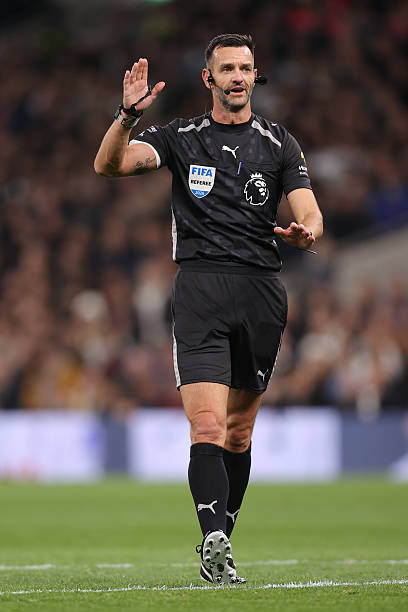
The Premier League has reportedly explained why Tottenham’s controversial second goal against Coventry City was allowed to stand, despite Frank Lampard’s furious reaction to an alleged elbow in the build-up.
Tottenham Hotspur’s 3-1 victory over Coventry City was overshadowed by a contentious incident involving Omar Marmoush and Coventry defender Milan van Ewijk.
The controversy unfolded in the 58th minute, when Marmoush restored Tottenham’s lead with a curling finish. However, the goal immediately sparked debate after the forward appeared to catch van Ewijk with a raised elbow during the attacking move.
Coventry players and supporters were left questioning why the goal was allowed to stand, particularly after VAR reviewed the incident without recommending that the on-field decision be overturned.
Coventry manager Frank Lampard was visibly frustrated by the decision, believing the contact should have been enough to disallow the goal.
The incident has reignited the debate surrounding VAR consistency in English football, with questions being raised about the threshold officials use when assessing potential fouls in the build-up to goals.
While the reported explanation from the Premier League Match Centre suggests the contact was considered accidental, Coventry’s frustration reflects a wider concern about how similar incidents are judged.
The Incident That Left Frank Lampard Furious
The controversy occurred during a crucial period of the match at Tottenham Hotspur Stadium.
With the score level at 1-1, both teams were looking for a breakthrough that could give them an advantage in the contest.
Tottenham eventually found the net through Marmoush, whose curling finish restored the home side’s lead.
However, the goal was immediately overshadowed by the events that preceded it.
During the attacking move, Marmoush appeared to make contact with Coventry full-back Milan van Ewijk using a raised elbow. The defender went to ground, prompting Coventry players to appeal for a foul.
Despite the protests, the referee allowed play to continue, and Tottenham celebrated what proved to be a significant goal in their eventual 3-1 victory.
The incident was subsequently reviewed by VAR, but the goal was not overturned.
For Coventry, the timing of the decision made it particularly frustrating. The match had been evenly poised, and conceding a second goal placed Lampard’s side under renewed pressure.
Although Tottenham ultimately secured the victory, the controversial moment became one of the main talking points after the final whistle.
The central question was whether Marmoush’s contact with van Ewijk constituted a foul that should have prevented the goal from standing.
That distinction is important because not every instance of physical contact automatically qualifies as an offence under the Laws of the Game.
Referees must consider the nature of the contact, the players’ movements and whether an opponent was carelessly, recklessly or excessively challenged.
In this case, the officials apparently concluded that the contact did not justify overturning the goal.
Frank Lampard Questions Why VAR Did Not Intervene
Lampard did not hide his disappointment when discussing the incident after the match.
The Coventry manager believed the contact was significant enough for VAR to intervene, particularly because Marmoush went on to score immediately afterwards.
Reflecting on the incident, Lampard reportedly said:
“I think if you roll and your elbows are that high and it connects with Milan in the contact it did, I thought VAR would cancel it. I did.”
His comments underline the frustration felt by Coventry’s coaching staff.
From Lampard’s perspective, the issue was not simply that two players came together during an attacking move. It was whether the nature and force of the contact should have resulted in a foul being awarded.
If the referee had judged that Marmoush committed an offence immediately before scoring, the goal could have been disallowed.
However, VAR operates under a specific intervention threshold. In general, it does not replace every on-field judgment with a new decision. For a subjective decision such as a potential foul, intervention is normally reserved for a clear and obvious error.
That distinction often becomes a source of controversy when supporters believe television replays show contact that should have resulted in a free-kick.
Lampard also appeared cautious about criticising the officials too strongly, acknowledging the difficulty of discussing contentious decisions after a match.
He reportedly added:
“You have to be really careful how you choose your words after this because there’s no point in getting after the event to get too deep into it. But I absolutely felt that.”
Despite choosing his words carefully, the Coventry manager’s frustration was clear.
His comments reflected a belief that the incident deserved greater scrutiny and that the outcome had an important impact on the match.
Other Decisions Added to Coventry’s Frustration
Lampard’s concerns reportedly extended beyond the incident involving Marmoush and van Ewijk.
The Coventry manager also referred to several other moments during the match that he felt had gone against his side.
Discussing those incidents, he reportedly said:
“The little bits add up, the corner adds up, Brandon getting fouled trying to stay on his feet and then another little action and you don’t get the advantage late into the game is a big deal for us. That’s all I’ll say about it.”
The comments suggest that Lampard was frustrated by what he perceived as a series of marginal decisions rather than one isolated incident.
In football, individual refereeing decisions can have different levels of importance depending on when they occur and how they influence the flow of a match.
A disputed corner may lead to a dangerous attacking opportunity, while an advantage decision can determine whether a team retains possession in a promising position.
However, each incident must be assessed on its own merits.
The existence of one controversial decision does not automatically mean that every other decision made during the match was incorrect.
Nevertheless, when several close calls occur in the same game, frustration can build among players, managers and supporters.
For Coventry, the disputed goal became the focal point of those concerns.
Lampard will now want his team to move forward from the disappointment while ensuring that the controversy does not distract them from their performances on the pitch.
Premier League Match Centre Explains the VAR Decision
The most significant development in the controversy was the reported explanation from the Premier League Match Centre.
According to the supplied information, the Match Centre stated:
“The VAR checked the possible foul in the build-up to the goal. The contact was deemed accidental and not a clear and obvious error. The goal stands.”
The reported statement explains why the goal was allowed to remain on the scoreboard.
The officials apparently considered the contact between Marmoush and van Ewijk and concluded that it did not meet the threshold for overturning the original decision.
However, the distinction between accidental contact and a punishable foul is central to understanding the incident.
Football is a physical game, and players regularly make contact when challenging for space or attempting to reach the ball.
The referee must determine whether that contact amounts to an offence under the Laws of the Game.
If a player carelessly challenges an opponent, a free-kick may be awarded. If the challenge is reckless, disciplinary action may also be necessary. Serious foul play or violent conduct can warrant a red card, depending on the circumstances.
A raised elbow is not automatically a foul in every situation, but its use, the force involved and the manner of contact are relevant to the referee’s assessment.
VAR then considers whether the on-field decision meets the criteria for intervention.
The reported explanation indicates that the officials did not consider the incident a clear and obvious error.
That does not mean every supporter must agree with the assessment. It means the officials decided that the original decision should remain unchanged following the review.
Importantly, the reported statement and quotations in the supplied account should be verified against an official Premier League source before being presented as confirmed statements.
Keith Hackett’s Reported Verdict on the Incident
Former PGMOL chief and ex-FIFA referee Keith Hackett was also cited in the supplied report as offering his assessment of the controversial incident.
Hackett reportedly supported the officials’ decision, arguing that the contact was accidental.
He was quoted as saying:
“The coming together is accidental so play was allowed to continue.”
He reportedly added:
“Where there is doubt that an offence has taken place the goal must be allowed.”
The comments, if accurately reported, reflect the importance of distinguishing between ordinary physical contact and a punishable offence.
However, the second statement should not be interpreted as a universal rule that every doubtful incident must automatically result in a goal being allowed.
The Laws of the Game require referees to assess whether an offence has occurred. VAR must then apply the relevant intervention criteria when reviewing the original decision.
If a clear foul has occurred immediately before a goal, the goal may be disallowed. If the officials determine that no offence took place, the goal can stand.
The question in the Marmoush incident is therefore whether the contact with van Ewijk should have been judged a foul in the first place.
Hackett’s reported assessment offers one perspective, but it should not be treated as conclusive proof that the decision was correct without verifying his full comments and the circumstances he considered.
Ultimately, the official decision remained unchanged following the reported VAR review.
Coventry Fans React to the Controversial Goal
The incident also sparked frustration among Coventry supporters, many of whom questioned the consistency of officiating in the Premier League.
According to the supplied report, some fans argued that the contact was sufficiently serious to warrant a foul.
One reported reaction stated: “That’s a clear elbow. VAR is a joke. How can they let that stand?”
Another supporter reportedly claimed that Marmoush should have been penalised for the contact before scoring.
Others questioned whether the same decision would have been reached if the incident had occurred at the opposite end of the pitch.
Such reactions demonstrate how contentious VAR decisions can influence the conversation surrounding a match.
Supporters naturally want their team to receive fair treatment, and a disputed goal can feel particularly damaging when it changes the momentum of a contest.
However, social media reactions represent individual opinions rather than a definitive assessment of the incident.
The most useful way to evaluate the decision is to consider the available footage, the relevant laws and the explanation provided by the match officials.
That approach allows supporters to disagree with the outcome while still examining the decision on its merits.
For Coventry, the frustration will be compounded by the fact that the goal was not overturned despite the appeals from their players.
What Does the Incident Mean for VAR?
The controversy has once again raised questions about the role of VAR in English football.
The system was introduced to help officials correct clear and obvious errors in important match situations, including goals, penalty decisions, direct red cards and cases of mistaken identity.
However, VAR was never intended to remove every subjective judgment from the game.
That distinction is particularly important when reviewing potential fouls in the build-up to goals.
Some incidents are straightforward. A clear trip or an obvious push may leave little room for disagreement.
Other situations involve physical contact that can be interpreted differently depending on the players’ movements, the force involved and the surrounding circumstances.
The Marmoush incident appears to fall into the latter category, given the disagreement between Coventry’s manager and the reported assessment from the officials.
For VAR to be effective, supporters need to understand not only the final decision but also why the relevant intervention threshold was or was not met.
Clear explanations can help reduce confusion, even when they do not satisfy every fan.
At the same time, consistency remains essential.
When similar incidents appear to receive different outcomes, supporters are more likely to question the reliability of the system.
The debate following Tottenham’s victory therefore highlights the continuing challenge of applying subjective laws consistently across different matches.
The Verdict: Why Tottenham’s Goal Stood
Tottenham’s 3-1 victory over Coventry City has been overshadowed by the controversy surrounding Marmoush’s goal and the alleged elbow on van Ewijk.
Frank Lampard believed the incident should have resulted in the goal being disallowed, while the supplied report attributes a different assessment to the Premier League Match Centre and former referee Keith Hackett.
The reported explanation was that the contact was considered accidental and did not meet the threshold for VAR intervention.
However, without independently verifying the official statement and Hackett’s full comments, it would be premature to present every quotation or interpretation in the supplied account as conclusively established.
What is clear from the account is that the decision has generated considerable debate about the distinction between accidental contact, a punishable foul and the threshold for VAR intervention.
For Coventry, the priority will be to respond positively on the pitch rather than allow the controversy to overshadow the team’s future performances.
For the officials, the incident serves as another reminder of the importance of clear communication when contentious decisions attract widespread attention.
The central question remains: should Marmoush’s contact with van Ewijk have been considered a foul, or was the decision to allow the goal to stand justified?
That is the issue supporters will continue to debate.
What Do You Think?
Was the referee right to allow Tottenham’s controversial goal to stand, or should VAR have intervened after the contact with Milan van Ewijk?
Do you agree with the reported assessment that the contact was accidental, or do you believe Coventry were unfairly treated?
Share your thoughts in the comments below