Strong verdict emerges on Frank Lampard after 7 Premier League games as Coventry boss following Tottenham controversy
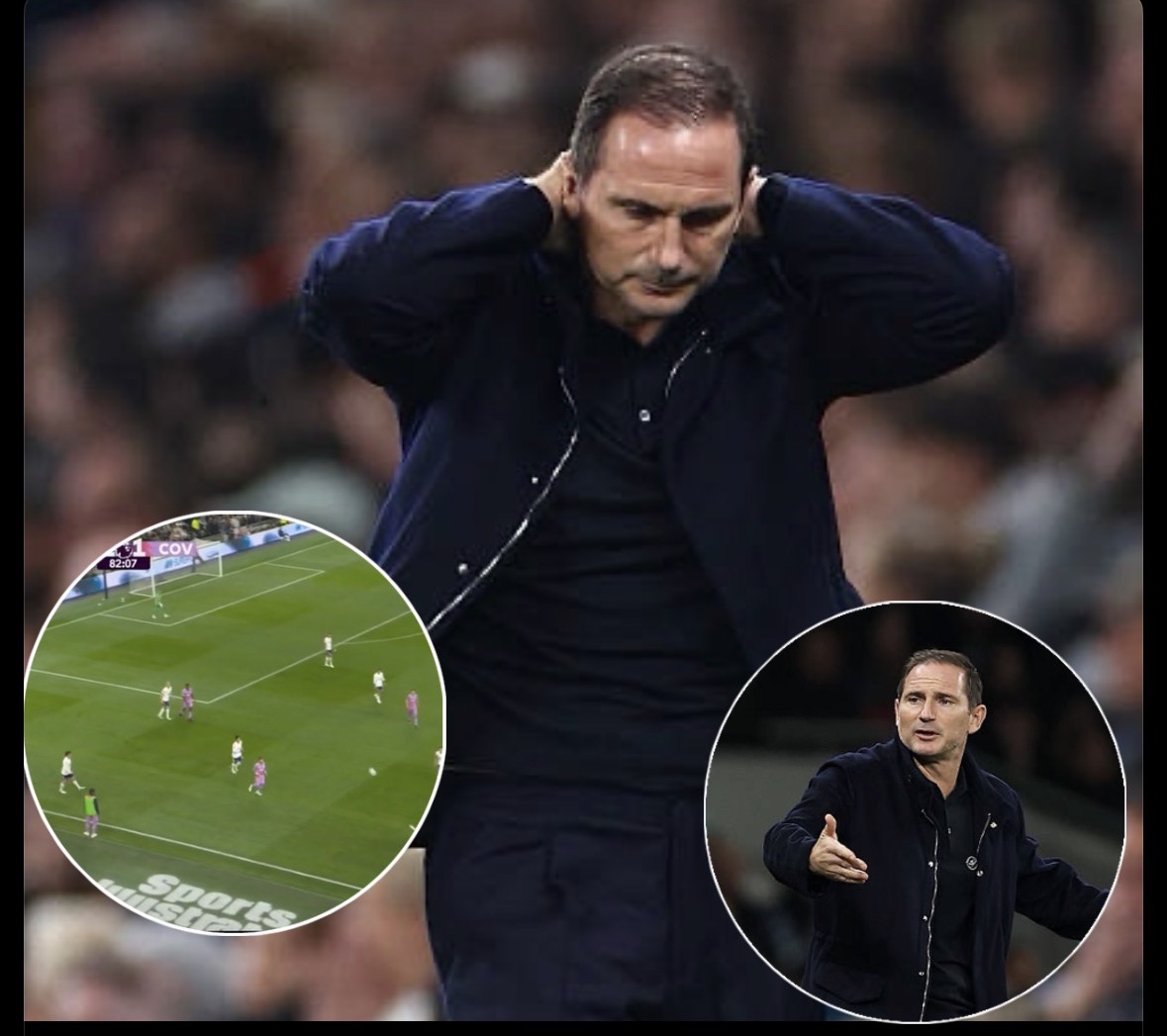
Frank Lampard has found himself at the centre of fresh discussion after Coventry City’s 3-1 defeat to Tottenham Hotspur, with the result raising questions about the Sky Blues’ ability to compete consistently in the Premier League.
Coventry travelled to north London on Monday night, October 19, hoping to build on their impressive 4-1 victory over Newcastle United in their previous league outing.
However, despite showing moments of promise, Lampard’s side left empty-handed after Tottenham secured their first Premier League victory of the campaign.
The result was painful enough for Coventry supporters, but the biggest talking point emerged in the second half when Omar Marmoush scored Tottenham’s second goal.
The Egyptian forward’s strike came after an incident involving Coventry defender Milan van Ewijk, who appeared to be caught in the face by Marmoush’s arm during the build-up.
The officials allowed the goal to stand, and VAR did not intervene to overturn the decision.
That moment immediately became one of the defining incidents of the contest, with Coventry players visibly frustrated and questions raised about whether a foul should have been awarded.
Lampard, however, chose not to make the refereeing decision the entire focus of his post-match assessment.
Instead, the Coventry manager reflected on his team’s performance, the quality of Tottenham’s goals and the lessons his players must take from the defeat.
Lampard’s reaction attracts attention
The former Chelsea and Everton manager had every reason to feel frustrated after watching his side lose a match in which they had worked hard to remain competitive.
Coventry had entered the contest with renewed confidence following consecutive victories over Nottingham Forest and Newcastle United.
Their performance against Newcastle had been particularly encouraging, with Lampard’s players scoring four goals and demonstrating the attacking threat that had helped them establish themselves as a competitive side.
Against Tottenham, however, they were unable to reproduce that same clinical finishing.
James Maddison gave Tottenham the lead before Jack Rudoni brought Coventry back into the contest shortly after half-time.
At 1-1, the visitors had an opportunity to put pressure on their hosts, who had struggled badly during the opening weeks of the season.
But Marmoush’s long-range effort restored Tottenham’s advantage, and Ben Davies added a third goal in stoppage time.
Speaking after the match, Lampard acknowledged that Marmoush’s goal was questionable because of the apparent contact with van Ewijk.
Nevertheless, he refused to turn his interview into a sustained attack on the officials.
His response was notable because the incident could easily have become the dominant subject of his post-match comments.
Instead, Lampard concentrated on the overall performance and the areas in which his team needed to improve.
That measured response provides an important part of the story: Coventry’s manager was disappointed with the decision, but he also recognised that his team needed to do more in the final third.
Seven Premier League matches tell a mixed story
After seven league matches in the 2026-27 campaign, Coventry have recorded two victories and five defeats.
The opening stretch has therefore been challenging for Lampard, particularly following the club’s return to the Premier League.
Coventry began their campaign with a defeat against Arsenal before suffering further losses against Hull City, Manchester City and Brighton.
Those results raised concerns about the step up in quality required to survive in the top flight.
However, the team’s subsequent victories over Nottingham Forest and Newcastle suggested that Lampard was beginning to find a formula capable of producing results.
The 4-1 win against Newcastle was especially significant because it demonstrated that Coventry could hurt established Premier League opponents when their attacking players performed effectively.
Unfortunately, the defeat against Tottenham interrupted that momentum.
Coventry’s record after seven matches does not tell the complete story of their season, but it does highlight the challenge facing Lampard.
He must find a way to make his side more consistent while ensuring that promising performances translate into points.
The manager will also be aware that newly promoted teams cannot afford to spend too long waiting for their results to improve.
Every point matters, particularly when the objective is to remain in the division.
The controversial Marmoush goal changes the conversation
The incident involving Marmoush and van Ewijk became the most contentious moment of the match.
At 1-1, Coventry were still in a position to take something from the game.
The visitors had recovered from conceding the opening goal and had given themselves a realistic opportunity to challenge Tottenham.
Marmoush’s strike changed the situation.
The forward found space outside the penalty area and unleashed a powerful effort that beat the goalkeeper.
Yet the goal was accompanied by controversy because of the contact that had occurred shortly before the shot.
For Coventry supporters, the concern was straightforward: should the referee have stopped play for a possible foul before allowing the goal to count?
That question will inevitably remain part of the discussion surrounding the match.
However, it is important to distinguish between a disputed decision and a proven officiating error. The fact that VAR did not intervene does not, by itself, establish that the goal should have been disallowed.
For Lampard, the challenge is to ensure that frustration over the incident does not distract his players from the work required to improve their results.
His team must learn to respond when decisions go against them, particularly during difficult away fixtures.
Coventry must improve their attacking threat
Although the refereeing controversy attracted attention, Coventry’s attacking performance also deserves examination.
Lampard’s team created some promising situations and showed that they were willing to take the game to Tottenham.
However, they struggled to turn those moments into clear opportunities that seriously tested the home goalkeeper.
That was a significant difference from their performance against Newcastle, when Coventry found the net four times.
Against Tottenham, Rudoni’s goal provided a route back into the contest, but the visitors were unable to find the equaliser they needed after falling behind again.
The lack of a sustained goal threat meant that Tottenham could protect their advantage with greater confidence as the match progressed.
This is an area Lampard must address.
Coventry do not necessarily need to dominate possession against every opponent, but they must make their attacking spells count.
Better decision-making in the final third, more accurate deliveries into dangerous areas and improved finishing could help them collect valuable points in the coming weeks.
The manager will also want his players to remain composed when they fall behind rather than allowing frustration to affect their performance.
Defensive concentration remains another concern
The three goals conceded against Tottenham will also give Lampard plenty to consider.
Maddison’s opener demonstrated Tottenham’s ability to punish defensive lapses, while Marmoush’s powerful effort proved decisive after Coventry had equalised.
Davies then added a third goal late in stoppage time, making the final scoreline more damaging for the visitors.
Although the controversial second goal will remain a talking point, Coventry cannot ignore the importance of defending more effectively throughout the full 90 minutes.
Newly promoted teams often face opponents with greater individual quality, making concentration and organisation especially important.
Lampard must ensure that his players remain disciplined when defending their penalty area, closing down shooters and tracking runners into dangerous positions.
The final goal was particularly frustrating because it arrived after Coventry had continued pushing for a way back into the game.
The difference between a narrow defeat and a three-goal concession can affect confidence, goal difference and the mood surrounding a club.
For that reason, the manager will be keen to ensure that his players learn from the match rather than allowing the disappointment to linger.
Is Lampard under pressure already?
Seven games are enough to identify problems, but they are not enough to deliver a definitive judgement on an entire Premier League campaign.
Lampard’s record of two wins and five defeats places Coventry in a difficult position, yet the victories against Nottingham Forest and Newcastle demonstrate that the team has the potential to compete.
The question is whether those performances can become the standard rather than occasional highlights.
There will be scrutiny on Lampard because of his experience as a manager and the expectations surrounding Coventry’s return to the top flight.
However, it would be premature to conclude that his position is under serious threat without evidence of that from the club.
The more reasonable assessment is that Lampard faces an important period in which his tactical decisions, team selection and ability to improve consistency will be closely examined.
His response to the Tottenham defeat suggests that he is keen to maintain perspective.
Rather than allowing one disputed decision to dominate the discussion, he has an opportunity to use the disappointment as motivation ahead of Coventry’s next fixture.
The next match could be important
Coventry’s attention must now turn towards their upcoming Premier League meeting with Fulham on October 24.
Playing at home will give Lampard’s side an opportunity to respond in front of their supporters.
The priority will be to turn the encouraging elements of their recent performances into another positive result.
Lampard will want his attacking players to rediscover the sharpness they demonstrated against Newcastle while ensuring that defensive mistakes do not undermine their efforts.
A strong response would help restore confidence and demonstrate that the Tottenham defeat has not derailed their progress.
Another disappointing result, however, would increase the pressure to find solutions quickly.
For Coventry, the coming fixtures represent an opportunity to establish greater consistency before the demands of the season become even more difficult.
The verdict on Lampard
The strongest conclusion from Coventry’s defeat is not that Lampard has failed, nor that the referee alone cost his team the match.
Instead, the performance highlighted both the promise and the limitations of his side.
Coventry showed enough determination to recover from Tottenham’s opening goal, but they could not maintain that momentum after Marmoush restored the home team’s lead.
The controversial decision understandably attracted attention, and Lampard was entitled to question the circumstances surrounding the goal.
Nevertheless, his bigger challenge remains improving Coventry’s overall results.
Two wins from seven league matches represent a difficult start, but the victories over Nottingham Forest and Newcastle offer reasons for optimism.
Lampard now needs to build on those performances, strengthen his team’s defensive concentration and help his forwards become more clinical.
The coming weeks will reveal whether Coventry can turn those encouraging signs into consistent results.
For now, the Tottenham defeat has raised important questions, but it has not provided the final verdict on Lampard’s season.
The Coventry manager still has an opportunity to respond on the pitch — and his team’s next performances will ultimately matter far more than the noise surrounding one controversial goal.