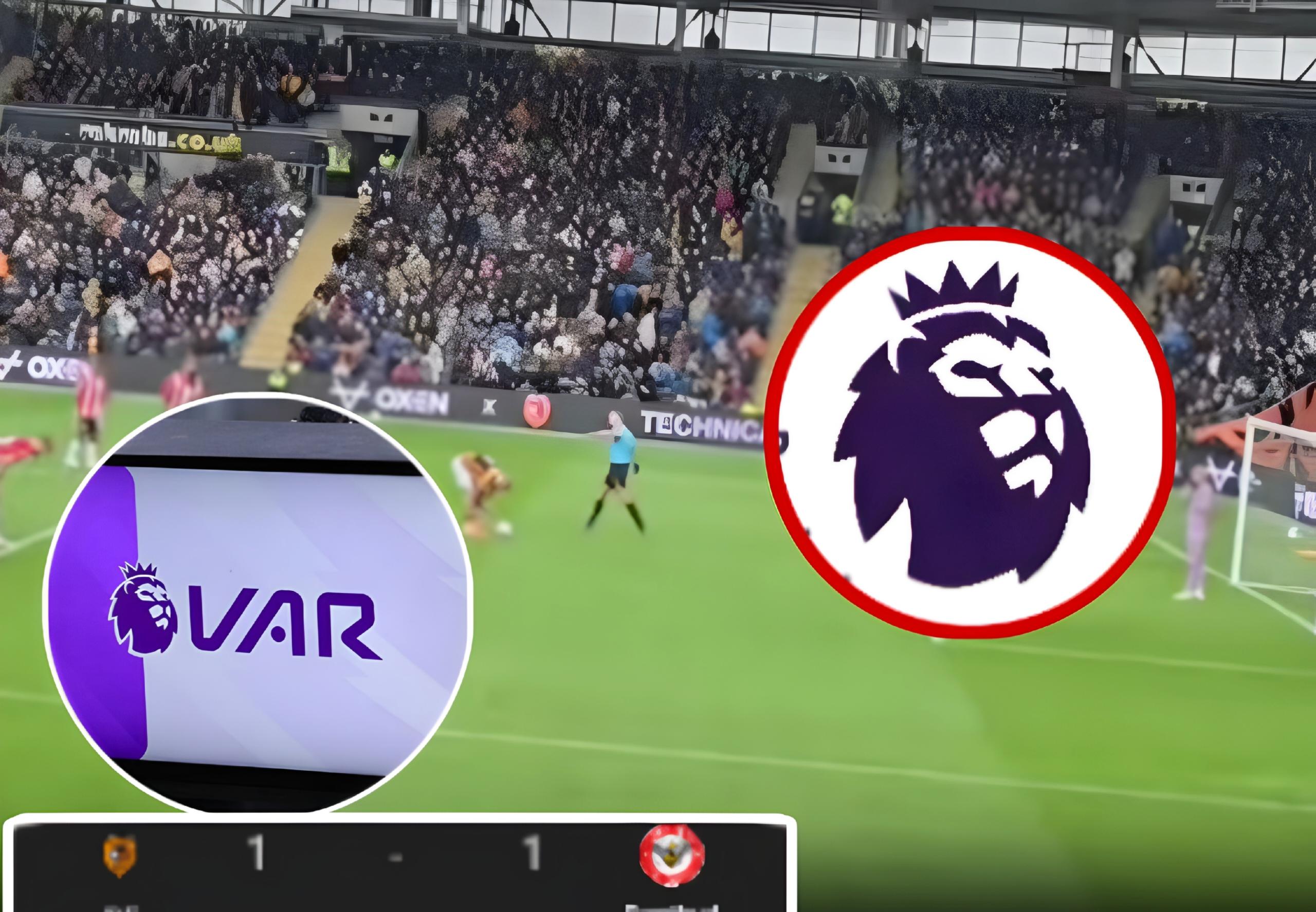
The debate surrounding VAR has erupted once again following Hull City’s clash with Brentford, with supporters questioning a crucial penalty decision that became one of the biggest talking points of the match.
What should have been a contest focused on the football quickly became a heated discussion about refereeing, the use of technology, and whether match officials are getting important decisions right when the pressure is at its highest.
The incident involving Hull City and Brentford left supporters debating whether the referee made the correct call, with many fans arguing that the decision to award Hull City a penalty was wrong.
For frustrated Brentford supporters, the central question was straightforward: if VAR is supposed to help officials avoid major mistakes, why are decisions like this still generating so much controversy?
The disagreement has reignited a familiar argument across English football. While some supporters believe VAR remains an important tool for correcting obvious errors, others feel that its application has introduced fresh uncertainty into the game.
And after the incident involving Hull City and Brentford, the conversation has once again turned towards the officials and the explanations supporters want to hear.
THE PENALTY DECISION THAT SPARKED AN OUTCRY
The controversy centred on the penalty awarded to Hull City following an incident involving Tim Iroegbunam and Brentford defender Aaron Hickey.
The decision gave Hull City a significant opportunity to take control of the contest, placing immediate pressure on Brentford to respond.
For Hull supporters, the award represented a valuable opportunity to get their team in front. For Brentford fans, however, the decision raised questions about whether the contact was sufficient to justify a penalty.
That difference in opinion quickly became the heart of the debate.
Football supporters understand that referees must make difficult decisions in real time. Penalty-area incidents can unfold in seconds, and determining whether contact constitutes a foul is not always straightforward.
Nevertheless, supporters increasingly expect VAR to provide additional clarity in precisely these situations.
The technology allows officials to review incidents from different angles and examine details that might be difficult to see during the initial passage of play.
However, when a decision remains disputed after a review, the existence of VAR can make the controversy even more frustrating for supporters who believe an obvious mistake should have been corrected.
That was the central issue for many Brentford fans following the penalty incident.
They wanted to understand why the decision was made and whether the available footage justified the outcome.
BRENTFORD FANS QUESTION THE REFEREE’S CALL
The reaction from frustrated supporters reflected a broader concern about consistency in football officiating.
Many fans argued that the penalty decision was wrong, questioning whether the incident warranted such a significant intervention in the match.
For supporters who disagreed with the call, the issue was not simply that their team had conceded a penalty. It was whether the same incident would have resulted in the same decision in another match.
Consistency has become one of the most frequently discussed subjects whenever VAR enters the conversation.
Supporters regularly compare decisions from different fixtures, searching for evidence that similar incidents are being judged according to the same standards.
When one team receives a penalty for a particular type of contact while another team appears to be denied one in a comparable situation, frustration naturally follows.
Brentford supporters wanted clarity over the reasoning behind the decision involving Hickey and Iroegbunam.
Was the contact considered sufficient to bring down the Hull player? Did the referee have a clear view of the incident? What did the VAR review establish?
These are the kinds of questions that can dominate discussions long after the final whistle.
For supporters, an explanation can be just as important as the decision itself. Even when fans disagree with an official, understanding the reasoning can help them assess how the laws of the game have been applied.
Without that clarity, uncertainty can continue to grow.
WHY VAR IS UNDER THE SPOTLIGHT AGAIN
The controversy has revived questions about the purpose of VAR and whether the system is delivering the level of certainty supporters expected when it was introduced.
Video technology was designed to help referees correct clear and obvious errors involving important match-changing incidents.
The intention was to reduce the likelihood of goals being incorrectly awarded or disallowed, penalties being wrongly given or overlooked, and serious disciplinary incidents being missed.
However, VAR was never intended to eliminate every disagreement in football.
Many decisions still depend on interpretation. Determining whether contact is sufficient for a foul, whether a player has committed an offence, or whether an incident meets the threshold for intervention can involve difficult judgement calls.
That distinction matters in the Hull City versus Brentford controversy.
Supporters who believe the penalty was incorrect may feel that the review should have led to a different outcome. Others may argue that the referee had sufficient grounds to maintain the original decision.
The disagreement illustrates one of the biggest challenges facing football officials: a review can provide more information without necessarily producing a decision that satisfies everyone.
Still, that does not mean supporters should stop asking questions.
When a major incident influences the direction of a match, clear communication can help supporters understand the decision-making process.
THE BIG QUESTION: SHOULD VAR HAVE INTERVENED DIFFERENTLY?
One of the most important questions surrounding the incident is whether VAR should have recommended a different decision.
Under the VAR framework, a review is not supposed to become a complete re-refereeing of every incident. Intervention is generally reserved for clear and obvious errors or serious missed incidents within the relevant review categories.
That threshold can make controversial penalty decisions particularly difficult to assess.
If the original decision falls within the range of reasonable interpretations, VAR may not intervene simply because another referee might have made a different call.
This is where supporters and officials can reach different conclusions.
A frustrated fan might watch a replay and believe there was insufficient contact for a penalty. An official, considering the incident alongside the applicable laws, might reach a different assessment.
The key question is whether the decision meets the required standard for intervention, rather than whether every supporter agrees with it.
Nevertheless, Brentford fans who believe the call was wrong are entitled to debate the incident and ask for a clear explanation of the reasoning behind it.
The controversy also raises a wider question about transparency.
Would supporters have a better understanding of the decision if the referee’s explanation were made available after the match? Would clearer communication reduce the anger surrounding controversial calls?
Those questions deserve serious consideration as football continues to refine its use of technology.
HULL CITY’S ADVANTAGE AND BRENTFORD’S RESPONSE
The penalty incident also mattered because of its potential influence on the balance of the match.
A penalty presents a team with an opportunity to score from a position that is normally far more favourable than an ordinary attacking situation.
When the decision goes in a team’s favour, the opposition must respond to both the scoreline and the psychological effect of conceding.
For Brentford, the challenge was to put the controversy aside and concentrate on the football.
Players cannot afford to spend the remainder of a match dwelling on a refereeing decision. They must continue competing, maintain their tactical discipline, and look for opportunities to recover.
Hull City, meanwhile, had the opportunity to benefit from the decision and build momentum.
That is why penalty incidents attract such strong reactions. They can affect the scoreline, change tactical approaches, and influence the emotions of players and supporters.
Yet the debate should not obscure the wider contest between the two teams.
Both sides still have to execute their plans, create opportunities, defend effectively, and take advantage of the moments that arise during a match.
Refereeing decisions may become the headline, but the football itself remains central to the result.
SUPPORTERS WANT CONSISTENCY, NOT MORE CONFUSION
The reaction to the Hull City versus Brentford incident highlights what many supporters want from football officiating: consistency, transparency, and clear communication.
Fans do not necessarily expect every decision to go in their team’s favour.
What they want is confidence that the laws are being applied fairly and that similar incidents are being judged according to consistent principles.
When a controversial decision occurs, a clear explanation can help supporters understand why the referee reached that conclusion.
Without one, debate can quickly become a contest between competing interpretations of the same incident.
Some supporters will insist that the penalty was justified. Others will maintain that the referee should never have awarded it.
Neither side is likely to abandon its position simply because the final whistle has sounded.
That is precisely why communication matters.
The more supporters understand the reasoning behind major decisions, the easier it becomes to distinguish between a genuine officiating error and a difficult judgement call that falls within the laws of the game.
For the officials involved, the challenge is not merely to make decisions correctly but also to maintain confidence in the process.
COULD THE INCIDENT LEAD TO FRESH CALLS FOR CHANGE?
The latest debate could add to the continuing calls for improvements in how controversial decisions are explained to supporters.
Some fans want more detailed public explanations following significant VAR incidents. Others want greater consistency in the threshold used to overturn referees’ decisions.
There are also supporters who believe the review process should be quicker, allowing matches to flow more naturally without lengthy interruptions.
These concerns are not necessarily mutually exclusive.
Football authorities face the difficult task of balancing accuracy, speed, transparency, and the referee’s authority on the pitch.
Intervening too frequently can undermine the referee’s original role and disrupt the game. Intervening too rarely can leave supporters wondering why technology failed to correct an apparent mistake.
Finding the right balance remains one of the most challenging aspects of modern officiating.
The Hull City and Brentford incident has provided another example of how a single penalty decision can reignite that discussion.
For Brentford fans who believe the call was wrong, the desire for answers is understandable. For supporters who agree with the referee, the important question is whether the decision can be explained consistently under the laws of the game.
Ultimately, the objective should be to make the process as clear and consistent as possible.
THE DEBATE IS FAR FROM OVER
The Hull City versus Brentford match may be remembered by many supporters for more than its footballing moments.
The disputed penalty has placed the spotlight on the referee, VAR, and the broader issue of how match-changing decisions are handled.
Many Brentford fans believe the call was wrong and want answers. Others may see the incident differently, arguing that the referee was entitled to make the decision based on the contact involved.
That disagreement is at the heart of football’s continuing relationship with VAR.
Technology can provide additional information, but it cannot guarantee that every decision will be universally accepted.
What supporters can reasonably demand is a process that applies the laws consistently, uses reviews appropriately, and explains major decisions clearly.
For now, the penalty incident remains a major talking point among those questioning the officiating in Hull City’s clash with Brentford.
The question supporters continue to ask is simple: if VAR is there to help get the big decisions right, how can officials convince fans that the process is working when a crucial penalty call leaves so many people unconvinced?
That question will continue to fuel the debate whenever a controversial decision threatens to overshadow the football itself.