FORMER PREMIER LEAGUE REFEREE SLAMS ONE OF THE ‘WORST MISTAKES’ MADE IN SUNDERLAND’S CLASH WITH CHELSEA

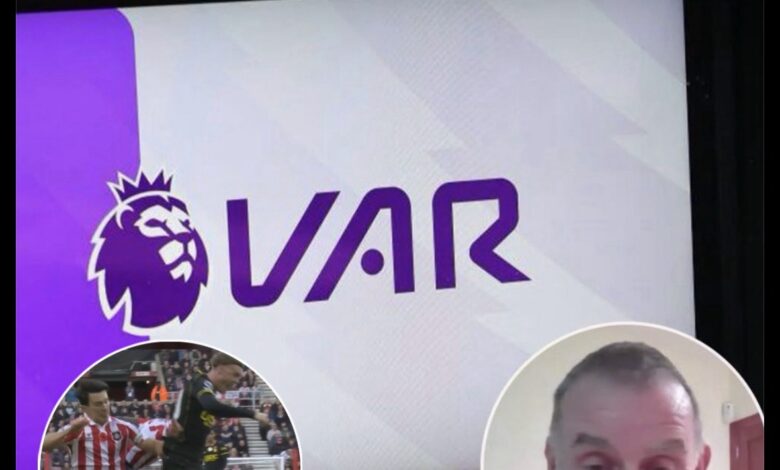
Sunderland’s dramatic 1-0 victory over Chelsea at the Stadium of Light has continued to generate controversy, with a former Premier League referee delivering a strong verdict on one of the most important refereeing decisions of the afternoon.
What should have been remembered as a massive result for Régis Le Bris and his players has instead become another talking point surrounding the standard of Premier League officiating and the use of VAR.
The Black Cats produced a determined performance against Chelsea, showing tremendous discipline and resilience to secure all three points. However, the result was heavily influenced by a controversial first-half penalty decision that has attracted considerable attention.
Former head of PGMOL and FIFA referee Keith Hackett has now questioned the decision that ultimately handed Sunderland their winning goal, arguing that VAR should have intervened.
His assessment has added another dimension to the debate, particularly because the incident involved two players pulling at each other inside Chelsea’s penalty area.
THE CONTROVERSIAL DECISION THAT CHANGED THE GAME
The major incident occurred during the first half when Sunderland striker Brian Brobbey became involved in a physical battle with Chelsea defender Levi Colwill.
Both players were competing for position as Brobbey attempted to get towards goal. There was clear physical contact between the two, with Colwill appearing to hold the Sunderland forward while Brobbey also had his hands on the Chelsea defender.
Referee Jarred Gillett eventually pointed to the penalty spot, deciding that Colwill had committed an offence inside the area.
Chelsea’s players immediately protested the decision, believing that Brobbey had also been holding Colwill and that the defender had been unfairly penalised.
However, after a VAR check, the original decision was allowed to stand.
Enzo Le Fée stepped forward and confidently converted the spot-kick, sending goalkeeper Mike Penders the wrong way and giving Sunderland the lead.
It proved to be the decisive moment of the contest, as Chelsea were unable to find an equaliser despite attempting to increase the pressure during the remainder of the match.
KEITH HACKETT QUESTIONS THE VAR DECISION
The biggest development came after the match when Keith Hackett gave his assessment of the controversial penalty.
Hackett, who previously served as head of PGMOL and officiated at FIFA level, believes the incident deserved a VAR intervention.
His argument centres on the actions of Brobbey, who he believes was also committing an offence during the physical contest with Colwill.
Speaking to Football Insider, Hackett explained that the video showed the Sunderland striker holding his opponent’s shirt and dragging him down.
He said:
“In my opinion, the Sunderland penalty kick awarded by referee Jarred Gillett should’ve seen the intervention of VAR.
“Review of the video shows that the Sunderland player is in fact the offender, holding his opponent by the shirt and dragging him to the ground behind him. Not a penalty kick for me.”
Those comments have naturally attracted attention because the penalty was not simply another decision during the match.
It directly produced the only goal of the game and ultimately separated the two sides.
Had VAR recommended an on-field review and the penalty been overturned, the outcome could potentially have been very different.
Chelsea would have avoided conceding from the spot, while Sunderland would have needed to find another way to break down their opponents.
WHY CHELSEA WERE SO FRUSTRATED
From Chelsea’s perspective, the frustration was understandable.
The visitors had travelled to the Stadium of Light hoping to collect three important points, but found themselves chasing the game after Le Fée’s penalty.
Colwill was particularly unhappy with the decision, especially because he believed Brobbey had initiated the holding during their battle.
The defender was also shown a yellow card following his protests.
Chelsea goalkeeper Mike Penders subsequently made his feelings clear, suggesting that Colwill had barely touched Brobbey and that the Sunderland forward had been holding his opponent.
It was an incident that left Chelsea questioning how the referee and VAR team had reached their conclusion.
However, it is important to recognise that Hackett’s opinion is an expert assessment rather than an official admission that the decision was wrong.
The fact that the original decision survived the VAR check also means the match officials were satisfied that there was no clear and obvious error requiring intervention.
IT WAS NOT THE ONLY CONTROVERSIAL MOMENT
Interestingly, the penalty incident was not the only major refereeing discussion from the afternoon.
Chelsea also had an appeal of their own when Cole Palmer went down following contact involving Luke O’Nien near the Sunderland penalty area.
The visitors believed they should have received a penalty, but VAR reviewed the incident and confirmed that the contact had occurred outside the box.
The Premier League match centre explained that the referee’s original decision of no penalty was checked and confirmed because the contact took place outside the penalty area.
That meant Chelsea were not awarded a spot-kick.
Nevertheless, the incident raised another question about the consistency of decisions during the match.
Hackett also gave his assessment of Palmer’s situation, arguing that the Chelsea player had been fouled and that the position of his foot on the penalty-area line was significant.
Under the Laws of the Game, the penalty-area line forms part of the area itself.
That detail became another reason for Chelsea supporters to question the officiating.
There was also a late handball appeal involving Chelsea midfielder Romeo Lavia, which Sunderland supporters felt should have been examined more closely.
With several incidents attracting attention, it was perhaps inevitable that the referee’s performance would become one of the biggest talking points after the final whistle.
SUNDERLAND WILL STILL TAKE THE THREE POINTS
Despite the controversy, Sunderland deserve credit for the performance they produced.
Le Bris’s players approached the contest with determination and showed that they were prepared to compete against a Chelsea side possessing considerable attacking quality.
The Black Cats worked hard defensively, limited the visitors’ opportunities and remained organised when Chelsea attempted to increase the tempo.
Brobbey also caused problems for the Chelsea defence, using his physical strength to challenge Colwill and create opportunities for Sunderland.
His involvement in the penalty incident will undoubtedly remain a talking point, but his overall contribution was important to the home side.
Le Fée, meanwhile, demonstrated composure when it mattered most.
Converting a penalty in such a significant Premier League fixture is never guaranteed, especially when the pressure is high and the goalkeeper is attempting to anticipate the direction of the shot.
The midfielder delivered when Sunderland needed him.
The victory was particularly important for Le Bris, whose team needed a positive result after a difficult period.
Beating Chelsea provided a significant confidence boost and gave the supporters something to celebrate.
THE BIGGER QUESTION FOR PREMIER LEAGUE OFFICIATING
The controversy has once again highlighted the difficult relationship between referees, VAR and the expectations of supporters.
VAR was introduced to reduce major mistakes and help officials make more accurate decisions.
However, incidents such as the one involving Brobbey and Colwill demonstrate why the technology continues to generate debate.
Supporters are often left wondering why certain decisions are reviewed extensively while others appear to be accepted without a significant challenge.
The main question surrounding Sunderland’s penalty is whether the actions of both players should have been considered before the referee awarded the spot-kick.
Hackett clearly believes that the evidence warranted VAR intervention.
Chelsea supporters will naturally agree with his assessment, while Sunderland fans are more likely to defend the decision that helped their team secure a crucial victory.
Ultimately, the responsibility for making the final decision rested with the match officials.
A DEBATE THAT IS NOT GOING AWAY
Sunderland may have secured the victory, but the discussion surrounding the officiating is unlikely to disappear immediately.
Hackett’s comments have given Chelsea supporters another reason to question the decision, while the Black Cats will be keen to focus on the positive result rather than the controversy.
There is also an important distinction between criticising a decision and questioning the integrity of the officials. Nothing in Hackett’s assessment suggests wrongdoing; his criticism is about how the incident was interpreted and whether VAR should have intervened.
For Sunderland, the result remains a valuable three points.
For Chelsea, it is another frustrating afternoon in which key decisions and missed opportunities will be discussed.
And for the Premier League, the incident is another reminder that VAR will continue to face scrutiny whenever a controversial decision has a direct impact on the outcome of a match.
Do you agree with Keith Hackett that VAR should have overturned Sunderland’s penalty against Chelsea, or do you believe Jarred Gillett made the correct decision?