RANGERS FANS BRACE THEMSELVES FOR THE WORST AS NEW CAMERA ANGLE SPARKS MAJOR QUESTIONS AFTER ABERDEEN CLASH

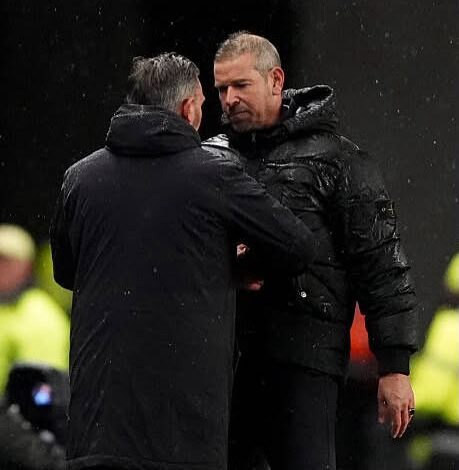
Rangers could find themselves facing uncomfortable questions following their dramatic 3-2 victory over Aberdeen, with fresh attention turning towards a controversial incident during Tuesday night’s encounter at Ibrox.
What initially appeared to be another ordinary moment in an intensely contested Scottish Premiership fixture has attracted renewed attention following discussions surrounding the available camera footage.
With emotions running high after the final whistle, questions are beginning to emerge about whether the incident could attract further attention from the Scottish Football Association (SFA), particularly if additional footage provides evidence that was not fully considered during the original VAR review.
However, while supporters are already discussing possible disciplinary consequences, there is an important distinction between retrospective action against an individual, sanctions against a club and the considerably more serious prospect of a points deduction.
And Rangers supporters will undoubtedly want answers before the controversy develops into something much bigger.
Rangers’ victory over Aberdeen overshadowed by late controversy
Rangers secured all three points against Aberdeen following an entertaining five-goal encounter at Ibrox.
Aberdeen initially stunned the home supporters when Brad Lyons put the visitors ahead in the first half, with VAR confirming that his header had crossed the goal line.
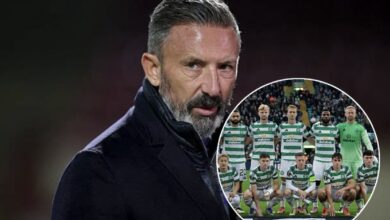
However, Derek McInnes’ half-time substitutions completely transformed the contest.
Ryan Naderi restored parity shortly after the restart before Djeidi Gassama put Rangers ahead. Nicolas Raskin subsequently extended their advantage, leaving Aberdeen with a difficult task.
Findlay Marshall pulled one back for the visitors, setting up a tense closing period.
Although Rangers eventually held on to secure a 3-2 victory, the final stages were not without controversy.
Aberdeen had a penalty appeal involving Nesta Guinness-Walker dismissed following a VAR check, with the match officials deciding against sending referee John Beaton to the pitchside monitor.
That decision has become an important part of the wider discussion surrounding the match.
The question now is whether any additional footage could change the assessment of a controversial incident.
Could the SFA investigate Rangers following the new footage?
One of the biggest questions surrounding the controversy is whether the Scottish FA could become involved after the match.
Under Scottish football’s disciplinary procedures, retrospective action is possible in certain circumstances, particularly where an incident involving potential serious misconduct was not seen by the match officials.
The SFA’s Compliance Officer has powers to examine incidents and determine whether a formal complaint should be brought against a player.
However, retrospective disciplinary action is not automatic simply because another camera angle emerges or supporters disagree with a referee’s decision.
The distinction is particularly important.
If an incident was already seen and assessed by the referee, the SFA generally cannot simply reopen the decision because another angle makes the challenge appear different.
The situation can be different where a significant part of the incident was completely unseen by the match officials.
In such circumstances, the Compliance Officer can consider whether retrospective action is justified.
For an incident to qualify for a retrospective sending-off complaint, the relevant disciplinary process requires supporting assessments from three independent refereeing experts.
Consequently, the existence of additional footage alone would not guarantee that Rangers or any individual player would face disciplinary proceedings.
What punishments could Rangers actually face?
The possibility of points deductions is likely to attract the greatest attention among supporters, particularly given the importance of every result in this season’s Scottish Premiership title race.
However, it is important to understand that the SFA has different disciplinary options depending on the nature of the offence.
1. Individual player suspension
If the footage establishes that a Rangers player committed an offence warranting retrospective disciplinary action, an individual suspension could become a possibility.
The length would depend on the offence, its seriousness and the applicable disciplinary rules.
A suspension would affect the player concerned rather than automatically costing Rangers points.
2. Financial penalties
Financial sanctions could become relevant if the investigation established a breach of the club’s disciplinary obligations.
The SFA’s Judicial Panel Protocol provides for financial penalties against clubs in various circumstances.
However, a controversial challenge by an individual player would not automatically make the club financially liable.
There would need to be an appropriate disciplinary basis for such a sanction.
3. Further disciplinary proceedings
If the authorities identify evidence of misconduct that was not properly considered during the match, formal proceedings could follow.
This could involve requests for explanations, examination of footage and a hearing before the appropriate disciplinary body.
Depending on the findings, further sanctions could be imposed.
4. Points deduction
This is arguably the most dramatic possibility being discussed.
A points deduction would have enormous consequences for Rangers, particularly with Celtic currently occupying the top position in the Premiership.
Nevertheless, there is currently no confirmed basis for claiming that Rangers are facing such a punishment over the incident shown in the circulating footage.
A points deduction is not an automatic consequence of a controversial challenge, a disputed VAR decision or an individual player’s disciplinary offence.
There would need to be a separate and sufficiently serious breach of the applicable competition or disciplinary regulations to justify such a sanction.
For now, supporters should distinguish between online speculation and an actual disciplinary threat.
Could Rangers appeal if the SFA takes action?
Another important aspect of the situation concerns Rangers’ potential right to challenge any disciplinary decision.
Should a formal complaint result in a suspension or another sanction, the club or affected individual may have appeal rights under the applicable Scottish FA disciplinary procedures.
An appeal would generally need to identify a legitimate ground for challenging the original decision.
This could involve questioning whether the correct disciplinary procedure was followed, whether the evidence supported the finding or whether the sanction was appropriate under the relevant rules.
However, simply disagreeing with a punishment would not guarantee that an appeal would succeed.
The club would need to present arguments supported by the available evidence and the applicable regulations.
There are also circumstances in which a player or club can challenge certain on-field decisions through the Fast Track Claims process.
These include claims involving wrongful dismissal, mistaken identity and wrongful cautions for simulation.
Importantly, this process is not a general opportunity to overturn every controversial refereeing decision.
Could Aberdeen also take action?
Rangers are not necessarily the only club with an interest in how the incident is assessed.
Aberdeen could also seek clarification if the club believes an important decision during the match was incorrectly handled.
The visitors already had reason to question aspects of the officiating after their late penalty appeal was rejected.
However, a club cannot automatically force the SFA to overturn a referee’s decision simply by submitting a complaint.
The governing body would have to consider whether the matter falls within its disciplinary or claims procedures.
If the footage establishes an offence that was genuinely unseen by the match officials, the relevant retrospective disciplinary process could become important.
Otherwise, the original on-field decision would generally remain in place.
Rangers’ title ambitions make the controversy even more significant
The timing of the controversy makes it particularly interesting.
Rangers’ victory over Aberdeen moved them to within one point of Premiership leaders Celtic, leaving the title race finely balanced.
With another important fixture against Falkirk approaching, any potential disciplinary distraction is unlikely to be welcomed around Ibrox.
Derek McInnes will want his players concentrating on maintaining their momentum rather than becoming involved in a prolonged debate about match officials and disciplinary investigations.
The club will also be conscious that any confirmed investigation could generate considerable attention among supporters and the wider Scottish football community.
However, until the SFA makes an official announcement, there is no reason to conclude that Rangers are facing a points deduction.
What happens next?
The biggest development to watch is whether the Scottish FA receives sufficient evidence to justify examining the incident further.
If the footage reveals something that was not seen by the match officials, retrospective disciplinary procedures could potentially become relevant.
If the incident was already assessed during the match, however, the possibility of reopening the matter becomes considerably more complicated.
Any eventual punishment would depend on the precise nature of the offence, the available evidence and the applicable disciplinary regulations.
For Rangers, the immediate priority remains their Premiership campaign.
But with supporters continuing to scrutinise the footage from Ibrox, the incident could generate further debate in the coming days.
One thing is certain: a controversial moment is not the same as a confirmed disciplinary charge, and Rangers supporters will be waiting to see whether the SFA has anything further to say.