Supporters may already have a clear favourite
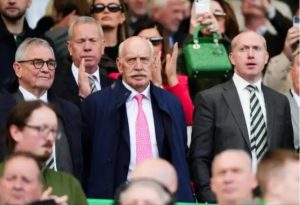
If Celtic’s next manager genuinely comes down to a choice between Martin O’Neill and Robbie Keane, many supporters are unlikely to spend much time debating which candidate they would prefer.
One is a figure synonymous with success and silverware at Celtic Park. The other represents a more familiar route of recruitment, one often associated with major shareholder Dermot Desmond and his trusted football connections.
That appears to be where Celtic’s managerial search currently stands after Desmond reportedly met both men in London this week to discuss the vacant position.
Concerns grow over the pace of the search
What makes the situation increasingly uncomfortable is the fact that Celtic have now had five months to identify a successor following their decision to move on from Wilfried Nancy.
Given that timeline, many observers expected the club to be much further along in the process by now.
If Keane has genuinely been under consideration since the vacancy emerged, those backing his candidacy may have hoped his time at Ferencvaros ended with another league title. Without that achievement, questions around his suitability become more difficult to ignore.
Mixed results during Keane’s time in Hungary
Ferencvaros entered the season having won seven consecutive league titles, but under Keane they were ultimately overtaken by Gyor in the championship race.
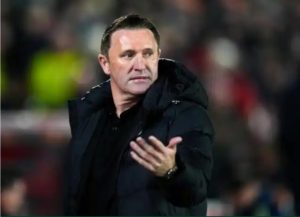
The club moved quickly after his resignation last month, appointing Balazs Borbely, the coach who guided Gyor to the title, just nine days later.
That said, Keane did enjoy success during his spell in Hungary. After taking charge midway through the previous campaign, he led Ferencvaros to an unbeaten run of 13 matches on their way to the league title.
He also secured the domestic cup and guided the club to the Europa League last-16 this season, recording notable victories against Genk, RB Salzburg and Rangers.
European setbacks still raise concerns
While wins over strong opposition enhanced Keane’s reputation, some Celtic supporters may place greater emphasis on Ferencvaros’ Champions League Play-Off exit against Qarabag earlier in the campaign.
Considering the financial gap between the clubs, that defeat remains a blemish on an otherwise respectable European record.
Keane’s previous success with Maccabi Tel Aviv, where he delivered a league and cup double in 2023/24, also forms part of his managerial résumé.
However, his decision to remain at the Israeli club following the outbreak of conflict in Gaza attracted criticism and could generate additional debate among sections of the Celtic support should he become the preferred candidate.
O’Neill’s achievements remain difficult to match
Even setting aside the off-field discussion surrounding Keane, comparisons between the two candidates strongly favour O’Neill.
The former Celtic boss boasts the highest win percentage in the club’s history and collected nine trophies during his time in Glasgow.
He also guided Celtic to their only European final of the last five decades and recently delivered a dramatic title triumph that few believed possible.
When comparing achievements and experience, O’Neill’s credentials are unquestionably stronger.
Could Celtic be relying too heavily on familiarity?
At a time when Celtic have often appeared to overcomplicate matters, there is obvious attraction in appointing a manager whose primary focus remains winning football matches.
O’Neill undoubtedly possesses the authority and experience to command immediate respect.
However, there remains a risk that Celtic view his return as a solution to wider structural issues within the club. O’Neill himself has acknowledged that he should not be viewed as a long-term coaching project.
That raises larger questions regarding the club’s future planning.
Bigger issues remain unresolved
Who will oversee recruitment during what could be a significant squad rebuild?
Who is responsible for defining the football philosophy moving forward?
And who ensures Celtic are not searching for another manager within the next year or two?
Those concerns remain regardless of whether O’Neill or Keane ultimately gets the job.
Why has the search narrowed to these two names?
Perhaps the more significant issue is not choosing between O’Neill and Keane, but understanding how Celtic arrived at this stage in the first place.
With Craig Bellamy publicly distancing himself from any potential departure from Wales earlier this week, the pool of realistic candidates appears increasingly limited.
That lack of variety has only intensified questions surrounding the recruitment process.
Questions over long-term planning continue
Successful managerial appointments are usually built upon a clearly defined vision and a structured recruitment strategy.
The most attractive clubs are often those capable of demonstrating long-term planning and footballing stability.
At present, Celtic have struggled to convince many observers that such a framework is firmly in place.
The aftermath of the Wilfried Nancy appointment has already raised concerns, and some believe the club’s reputation may have suffered as a result.
Supporters deserve greater clarity
Five months should have provided enough time to identify suitable profiles, evaluate numerous candidates and make a decision aligned with the club’s long-term objectives.
Instead, the conversation has gradually narrowed towards two familiar names, each offering a different type of comfort and familiarity.
While familiarity may reduce immediate pressure, it sits somewhat uneasily alongside Celtic’s repeated claims about modernisation and future planning.
If this is truly the result of five months of searching, supporters would be justified in asking what progress has actually been made behind the scenes.
The appointment is about more than the manager
Interim chairman Brian Wilson has attempted to reassure supporters through public communications, but the context surrounding this appointment cannot be ignored.
The club has endured public disputes, criticism directed at Brendan Rodgers and supporters, an unsuccessful managerial experiment, frustrating transfer windows and growing unrest among sections of the fanbase.
Although last season’s title success eased tensions, it did not fully restore confidence.
The process matters as much as the outcome
Celtic may yet arrive at the correct decision.
O’Neill, in particular, has repeatedly demonstrated throughout his career that he should never be underestimated, while Desmond has often made successful managerial choices in the past.
Ultimately, however, the biggest concern is not whether Celtic appoint Martin O’Neill or Robbie Keane.
It is the growing perception that a club of Celtic’s stature, resources and ambition has reached this stage without convincing supporters that a truly comprehensive and exhaustive managerial search has taken place.
Fans can accept difficult decisions when they understand the reasoning behind them. What becomes much harder to accept is the impression that the decision-making process itself lacks a clear and coherent framework.
For all the attention being placed on who becomes the next Celtic manager, that may be the most revealing aspect of the entire saga.