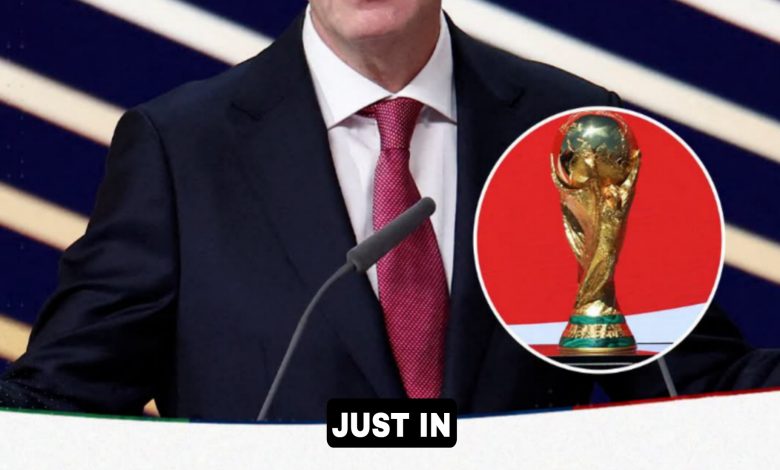
FIFA president Gianni Infantino is facing mounting criticism after a leaked letter sent to the organisation’s 211 member associations revealed further details of his controversial proposal to create a new commercial structure around football’s biggest competitions.
The letter, reportedly uncovered by The Times, outlines plans for national football associations to decide whether they support the creation of a new company called FIFA Forward Enterprise (FFE), which would oversee important commercial areas linked to FIFA competitions.
The proposal has triggered a major backlash across football, with UEFA expressing strong concerns and European nations preparing discussions over their response.
While FIFA argues the plan could unlock billions in investment and provide greater financial support for football development around the world, critics fear it could change the relationship between supporters, governing bodies and the sport’s most prestigious tournaments.
FIFA’s $10 Billion Proposal
According to reports, Infantino’s plan involves FIFA maintaining majority control of a new commercial entity while allowing minority ownership stakes to be made available.
The proposal would reportedly allow FIFA’s 211 member associations to receive tradable equity stakes in the company.
In his letter, Infantino explained that associations would have the choice of accepting the proposal or maintaining the current system.
The letter reportedly stated that if member associations supported the plan, a major investment package could become available from January 2027.
The financial package has been described as potentially worth around $10 billion, with FIFA arguing that the additional resources would help strengthen football development programmes across the globe.
Infantino also reportedly highlighted FIFA’s existing development programme, explaining that countries could continue receiving funding even if they chose not to participate in the new commercial structure.
UEFA Raises Alarm
The strongest opposition has come from UEFA.
European football’s governing body has criticised the process surrounding the proposal and has argued that major decisions affecting world football must involve greater consultation.
UEFA reportedly accused FIFA of crossing a “line” that football’s governing institutions should not cross.
The disagreement represents another major dispute between FIFA and UEFA, two organisations that have repeatedly clashed over the direction of international football.
Issues such as tournament expansion, scheduling, commercial rights and competition formats have all contributed to growing tensions between the two bodies.
Why European Nations Are Angry
Many European football officials believe the World Cup represents more than a commercial product.
For decades, the tournament has been viewed as a global sporting tradition built around national teams, supporters and sporting achievement.
Critics fear that bringing private investors into the ownership structure surrounding FIFA competitions could increase pressure to prioritise revenue growth.
Potential concerns include:
More frequent major tournaments.
Further expansion of the World Cup.
Higher ticket prices.
Increased commercial demands on host nations.
Greater influence from investors seeking financial returns.
None of these outcomes have been confirmed as part of the proposal, but opponents argue that private investment naturally creates pressure to increase profitability.
England and the FA Respond
The Football Association has also expressed concerns about the situation.
The FA reportedly said it wants FIFA to provide complete transparency before making a final judgment on the proposals.
England’s position is particularly significant because of the country’s influence within world football.
A potential boycott involving England and other major European nations would represent one of the most dramatic moments in World Cup history.
However, such a move would also carry enormous consequences.
Players, supporters, broadcasters and sponsors would all be affected, making any boycott decision extremely difficult.
Could UEFA Nations Boycott the World Cup?
Talk of a boycott has emerged as tensions continue to rise.
UEFA is reportedly expected to discuss possible responses with its member associations.
A World Cup without European nations would be an unprecedented situation.
European teams have historically played a central role in the competition, providing some of the tournament’s biggest moments, strongest teams and largest audiences.
A boycott would therefore create a major sporting and financial crisis.
However, many observers believe discussions are more likely to focus on negotiations and pressure rather than immediate withdrawal.
Political Questions Surrounding the Proposal
The controversy has also attracted political attention.
Reports have suggested that figures connected to the administration of US President Donald Trump were consulted regarding aspects of the investment proposal.
These reports have increased public interest in the issue, although claims about political involvement remain a subject of debate and have not been fully established publicly.
The situation has added another layer of controversy around FIFA’s plans at a time when the organisation is already facing criticism from some sections of the football community.
Supporters React
Football supporters have responded strongly to the reports.
Many fans believe decisions about the future of the World Cup should remain in the hands of football organisations rather than private investors.
Social media reactions have included calls for greater transparency and criticism of FIFA’s direction under Infantino.
Some supporters argue that football’s biggest competitions should be protected from excessive commercialisation.
Others believe that modern football requires investment and that additional funding could benefit smaller nations and developing football programmes.
The debate highlights a wider question facing the sport: how can football grow financially while preserving its traditional values?
Infantino’s Future at FIFA
Despite the criticism, removing a FIFA president is extremely difficult.
The organisation’s political structure means that a president with sufficient support among member associations can remain in power.
Infantino has previously secured support from many regions outside Europe and is expected to seek another term in office.
However, analysts believe the controversy could damage his reputation among European football leaders.
Whether that damage becomes politically significant will depend on how FIFA handles the coming months.
What Happens Next?
The immediate focus will be on discussions between FIFA, UEFA and national associations.
FIFA will need to explain the proposal in greater detail and address concerns about transparency, governance and commercial influence.
UEFA and its members will decide how strongly they wish to oppose the plan.
The debate is unlikely to disappear quickly.
At its heart, the controversy is about more than money. It is about the future identity of football and who should control the world’s most famous sporting competition.
For FIFA, the challenge is convincing supporters and football authorities that investment can strengthen the game rather than change it beyond recognition.
For UEFA and its member nations, the challenge is deciding how far they are willing to go to protect their vision of football.
Whatever happens, the dispute surrounding FIFA’s proposed commercial transformation could become one of the defining governance battles in modern football history.