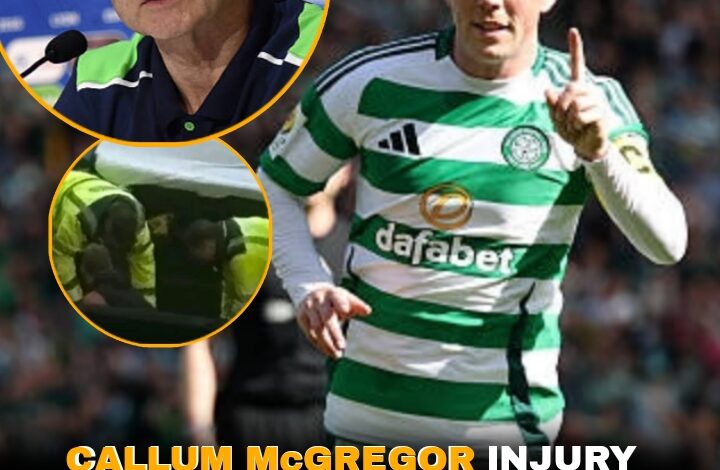
In the high-stakes world of Scottish football, few figures carry the weight of expectation quite like Callum McGregor. The Celtic captain, a mainstay of the midfield for over a decade, has been the heartbeat of the club through title triumphs, European campaigns, and periods of transition. So when news emerged of a training-ground setback that ruled him out of key fixtures, it sent ripples through the Parkhead support and beyond. Martin O’Neill, the interim manager who has twice returned to steady the ship in turbulent times, stepped forward with an official clarification that both eased immediate fears and set a cautious timeline for the skipper’s return—specifically with an eye on a clash against Dundee United.
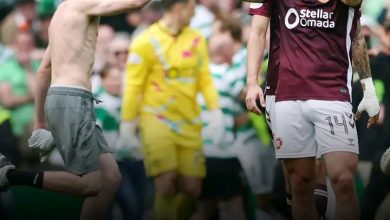
The sequence of events unfolded rapidly. McGregor had been a virtual ever-present, his leadership on and off the pitch as vital as his tactical intelligence and range of passing. He missed Celtic’s dramatic Scottish Cup penalty shoot-out victory over Rangers at Ibrox, a result that advanced the Hoops while exposing the void left by his absence. Reports swirled about the nature of the problem. Given McGregor’s history—most notably a significant Achilles issue that sidelined him for around five weeks in a previous campaign—speculation quickly turned to a possible recurrence. Fans and pundits alike feared a longer-term absence at a stage of the season when every point and every cup tie carried enormous significance.
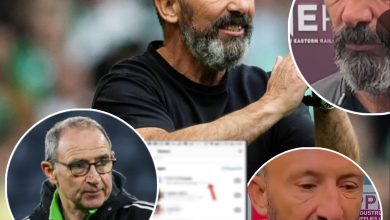
O’Neill addressed the matter directly in a press conference ahead of a Premiership fixture against Motherwell. The Northern Irishman, never one to mince words, provided the clarity the club needed. “It’s a calf strain,” he stated. “My physio mentioned this to me this morning. I think there’s rumours flying around that that’s what it was. It’s got nothing to do with that [last season]. That was an Achilles injury, this is just a calf thing.” The distinction mattered. An Achilles recurrence would have raised the spectre of weeks or months on the sidelines and potential complications. A calf strain, while still a blow for a player of McGregor’s intensity and workload, offered a more optimistic outlook.
O’Neill continued with measured hope: “I’m hopeful, pretty hopeful. He’s done very well in his recovery and we’d be hopeful for maybe next week.” That “next week” pointed squarely toward availability for the Dundee United encounter. McGregor had not taken part in team training sessions in the immediate lead-up, underlining the severity of the initial discomfort that first surfaced after the Aberdeen match. He had felt “pretty sore” by the end of that game and simply had not recovered in time for the Old Firm cup tie. The club’s medical staff, led by the physio O’Neill referenced, had monitored the situation closely, ruling out the more alarming Achilles diagnosis that had circulated.
The context surrounding Celtic at the time amplified the impact of any McGregor absence. O’Neill had been brought back into the fold after a short and difficult spell under previous management, tasked with restoring confidence, clarity, and results. The squad was already stretched by other injuries and absences. Kieran Tierney, another key figure, had been dealing with a foot issue but was confirmed available for the Motherwell game. Goalkeeper Kasper Schmeichel’s fitness remained a question mark in some reports. The midfield, without McGregor’s anchoring presence, had to rely on alternatives such as Luke McCowan, Reo Hatate, and Benjamin Nygren in various combinations. At Ibrox, Celtic registered limited shots across 120 minutes of cup action before progressing via penalties—an outcome that highlighted how much the team leaned on their captain for structure and tempo.
McGregor’s importance extends far beyond statistics. As captain “in every aspect,” in O’Neill’s words, he leads in the dressing room and on the field. His ability to dictate play, break up opposition attacks, and initiate transitions has been central to Celtic’s dominance in the domestic game. Previous injuries, including the Achilles problem and an earlier knee issue, had tested his resilience, yet he consistently returned stronger and more determined. In one earlier campaign, initial scans after a Dundee fixture had raised fears his season might be over; determination and careful management brought him back to help secure silverware and remain available for international duty. That history of recovery fuelled optimism around the calf strain.
The fixture against Dundee United carried its own narrative weight. Encounters between the sides have often been competitive, with United capable of causing problems at Tannadice through organisation and set-piece threat. For Celtic under O’Neill, every match formed part of a broader effort to close gaps in the league table and progress in cup competitions. The League Cup, in particular, represents a realistic path to silverware and a platform to build momentum. O’Neill’s hope that McGregor could be involved in training and potentially available for that clash underscored both the short-term nature of the injury and the high regard in which the player is held. A premature return risked aggravation; a carefully managed one promised to restore the side’s balance at a critical juncture.
Broader squad management also featured in the discussion. O’Neill has repeatedly spoken about the need for reinforcements during periods of fixture congestion and injury accumulation. European commitments, domestic doubles, and the intensity of Scottish football leave little margin for error. When key players such as Jota, Alistair Johnston, or others have been sidelined for longer periods, the burden on remaining midfielders and leaders intensifies. McGregor’s temporary absence forced tactical adjustments and placed greater responsibility on younger or less experienced options. Yet the manager’s public confidence in the recovery process helped stabilise the narrative around the team.
From a medical perspective, calf strains are common in footballers who cover high distances at high intensity. The muscle group is heavily involved in acceleration, deceleration, and changes of direction—precisely the demands placed on a box-to-box or deep-lying midfielder like McGregor. Recovery typically involves rest, controlled loading, strength work, and gradual return to full training. O’Neill’s update that the player had “done very well in his recovery” suggested the process was progressing without major setbacks. The distinction from the previous Achilles problem was crucial for long-term planning; soft-tissue calf issues, while painful and disruptive, rarely carry the same structural concerns as tendon injuries if managed properly.
Fan reaction mixed concern with relief. Social media and fan forums filled with discussion of the initial rumours, followed by measured positivity once O’Neill’s statement landed. Many supporters recalled previous occasions when McGregor had battled through or returned ahead of schedule. The captain’s own professionalism—rarely speaking extensively about injuries unless necessary—reinforced the sense that the club was handling the situation with appropriate caution. Meanwhile, the return of Tierney provided a timely boost to the defensive options, illustrating how injury news can shift the balance of a squad from one week to the next.
Looking at the bigger picture of that campaign, O’Neill’s second spell as interim or caretaker had already delivered results and restored a sense of purpose. Victories, improved performances, and a clearer style of play had re-engaged the support. McGregor’s presence had been integral to those improvements. His absence, even for a short period, tested the depth and adaptability of the group. The fact that Celtic could still progress in the cup without him spoke to the collective quality, yet few disputed that the side functioned at a higher level with the captain dictating terms.
As the days progressed toward the Dundee United fixture, attention remained fixed on McGregor’s training status. O’Neill’s public comments set a clear expectation: hopeful for involvement the following week. In the event, the captain did make his return around that period, leading the team out in subsequent matches and demonstrating the effectiveness of the recovery work. His influence once restored helped stabilise midfield control and provided the leadership that has defined his career at Celtic.
Injury setbacks are an inevitable part of a long season. What distinguishes successful clubs is the quality of their medical response, the honesty of communication from the manager, and the character of the player involved. In this instance, O’Neill’s straightforward statement cut through the rumour mill, correctly identified the issue as a calf strain rather than a more serious recurrence, and projected a realistic return window aligned with a significant fixture. McGregor, true to form, worked diligently behind the scenes to rejoin the group as soon as safely possible.
The episode also served as a reminder of the physical toll exacted by modern football. Players of McGregor’s stature and longevity accumulate significant mileage. Managing load, addressing niggles early, and balancing short-term needs against long-term availability become constant challenges for coaching and medical staff. O’Neill’s experience across decades of management, including previous successful spells at Celtic, equipped him to navigate such situations with calm authority.
For Celtic supporters, the ultimate measure remains on-pitch performance and silverware. The temporary loss of their captain tested resilience but did not derail progress. When McGregor returned, he resumed his role as the side’s organiser and motivator, contributing to the collective effort that has characterised recent campaigns under various managers. The “bombshell” of the training blow ultimately proved containable thanks to clear diagnosis, effective rehabilitation, and transparent communication from the dugout.
In Scottish football, narratives often hinge on the availability of a handful of pivotal players. Callum McGregor has long been one of those figures for Celtic. Martin O’Neill’s official statement after the training setback provided the facts, dispelled the more alarming speculation, and kept focus on the immediate path forward—including readiness for the Dundee United assignment. It was a moment that illustrated both the fragility of squad planning and the robustness of a club culture built around leadership, recovery, and collective responsibility. As the season continued, the captain’s return reinforced the value of that approach, ensuring Celtic remained competitive on multiple fronts.
The episode stands as a case study in modern injury management within a high-pressure environment: rapid assessment, honest public messaging, optimistic yet realistic timelines, and the enduring importance of a true leader in the centre of the park. For Celtic, the bombshell was defused; for McGregor, another challenge overcome on the road to continued contribution at the highest level of the Scottish game.