CLÉMENT TURPIN UNDER FIRE: FIVE BIGGEST REFEREE MISTAKES THAT OVERSHADOWED ENGLAND’S DRAMATIC WIN OVER NORWAY
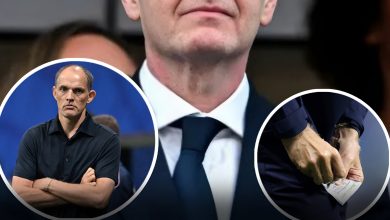
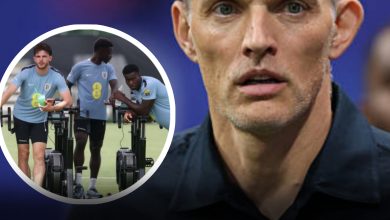
England booked their place in the FIFA World Cup semi-finals after a dramatic 2-1 extra-time victory over Norway, but much of the post-match conversation was not about Thomas Tuchel’s tactical changes or Jude Bellingham’s crucial equalizer. Instead, it centered on the performance of French referee Clément Turpin.
Turpin is widely regarded as one of the most experienced referees in world football. Having officiated Champions League finals, major international tournaments, and countless high-profile fixtures, expectations were understandably high heading into one of the biggest matches of the World Cup.
However, while the game itself produced plenty of drama, the referee’s display has become one of the tournament’s biggest talking points. Several contentious decisions left both sets of supporters frustrated, with Norway in particular feeling aggrieved by the officiating.
Although Turpin managed to keep control of the players for most of the evening, his performance will ultimately be remembered for the major incidents that influenced the narrative of the match.
The Camera Cable Controversy
The defining moment of Turpin’s evening came during England’s equalizer.
As England built their attack, Norwegian players immediately appealed that the ball had struck the overhead camera cable. According to the Laws of the Game, if the ball touches an outside agent such as a camera cable, play should be stopped immediately and restarted with a dropped ball.
Instead, Turpin allowed play to continue.
England regained possession, continued the attack, and Jude Bellingham found the back of the net to level the score.
The goal instantly sparked furious protests from the Norway players, who surrounded the referee believing play should never have continued.
Television replays appeared to suggest there may have been contact between the ball and the cable, leading to widespread debate across social media and among football pundits.
Former FIFA referee Mark Clattenburg argued that the goal should not have stood if the ball had indeed touched the cable.
FIFA later released information stating that data from the match ball’s internal sensor detected no contact with the cable, effectively backing the decision to allow play to continue.
Nevertheless, the controversy refused to disappear.
For many fans, the available television angles appeared to contradict the official explanation, ensuring the incident became one of the biggest refereeing debates of the tournament.
Whether Turpin ultimately made the correct decision or not, the incident overshadowed almost everything that happened afterward.
Inconsistent Foul Decisions
Beyond the equalizer, another criticism aimed at Turpin was the inconsistency of his foul threshold.
Throughout the match, several physical challenges that appeared to be fouls were waved away, while less forceful contacts elsewhere resulted in free kicks.
Players from both teams repeatedly expressed frustration with the referee’s interpretation.
England believed some robust Norwegian tackles went unpunished, while Norway argued that similar incidents involving England players were judged differently.
Consistency is one of the most important qualities expected from elite referees.
Players can usually adapt to a referee who allows physical football or one who whistles frequently, provided the standard remains the same throughout the match.
In this game, however, that consistency often appeared to be missing.
The uncertainty over what constituted a foul disrupted the rhythm of the contest and contributed to growing frustration on the pitch.
Heavy Reliance on VAR
VAR once again played a significant role.
England believed they had won a penalty during extra time after one of their attackers went down inside the box.
Turpin initially pointed to the penalty spot.
However, after a VAR review, the decision was overturned.
Replays showed there had not been sufficient contact to justify the original decision, meaning the correct outcome was eventually reached.
Even so, the incident raised further questions about Turpin’s positioning and decision-making.
Elite referees are expected to make as many correct decisions as possible without needing technological intervention.
While VAR exists to correct clear and obvious errors, repeatedly depending on it for major decisions inevitably affects perceptions of a referee’s overall performance.
The overturned penalty became another reminder that Turpin struggled to get the biggest moments right on the first attempt.
Poor Communication During Heated Moments
Another area where Turpin received criticism was his communication with players.
Following England’s equalizer, Norway’s players immediately surrounded the referee seeking an explanation.
Rather than quickly calming the situation, the discussions dragged on, increasing tension on the field.
Experienced referees are often praised not only for their decisions but also for the authority and clarity with which they explain them.
In this case, Turpin appeared unable to convince Norway’s players that the correct procedure had been followed.
Although dissent never spiraled completely out of control, the atmosphere remained tense for several minutes.
Clearer communication may not have changed opinions, but it could have reduced some of the frustration that dominated the closing stages.
Positioning on Key Incidents
Refereeing at the highest level requires exceptional positioning.
Being only a few metres out of place can completely alter a referee’s view of an incident.
During several important moments, Turpin appeared to rely heavily on his assistant referees and the VAR team.
His original penalty decision being overturned highlighted that he did not have the clearest angle of the challenge.
Similarly, the camera-cable controversy demonstrated how difficult it can be for the on-field referee to detect unusual incidents during open play.
While no referee can have a perfect view every second of a match, positioning remains one of the foundations of elite officiating.
What Turpin Did Well
Despite the criticism, it would be unfair to suggest Turpin completely lost control of the match.
The quarter-final was played at a high intensity, with both teams fully committed throughout 120 minutes.
He managed player confrontations reasonably well and avoided allowing emotions to boil over into serious disciplinary problems.
Most of his yellow-card decisions were accepted, and the game avoided descending into chaos despite the enormous stakes.
That level of control should not be overlooked.
However, football matches at this level are often remembered for defining moments rather than routine decisions.
Unfortunately for Turpin, the defining moments largely worked against him.
Did the Referee Cost Norway?
That question will continue to divide opinion.
Supporters of Norway argue the equalizer should never have counted if the ball made contact with the camera cable.
England supporters point to FIFA’s explanation that the ball’s sensor detected no touch, insisting the goal was correctly awarded.
Without absolute visual proof accepted by all parties, the debate is unlikely to disappear.
What is certain is that the incident shifted the momentum of the match and became the dominant talking point after the final whistle.
Final Verdict
Clément Turpin entered the match with a reputation as one of football’s most respected referees.
He left it facing intense scrutiny.
His handling of the camera-cable controversy, inconsistent foul decisions, reliance on VAR, positioning on major incidents, and communication with players combined to overshadow what should have been a memorable World Cup quarter-final.
While he deserves credit for maintaining overall control of a fiercely contested encounter, elite referees are ultimately judged on the biggest moments.
In this match, those moments did not go in his favor.
Whether history ultimately views his most controversial decision as correct or incorrect, one thing is certain: Clément Turpin’s performance will remain one of the most heavily debated refereeing displays of the 2026 FIFA World Cup.
Overall referee rating: 5/10. A composed performance in terms of match control, but several high-profile decisions and controversies prevented it from being remembered as one of Turpin’s better nights.