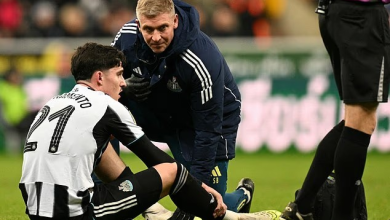
FA’s Controversial New Goalkeeper Rule Sparks Debate Across Football
Football is no stranger to rule changes, but the latest trial announced by the Football Association (FA) has quickly become one of the most talked-about topics in the sport. Introduced as part of an effort to reduce time-wasting and discourage teams from using goalkeeper injuries as tactical breaks, the new trial has already divided opinion among players, managers, pundits and supporters.
While some believe the change could improve the flow of matches and stop teams from exploiting the rules, others argue it could unfairly punish clubs dealing with genuine injuries. As debate intensifies, one thing is certain: this is a rule that has everyone talking.
Why has the FA introduced the trial?
The FA has become increasingly concerned about the growing number of situations where goalkeepers go down with injuries during matches. Although many of these incidents are genuine, there have also been accusations that some teams deliberately use goalkeeper treatment as a way to slow down the game.
A goalkeeper receiving treatment creates a natural pause in play. During that break, managers can gather players to give tactical instructions, defenders can recover from fatigue, and the momentum of an attacking opponent can be disrupted.
Football authorities believe these stoppages have occasionally been used for tactical reasons rather than medical necessity. The new trial is designed to remove any possible advantage from such situations.
How does the new rule work?
Under the trial, if a goalkeeper receives certain types of treatment on the pitch, the team will face a temporary consequence once play resumes.
Instead of simply restarting with all eleven players, one outfield player from the goalkeeper’s team must temporarily leave the field. That player remains off the pitch for at least one minute after play restarts before being allowed to return.
Importantly, the goalkeeper stays on the pitch.
There are exceptions to the rule. Serious injuries, heavy collisions, head injuries, bleeding incidents and other situations where immediate medical attention is essential are expected to be treated differently. The aim is not to punish genuine medical emergencies but to discourage unnecessary stoppages.
What problem is the FA trying to solve?
Modern football has become faster than ever before, making momentum increasingly important.
When one team is dominating possession or launching wave after wave of attacks, a short stoppage can completely change the rhythm of the game. Players catch their breath, managers reorganise tactics, and the attacking side may lose its intensity.
Officials believe some clubs have recognised this and occasionally used goalkeeper treatment as a convenient timeout.
By introducing a temporary numerical disadvantage after treatment, the FA hopes clubs will think twice before allowing unnecessary stoppages.
Why are fans unhappy?
The reaction has been mixed, with many supporters questioning whether the new trial actually solves the problem.
One of the biggest criticisms is fairness.
If a goalkeeper genuinely suffers a minor injury and requires treatment, the team could still be forced to play for a minute with one fewer outfield player. Critics argue that clubs should not be punished simply because a player needed legitimate medical attention.
Others fear the trial could pressure goalkeepers into staying on the pitch despite needing treatment.
Medical professionals have long encouraged players to report injuries immediately. Some supporters worry the new rule could unintentionally discourage this if teams become reluctant to lose an outfield player, even temporarily.
Managers also have concerns
Managers are expected to study the rule carefully.
A single minute may not sound significant, but in football it can decide an entire match.
Imagine a team protecting a one-goal lead during stoppage time. Losing an outfield player, even briefly, could invite intense pressure from the opposition.
Likewise, if a team is defending a corner or free-kick immediately after treatment, being temporarily reduced in numbers could increase the likelihood of conceding.
Coaches may now have to consider tactical decisions that never existed before, including deciding which player should leave the pitch if treatment is required.
Could the rule change player behaviour?
Many observers believe the trial could significantly alter decision-making during matches.
Goalkeepers may attempt to continue playing through discomfort rather than receive treatment.
Managers may encourage medical staff to avoid entering the field unless absolutely necessary.
Players themselves may also become more cautious about calling for treatment, knowing it could temporarily weaken the team.
Whether these behavioural changes improve football or create new problems remains to be seen.
Why the FA is only testing the rule
The important point is that this is currently a trial rather than a permanent law.
Football’s governing bodies regularly test new ideas before deciding whether they should become official regulations.
During the trial period, officials will monitor several factors, including:
– Whether goalkeeper injury stoppages decrease.
– Whether matches flow more smoothly.
– Whether teams attempt to exploit new loopholes.
– Whether genuine injuries are negatively affected.
– Feedback from referees, clubs, players and supporters.
Only after analysing the results will authorities decide whether to adopt, modify or abandon the proposal.
Football has changed before
Many rules that once seemed controversial are now accepted as normal.
The introduction of VAR generated huge debate.
Five substitutions were heavily criticised before becoming common.
Goal-line technology was questioned before proving highly successful.
Changes to handball interpretations and added time have also divided opinion.
Supporters may disagree about this latest proposal, but history shows football constantly evolves in an effort to improve fairness and entertainment.
What happens next?
The trial will now be closely watched across English football.
Every incident involving a goalkeeper is likely to receive greater attention than before, especially if the temporary removal of an outfield player influences the result of an important match.
If the trial proves effective in reducing tactical time-wasting without creating major problems, football authorities could consider making it permanent.
However, if clubs, players and referees conclude that it unfairly penalises genuine injuries or creates unintended consequences, the idea could be revised or abandoned altogether.
For now, the debate is far from over.
One thing is certain: whenever football changes its rules, opinions are never in short supply. Whether this trial becomes another successful innovation or joins the long list of experiments that never survive, supporters around the world will be watching closely to see whether the FA’s bold move improves the game—or simply creates a brand-new controversy.